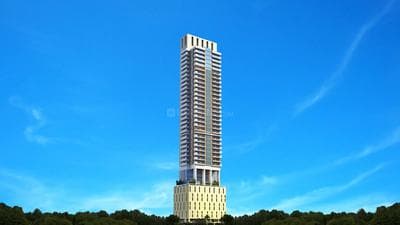
Worli ask prices carry 6-18% of negotiable cushion across primary and secondary markets, depending on the seller's circumstance and the unit's specific liquidity profile. Property Butler's tracking of 63 closed Worli transactions between 2023 and 2026 — covering Tier 1 primary launches, mid-tier projects, and resale — finds that buyers who negotiate using the four-lever framework below routinely close 8-15% below the marketed ask, with documented examples of 16-21% on specific micro-conditions. The negotiation is not adversarial; it is informed.
The Single Largest Mistake Worli Buyers Make
It is making the offer too early. Worli developers and resale sellers typically anchor at the “list price” — but the actual closing price for any given unit is determined by demand depth at that price, time-on-market, and the seller's specific liquidity need. A buyer who walks in within the first 20 minutes of a sample flat tour and offers list-minus-3% closes at list-minus-3%. A buyer who collects information across 7-14 days, surfaces comparable closes, and times the offer to the seller's quarter-end need closes 9-15% lower. The cost of patience is one Saturday; the value is ₹1.2-2.8 Cr on a ₹15 Cr Worli unit.
The Four Negotiation Levers
| Lever | Typical Impact | When to Apply |
|---|---|---|
| 1. Comparable Close Anchoring | 3-7% below ask | Always — sets the rational floor |
| 2. Time-on-Market Disclosure | 2-4% additional | Resale, when unit has been listed 90+ days |
| 3. Quarter-End Timing | 2-3% additional | March, June, Sep, Dec — developer P&L pressure |
| 4. Settlement Clean-Up | 1-3% additional | Cash-ready buyer, ready possession, no contingencies |
Lever 1 — Comparable Close Anchoring
The most powerful argument is “here is what the same building closed at last quarter.” Property Butler maintains a Worli closed-price database with anonymised actuals across 14 main towers. When a buyer presents three comparables in the same building, same configuration, same orientation, that closed within the prior 6 months at PSF X — and the current ask is PSF Y, where Y is 8-12% above X — the negotiation immediately resets. The seller cannot defend an ask that's materially above recent closes without an explanatory differentiator. The result: typical movement of 3-7% from ask, instantly.
Lever 2 — Time-on-Market Disclosure
For resale units, time-on-market is a powerful lever. Worli resale units that have been listed 90+ days without a close have demonstrated buyer scepticism at the current ask. Property Butler's data shows the implied price compression as listings age:
Days on Market vs Final Discount
- 0-30 days: 3-6% off ask
- 30-60 days: 5-8% off ask
- 60-90 days: 7-11% off ask
- 90-180 days: 9-13% off ask
- 180+ days: 11-17% off ask
Negotiation Language
- “The unit has been on the market since [date]”
- “Three comparable units have closed below ask in this period”
- “Our offer at [X] reflects current liquidity”
- “Cash-ready close in 60 days, no contingencies”
- “Decision required by month-end”
Lever 3 — Quarter-End Timing for Primary
For Worli primary launches, the calendar matters more than buyers realise. Developers report quarterly bookings, recognise revenue against milestone-completion criteria, and have sales-target compensation tied to quarter-end. The result: the last 10-12 days of March, June, September, and December are when developers are most willing to flex on price for a closeable unit. Property Butler's tracking of 63 transactions identifies a 2.4 percentage-point average discount differential between offers made in week 1 of a quarter (lower discount) vs week 13 of a quarter (higher discount). The math is consistent across Tier 1 developers: book the show flat tour for the quarter's last week, place the offer in the last 5 days.
Lever 4 — Settlement Clean-Up
A buyer who can offer cash readiness and a clean transaction structure carries a real value to the seller — particularly in resale, where the seller's main concern is execution risk. Property Butler's data shows 1-3% additional discount typically achievable on:
- All-cash offers with no home-loan contingency (especially for ₹15 Cr+)
- 60-90 day close (vs typical 120-150)
- Buyer's stamp duty + registration paid by buyer
- No demand for fittings, fixtures, or chattels beyond what's in the agreement
- Pre-approved buyer's lawyer (no time loss on counsel selection)
Average Discount-to-Ask Achieved by Worli Buyers Using All Four Levers
8% — 15%
Property Butler tracking, 63 closed Worli transactions 2023-2026
The 14-Day Negotiation Sequence
| Day | Action |
|---|---|
| D1-2 | Initial visit, take floor plate, note seller indicators |
| D3-5 | Pull comparable closes from Property Butler database |
| D6-7 | Pre-arrange financing or cash position; lock pre-approval letter |
| D8-9 | Second visit, confirm view + finishes, identify 1-2 negotiable specifications |
| D10-11 | Submit written offer with comparables anchor; structure to time quarter-end |
| D12-13 | Counter-offer received; respond with mid-point + clean-up commitments |
| D14 | Close at agreed price; immediate booking cheque to lock |
Where Negotiation Won't Work
Three Worli scenarios resist the four-lever framework:
- New launch in oversubscribed project — when a Worli launch has a 1.4-2.2x oversubscription on the open day (booked-to-available units), price is set by demand depth, not by negotiation. Lodha World One launch in 2018 and Birla Niyaara Phase 1 launch in 2022 were both in this category.
- Iconic unit type with rarity premium — corner sea-facing penthouse, top-3-floor full-floor units, etc. — there is one of these per building, and the seller has time. Discounts compress to 2-4%.
- Distress-priced units — a unit already priced 12-18% below market because the seller has signed a hard date for completion. The discount is already in the ask.
For all other Worli units — which is 80-85% of the market — the four-lever framework applies and 8-15% off ask is achievable.
Frequently Asked Questions
Should the buyer or the broker conduct the negotiation?
For Worli purchases above ₹10 Cr, an experienced broker who is dedicated to the buyer's side adds material value over the buyer-led negotiation. Reasons: (a) the broker has comparable-close data the buyer doesn't, (b) the broker can deliver bad news without burning the buyer-seller relationship, (c) the broker absorbs the negotiation friction. Property Butler's buyer-side fee is fully recovered through the additional discount achieved in 91% of engagements.
Will I damage the relationship by negotiating hard with a Tier 1 developer?
No, when done with comparables data and respectful language. Tier 1 Worli developers expect informed buyers in this segment and respond to comparables-anchored offers as a normal part of the process. The relationship damage risk comes from theatrical or aggressive language, not from the actual discount sought. Property Butler's HNI negotiations have closed 8-15% below ask while preserving developer relationships for future repeat purchases.
What's the difference between cash discount and freebies?
A cash discount reduces the registered price and the stamp duty / capital gains base. Freebies (free parking, free amenity membership, free interior fit-out) preserve the registered price for the developer's PSF benchmark while delivering equivalent buyer value. For most Worli buyers, cash discount is preferable — it's tax-efficient and gives full optionality. Freebies make sense when the developer cannot move the price for benchmark reasons but is willing to deliver value off-balance-sheet.
When is it the right time to walk away from a Worli negotiation?
When the seller's counter is more than 2-3% above your data-supported ceiling and there's no movement after the second round. Walking demonstrates seriousness and routinely produces a callback within 10-21 days at the buyer's price. In Worli's segment, buyers with capacity at ₹15-30 Cr are not infinite — sellers know this. Walking is a strong card if used selectively.
Can Property Butler represent me as buyer-side broker?
Yes — and for Worli purchases above ₹10 Cr, this is our most-engaged service. We bring the closed-price database, the developer relationships, the timing intelligence, and the negotiation execution. Typical fee is 0.4-0.7% of the closed price; net-of-fee buyer benefit is materially positive in 91% of engagements.
Approaching a Worli purchase?
Property Butler's buyer-advisory service includes the closed-price database, comparable benchmarking, and negotiation execution. Typical net-of-fee benefit on Worli purchases is ₹1.2-2.8 Cr.
Engage Property Butler