
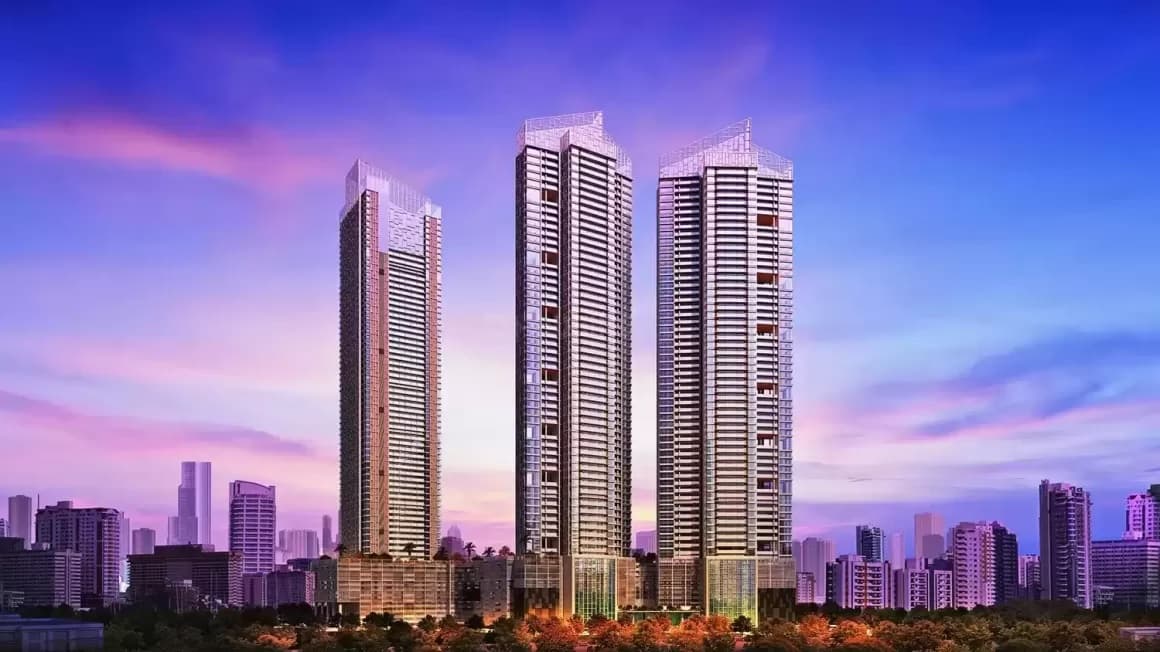
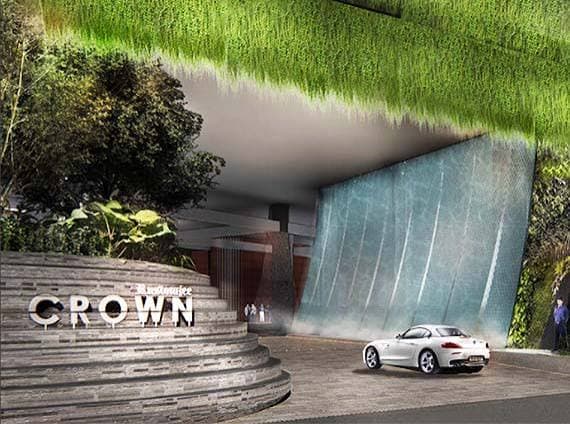
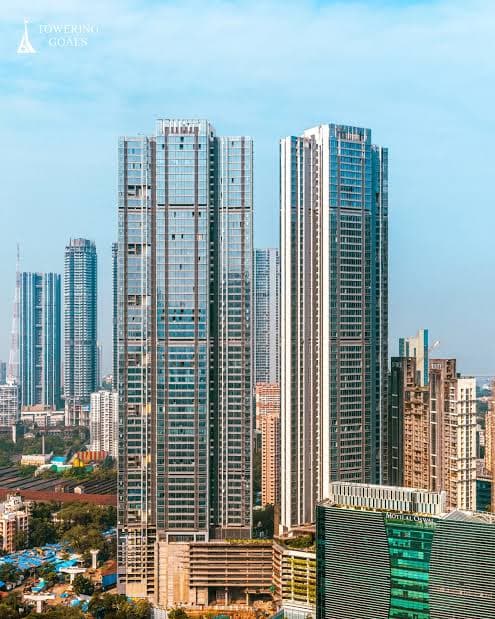
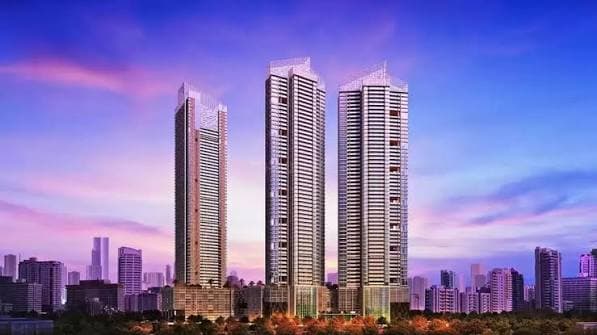
Walk into the Rustomjee Crown sales gallery on Senapati Bapat Marg and the first question the relationship manager asks isn't budget or BHK — it's which phase. Crown is one address with two RERA registrations, two possession timelines, two construction completion curves, and crucially, two distinct pricing bands. Property Butler tracks 56 active listings in Phase I (RERA P51900003268) and 7 in Phase II (RERA P51900006367), with a clean phase-PSF gap of roughly ₹4,800 per sqft. The choice between them is not cosmetic — it changes everything from your possession date to your downpayment exposure to your resale window.
The headline number
Phase I active median PSF tracks at ₹61,400. Phase II active median PSF tracks at ₹66,200. The ₹4,800/sqft phase-premium reflects newer construction, refreshed amenity spec, and Phase II's slightly elevated tower stand height. On a 1,500 sqft 3 BHK that is ₹72 lakh of pricing differential for the same compound, same gate, same temple-walk distance.
What separates Phase I from Phase II structurally
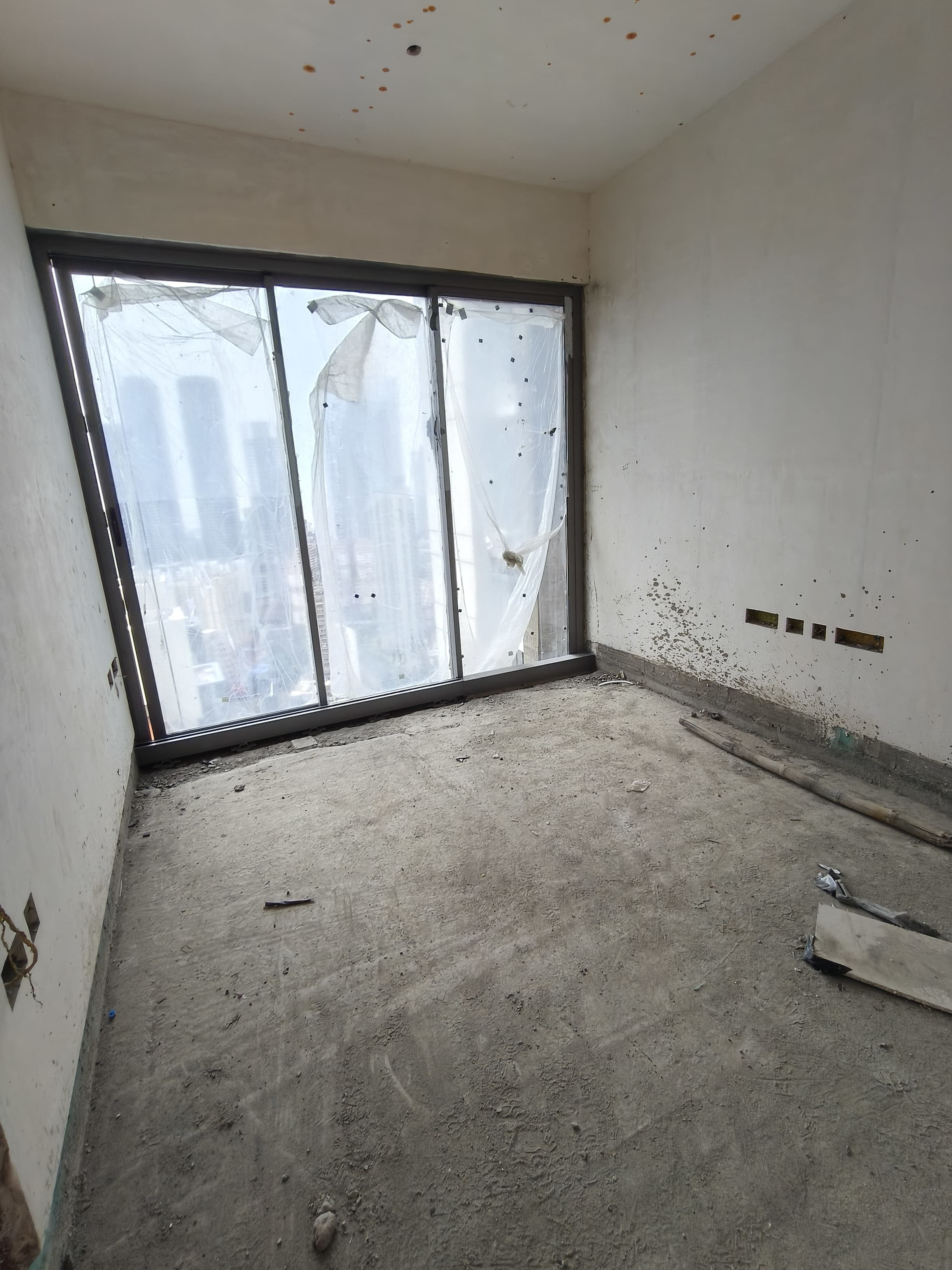
Both phases sit on the same Senapati Bapat Marg plot — the original Rustomjee land aggregation that put together what became one of Prabhadevi's largest single-developer footprints. But they are independently registered RERA projects with distinct construction sequences, distinct contractor packages, and distinct possession schedules. Phase I came online in the earlier construction wave and is now fully ready-to-move with Occupancy Certificate received. Phase II is in the partial-completion band — towers stand structurally complete, with internal finishing and amenity podium fit-out continuing.
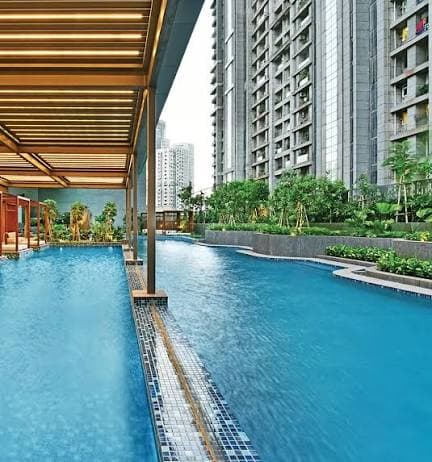
The structural difference matters because under MahaRERA, each phase is its own legal entity. A delay in Phase II does not affect Phase I owners. A society formation in Phase I happens earlier and independently. Common amenities — the central podium, club, swimming pool deck — are typically allocated by phase share, but the operating cost split can favour Phase I residents who get to use amenities first while Phase II buyers continue to pay maintenance on amenities they cannot fully access.
The PSF math by configuration
Property Butler's tracked asking-price data across both phases breaks down cleanly when split by configuration. The Phase II premium is most pronounced at the 3 BHK band — the configuration with the heaviest end-user demand — and compresses at the 4 BHK and larger formats where the buyer pool is smaller and pricing is more idiosyncratic.
| Configuration | Carpet (median) | Phase I PSF | Phase II PSF | Phase II premium |
|---|---|---|---|---|
| 3 BHK | ~1,335 sqft | ₹59,500 | ₹64,800 | +8.9% |
| 4 BHK | ~2,100 sqft | ₹68,200 | ₹72,500 | +6.3% |
| 5 BHK | ~3,045 sqft | ₹72,800 | ₹76,000 | +4.4% |
| Sea-facing units (any BHK) | varies | +18-22% vs internal | +22-28% vs internal | Phase II sea-view skew |
Phase II's sea-view premium runs higher because the Phase II tower elevations gain incremental floor count over Phase I's earliest blocks — meaning the marginal high-floor sea-view unit at Phase II clears the Phase I rooflines. That is a one-time geometric gain, but it is real and embedded in Phase II PSF.
Possession and downpayment exposure
Phase I buyers transact on a completed asset: payment is structured around registration, stamp duty (currently 6% in Maharashtra, plus 1% local body tax for Mumbai), and immediate occupancy. There is no construction-linked plan because construction is done. Phase II buyers, depending on tower and floor, may still be in a construction-linked plan with 30-40% milestone exposure to substructure and structure milestones, with the balance moving toward OC and possession.
The downpayment-exposure decision matters for two reasons. First, your home loan disbursement schedule. Banks that offer luxury home loans in this band (HDFC, SBI, LIC HFC, ICICI, Axis) prefer Phase I disbursement because it is a single-tranche transaction with clear collateral. Phase II requires construction-linked disbursement, which means tranche-wise approvals and progressively rising EMI obligations during the build. Second, your interest-during-construction (IDC) exposure. Even at 8.5% interest, an unfinished 3 BHK at ₹15-20 Cr accrues ₹10-15 lakh per quarter in interest you cannot offset against rental income because the unit isn't generating any.
Phase I — Why buyers pick it
- Ready-to-move with OC; zero construction risk
- Society formation already underway; AGM transparency
- Single-tranche home loan disbursement
- Immediate rental yield trigger from day 1
- Full visibility into actual amenities, common areas, neighbour profile
Phase II — Why buyers pick it
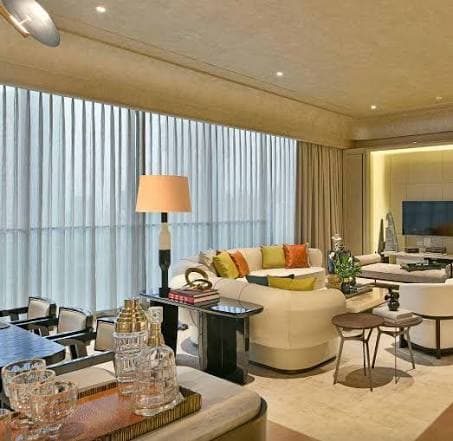
- Newer specifications: refreshed kitchen, bath, smart-home wiring
- Higher tower stand — better high-floor sea views
- Construction-linked plan eases cash flow versus full-ticket on Day 0
- Possession-curve appreciation potential as OC nears
- Fewer competing resellers in early years (smaller active count)
Tower spacing and orientation reality
The Crown compound houses multiple towers across both phases. Tower-to-tower spacing inside the compound runs 22-32 metres on the residential face — wider than typical Mumbai high-rise norms but narrower than the ultra-luxury 40m+ spacing at projects like Lodha The World Towers' premium wings. This matters because mid-floor units at Phase I can lose direct sea sightline as Phase II towers fill in completion. Phase II buyers, conversely, do not face new construction obstruction inside this compound but do face the possibility of future redevelopment on adjacent plots changing their north and east sightlines over a 10-15 year horizon.
Floor band selection therefore reads differently for each phase. Phase I buyers should target floors 28 and above for clean sea sightlines that survive Phase II's full elevation; Phase II buyers can target slightly lower floors (22+) and still get a clean sea view because they sit higher in the compound geometry. This is one of those non-obvious technical points that almost never makes it into developer brochures.
Phase II Premium On Average 3 BHK
~₹72 lakh on a ₹9 Cr ticket
For ~1,500 sqft 3 BHK at ₹61,400 vs ₹66,200 PSF
Resale velocity and liquidity comparison
Phase I has been transacting in the secondary market for several years. Property Butler tracks steady resale velocity at Phase I — sea-facing 3 BHK units typically clear within 90-120 days at asking, internal-view units take 150-200 days. Phase II's secondary market is thin because most original allottees are still in their lock-in period or holding for OC-trigger appreciation. That thinness cuts both ways: a Phase II owner who needs to exit before OC may face a sharper discount because the buyer pool is narrower and skews toward investors looking to flip. Post-OC, Phase II liquidity normalises.
For a buyer with a defined exit horizon — say, an NRI planning to repatriate proceeds in 5-7 years — Phase I's predictable resale market is the lower-friction choice. For a buyer with a 15-25 year hold horizon, Phase II's combination of newer fittings and untapped possession-trigger appreciation often outperforms. Property Butler's tracked appreciation differential between OC-imminent Prabhadevi towers and OC-completed peers in the same compound runs 4-7% additional in the 12 months around OC, a one-time event Phase I owners have already collected.
Society and amenity rights
Once both phases hit OC and full possession, common amenities are typically pooled under a single apex society or a federated structure — but until that consolidation, day-to-day governance is split. Phase I residents control their society's working capital, AGM agenda, contractor selection (housekeeping, security, fire compliance audits), and CAM rate setting. Phase II residents follow the developer-appointed managing agency until OC is achieved and the society can be formally registered.
This affects three things you should diligence before buying: (1) whether the developer-appointed agency at Phase II is overcharging on CAM relative to comparable benchmarks (Property Butler tracks ₹16-22 per sqft per month for ready luxury Prabhadevi towers; Phase II provisional CAM is typically billed at the upper end), (2) whether the deposit corpus (sinking fund, defect liability fund) is being managed transparently, and (3) what the contractual handover obligations are once Phase II society is registered.
Frequently asked questions
Are the two RERA registrations a sign of project risk?
No. Multi-phase MahaRERA registrations are standard practice when a developer launches a phased build to manage cashflow, contractor scheduling, and approval timelines. Phase I (P51900003268) and Phase II (P51900006367) are both filed by the same developer entity with audited financials. Risk diligence should focus on the Phase II construction milestone status and the developer's track record, not the existence of two filings.
Will Phase I unit values appreciate when Phase II hits OC?
Mildly yes. The phase-completion ripple effect typically pulls Phase I asking prices up by 3-5% in the 6 months around Phase II OC, because the entire compound now reads as fully complete and amenity-active. After 12-18 months the spread normalises back to the structural Phase II premium. Buyers eyeing this trade should plan a holding window of at least 2 years to clear stamp duty drag and capture the appreciation cleanly.
If I want a sea view at the lowest possible PSF, which phase?
Phase I, with floor selection at the 28th-floor band or above. Phase I sea-facing 3 BHK at ₹64-65,000 PSF beats Phase II sea-facing 3 BHK at ₹70-72,000 PSF. The trade-off is older fittings — but with a ₹50-70 lakh budget for interior re-do, Phase I plus refit comes in cheaper than Phase II original.
Can I buy across phases — say one Phase I unit for end-use and one Phase II unit for investment?
Yes, and a small number of Property Butler buyers run exactly this strategy. Two registrations means two stamp-duty events, two TDS deductions, and two separate income tax computations under sections 23 and 24 — but the diversification (one ready, one possession-trigger play) is structurally clean. Make sure your bank approves both loans concurrently if you are leveraging.
Does Phase II have refreshed sustainability or smart-home spec versus Phase I?
Yes — Phase II's specification book includes upgraded VRV air-conditioning circuits, smart-home BMS wiring at the unit level, and improved water-saving sanitaryware. Phase I residents typically retrofit these at unit level (₹15-25 lakh range for a full smart-home retrofit on a 1,500 sqft 3 BHK). For buyers who weight tech-fit specification highly, Phase II's premium can be partially justified by avoided retrofit cost.
Related Reading
→ Rustomjee Crown Prabhadevi — Full Review 2026 → Rustomjee Crown Tower-by-Tower Decoder → Prabhadevi Sea-View Premium Math — Crown Decoded → Prabhadevi Property Buying Guide 2026 → Lower Parel vs Prabhadevi PSF Gap Decoded → Prabhadevi Area GuideSee active Crown Phase I and Phase II inventory
Property Butler tracks every active Crown listing across both phases. Filter by sea view, floor band, and configuration to see what your budget actually buys today.
Search Rustomjee Crown