Quick answer
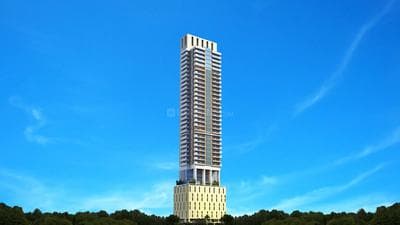
Mumbai's tallest completed building in 2026 is Lokhandwala Minerva in Mahalaxmi: 301 metres and 78 floors, India's first completed supertall.
Most floors: Piramal Aranya Arav in Byculla, 83 floors (282 m). No building in Mumbai has 100 floors or more.
Taller but not finished: Palais Royale in Worli is topped out at 320 metres (84 floors) and has been under construction since 2008. Until it receives a full occupation certificate, Minerva keeps the title.
The 25 tallest buildings in Mumbai in 2026
Ranked by architectural height. Lower Parel and Worli hold 15 of the 25, which is why the view premium on this list is a South Mumbai story. Heights are architectural heights as recorded in public skyscraper databases (CTBUH); floor counts are as marketed. "Completing" means structurally complete with handover expected in 2026.
| # | Building | Height | Floors | Locality | Year | Status |
|---|---|---|---|---|---|---|
| 1 | Lokhandwala Minerva | 301 m | 78 | Mahalaxmi | 2023 | Completed |
| 2 | Piramal Aranya Arav | 282 m | 83 | Byculla | 2022 | Completed |
| 3 | World One (Lodha) | 280 m | 76 | Lower Parel | 2020 | Completed |
| 4 | Piramal Mahalaxmi North Tower | 279 m | 78 | Mahalaxmi | 2026 | Completing |
| 5 | World View (Lodha) | 278 m | 73 | Lower Parel | 2020 | Completed |
| 6 | Wadhwa 25 South Tower A | 270 m | 65 | Prabhadevi | 2024 | Completed |
| 7 | Wadhwa 25 South Tower B | 270 m | 65 | Prabhadevi | 2026 | Completing |
| 8 | Lodha Park Adrina | 268 m | 78 | Lower Parel | 2025 | Completed |
| 9 | Lodha Park Kiara | 267 m | 78 | Lower Parel | 2022 | Completed |
| 10 | Omkar 1973 Tower A | 267 m | 73 | Worli | 2020 | Completed |
| 11 | Omkar 1973 Tower B | 267 m | 73 | Worli | 2020 | Completed |
| 12 | Lodha Allura | 266 m | 81 | Lower Parel | 2021 | Completed |
| 13 | Lodha Parkside | 266 m | 81 | Lower Parel | 2021 | Completed |
| 14 | Trump Tower Mumbai (Lodha) | 266 m | 79 | Lower Parel | 2021 | Completed |
| 15 | Lodha Marquise | 264 m | 77 | Lower Parel | 2021 | Completed |
| 16 | Nathani Heights | 262 m | 72 | Mumbai Central | 2020 | Completed |
| 17 | Three Sixty West Tower B | 260 m | 66 | Worli | 2020 | Completed |
| 18 | Rustomjee Crown Tower A | 260 m | 69 | Prabhadevi | 2023 | Completed |
| 19 | Rustomjee Crown Tower B | 260 m | 69 | Prabhadevi | 2023 | Completed |
| 20 | Rustomjee Crown Tower C | 260 m | 69 | Prabhadevi | 2026 | Completing |
| 21 | One Avighna Park | 260 m | 64 | Parel | 2017 | Completed |
| 22 | The Imperial Tower 1 | 256 m | 60 | Tardeo | 2010 | Completed |
| 23 | The Imperial Tower 2 | 256 m | 60 | Tardeo | 2010 | Completed |
| 24 | Birla Niyaara Tower 1 | 256 m | 75 | Worli | 2026 | Completing |
| 25 | Three Sixty West Tower A (Ritz-Carlton) | 256 m | 52 | Worli | 2020 | Completed |
Buildings with a link have a Property Butler review or building page with live asking prices and, where we hold stock, the units themselves.
Which building in Mumbai has the most floors?
Height and floor count are different races. Piramal Aranya Arav is 19 metres shorter than Minerva but packs 83 floors against Minerva's 78, because its floor-to-floor height is tighter. The ten highest floor counts in the city:
| # | Building | Floors | Height | Locality |
|---|---|---|---|---|
| 1 | Piramal Aranya Arav | 83 | 282 m | Byculla |
| 2 | Lodha Allura | 81 | 266 m | Lower Parel |
| 3 | Lodha Parkside | 81 | 266 m | Lower Parel |
| 4 | Trump Tower Mumbai | 79 | 266 m | Lower Parel |
| 5 | Lokhandwala Minerva | 78 | 301 m | Mahalaxmi |
| 6 | Piramal Mahalaxmi North Tower | 78 | 279 m | Mahalaxmi |
| 7 | Lodha Park Adrina | 78 | 268 m | Lower Parel |
| 8 | Lodha Park Kiara | 78 | 267 m | Lower Parel |
| 9 | Lodha Marquise | 77 | 264 m | Lower Parel |
| 10 | World One | 76 | 280 m | Lower Parel |
Searches for a "100-floor", "117-floor" or "200-floor building in Mumbai" have no real building behind them. The highest completed floor count is 83, and no tower with 90 or more floors is under construction in 2026. Palais Royale was planned at 88 floors in early filings and is listed at 84 today.
Under construction and topped out in 2026
These are the towers that could reshuffle the list. Only Palais Royale would take the title; everything else lands in the 229 to 242 metre band, below the current top 25.
| Building | Height | Floors | Locality | Status | Expected |
|---|---|---|---|---|---|
| Palais Royale | 320 m | 84 | Worli | Topped out; started 2008, cleared by the Supreme Court in 2019, partial occupation certificates only | 2026 (stated) |
| Monte South Tower 1 | 242 m | 68 | Byculla | Structurally topped out | 2026 |
| Monte South Tower 2 | 242 m | 68 | Byculla | Structurally topped out | 2026 |
| Simana Bhoomi Tower 2 | 240 m | 57 | Lalbaug | Topped out | 2025 to 2026 |
| N Rose Northern Hills Tower 1 | 229 m | 67 | Dahisar | Structurally topped out | 2026 |
| N Rose Northern Hills Tower 2 | 229 m | 67 | Dahisar | Structurally topped out | 2026 |
Want a unit high up in one of these towers? Property Butler tracks live asking prices for every building linked above; the Worli, Lower Parel, Prabhadevi and Mahalaxmi collections list what is available today, floor by floor.
How Mumbai got here
Mumbai is a city that has always wanted to go up. It sits on an island — 67 square kilometres, no room to sprawl. Every decade, the political debate is the same: should Mumbai build taller? And every decade, the city answers by building taller anyway, one regulation at a time, one developer at a time, one record at a time.
What follows is the chronological story of every building that held the title of Mumbai's tallest — from the colonial-era Rajabai Tower to Lokhandwala Minerva, the 301-metre tower that holds the title in 2026. It is also the story of how a city that restricted buildings to 4 floors for decades learned to embrace the sky.
The Height Restriction Era: 1964-1991
Before we trace the tallest buildings, you need to understand the strangest fact about Mumbai's skyline: for 27 years, the city actively prevented itself from going up.
In 1964, the Maharashtra government imposed a Floor Space Index (FSI) cap of 1.0-1.33 across most of Mumbai. In practice, this meant most buildings could not exceed 4-6 storeys. The stated reason was infrastructure — the government argued that Mumbai's water supply, sewage, and transport systems could not handle dense high-rise development.
The result was lateral sprawl (the suburbs exploded), astronomical land prices (if you can't build up, the only way to create more space is more land), and a city that, for three decades, had a skyline that looked nothing like its economic status would suggest. Singapore, Hong Kong, and Shanghai were building 40-50 storey towers in the 1980s. Mumbai was still arguing about whether 12 floors was acceptable.
The FSI restrictions were progressively loosened from the 1990s onward — DCR 58 (1991) for mill lands, increased FSI in the suburbs (2010s), the coastal regulation zone relaxations, and the fungible FSI policies. Today, Mumbai allows FSI of 3.0-5.0+ in some corridors, which is how the 70-80 storey towers became possible.
The Timeline: Mumbai's Tallest Buildings
| Era | Building | Height | Floors | Location |
|---|---|---|---|---|
| 1878 | Rajabai Clock Tower | 85m (279ft) | — | Fort, University of Mumbai |
| 1973 | Usha Kiran | ~75m (246ft) | 25 | Carmichael Road (Charles Correa) |
| 1980s | Maker Towers | ~80m (262ft) | 26 | Cuffe Parade |
| 2002-04 | The Imperial | 254m (833ft) | 60 | Tardeo (SD Corp, Shapoorji Pallonji) |
| 2019 | Palais Royale | 320m (1,050ft) | 88 | Worli (ABIL Group — incomplete/stalled) |
| 2023-25 | World One | 280m (919ft) | 76 | Worli (Lodha Group) |
| 2023 | Lokhandwala Minerva | 301m (986ft) | 78 | Mahalaxmi — India's first completed supertall |
Rajabai Clock Tower (1878) — The First Statement
Mumbai's first tall structure wasn't a home or an office. It was a clock tower, commissioned by Premchand Roychand — the cotton baron and stock broker who was one of Bombay's richest men in the 1870s. He donated the money for the tower at the University of Bombay (now University of Mumbai) in Fort, and named it after his mother Rajabai.
Designed by Sir George Gilbert Scott in the Venetian Gothic style, the tower rises 85 metres (279 feet) — taller than London's Big Ben (96 metres with Elizabeth Tower, but the clock mechanism itself sits lower). For decades, it was the tallest structure in Bombay and visible from ships entering the harbour. Its chimes, modelled on the Westminster bells, could be heard across South Bombay.
The Rajabai Tower is still standing, still beautiful, and still part of the UNESCO World Heritage precinct. It is no longer the tallest anything in Mumbai — but it remains the most elegant.
The Imperial (2002-2010) — Mumbai's First Supertall
For more than a century after Rajabai, Mumbai didn't produce a truly tall building. The FSI restrictions kept the city low. While Hong Kong and Singapore were building 40-60 storey towers through the 1970s-90s, Mumbai's tallest residential buildings were 20-odd storey towers in Cuffe Parade and Worli.
Then came The Imperial.
Developed by SD Corporation and constructed by Shapoorji Pallonji, The Imperial consists of twin towers at Tardeo — each 60 floors, 254 metres (833 feet) tall. When the first tower was completed in 2009, it was the tallest residential building in India. The second tower followed in 2010.
The Imperial was a statement of intent. It proved that Mumbai could build at the 60-floor level — that the soil (largely reclaimed land), the regulations (special permissions were obtained), and the market (apartments sold at what were then unprecedented prices of ₹30,000+ PSF) could all support supertall construction. Every major tower project that followed — Lodha Park, World One, Palais Royale — owes something to The Imperial for breaking the psychological barrier.
The Imperial effect on Tardeo
Before The Imperial, Tardeo was a middle-class residential area — old buildings, mid-range rents, unremarkable in Mumbai's property hierarchy. The towers transformed the perception of the entire micro-location. Today, Tardeo-area apartments in newer buildings command ₹35,000-55,000 PSF, roughly double what they would be without The Imperial's halo effect. The building demonstrated something important: a single landmark tower can redefine a neighbourhood's position in the city's price hierarchy.
Palais Royale (2014-ongoing) — The Cautionary Tale
Every skyline race has a cautionary tale. Mumbai's is Palais Royale.
Announced by ABIL Group (Avinash Bhosale) with plans for a 320-metre, 88-storey tower on Dr. Annie Besant Road in Worli, Palais Royale was supposed to be the tallest residential building in the world when announced. Construction began in the late 2000s, and the structure reached its full height by around 2014.
Then it stopped. The project became entangled in regulatory disputes, funding issues, and legal challenges. As of 2026, Palais Royale stands as a completed but largely unoccupied structure — a ghost tower on one of Mumbai's most expensive roads. It is a visible reminder that height alone doesn't make a successful project. Execution, funding discipline, and regulatory compliance matter as much as ambition.
World One (2020) — Breaking the 250m Barrier
Lodha Group's World One in Worli — part of the 17-acre World Towers complex — was completed in 2020 after nine years of construction. At 280 metres (919 feet) and 76 floors, it was India's tallest completed residential tower at the time. Interior design by Giorgio Armani. Apartments are priced in the ₹40,000-80,000 PSF range, with the highest floors commanding significant premiums.
Lokhandwala Minerva (2023) — The Current Champion
India's first completed supertall skyscraper (300m+), Lokhandwala Minerva in Mahalaxmi stands at 301 metres (986 feet) across 78 floors. Designed by Hafeez Contractor, built with an all-steel construction system, and IGBC Gold certified. It is, as of May 2026, Mumbai’s tallest completed building.
The building is significant not just for its height but for what it represents: Mumbai going from zero buildings above 200 metres before 2010 to 87 buildings above 200 metres by 2026. A 15-year transformation that no other city in South Asia has matched.
What's Coming Next
Mumbai's skyline is far from done. Several projects currently under construction or planned will push the city further upward:
- Lodha Ciel (Worli) — 750 feet+, targeting the Worli Sea Face skyline
- Multiple towers in the BDD Chawl redevelopment (Worli) — the massive redevelopment of colonial-era BDD chawls will add several 50-60 storey towers
- Piramal Aranya / Revanta (Byculla) — tall residential towers in the emerging central Mumbai corridor
The FSI liberalisation in Mumbai's Development Plan 2034 means that 50+ storey towers are now feasible in many parts of the city where they would have been impossible a decade ago. The skyline in 2035 will look nothing like the skyline in 2025.
The View Premium: What Height Is Worth
For property buyers, the tallest-buildings race has a very practical implication: view premiums.
| Floor range | View type | Typical premium vs ground floor |
|---|---|---|
| 1-15 | Street/neighbourhood | Base price |
| 15-30 | City skyline | +10-15% |
| 30-50 | Unobstructed city + partial sea | +20-30% |
| 50+ | Full sea view / panoramic | +30-50% |
In a city where the difference between a 25th-floor and a 55th-floor apartment in the same tower can be ₹2-3 crore, understanding the view premium is essential. The general rule: you're paying for what you can see and what can be built between you and the horizon. A 30th-floor apartment with permanent sea views (no construction possible in front) commands a justified premium. A 30th-floor apartment that currently has views but will lose them when the adjacent plot develops — less so.
Want to know what you're really paying for that view?
We help buyers evaluate floor premiums and view permanence in every Mumbai tower. Tell us which project you're looking at and we'll share the honest floor-by-floor analysis.
Talk to our advisor on WhatsApp