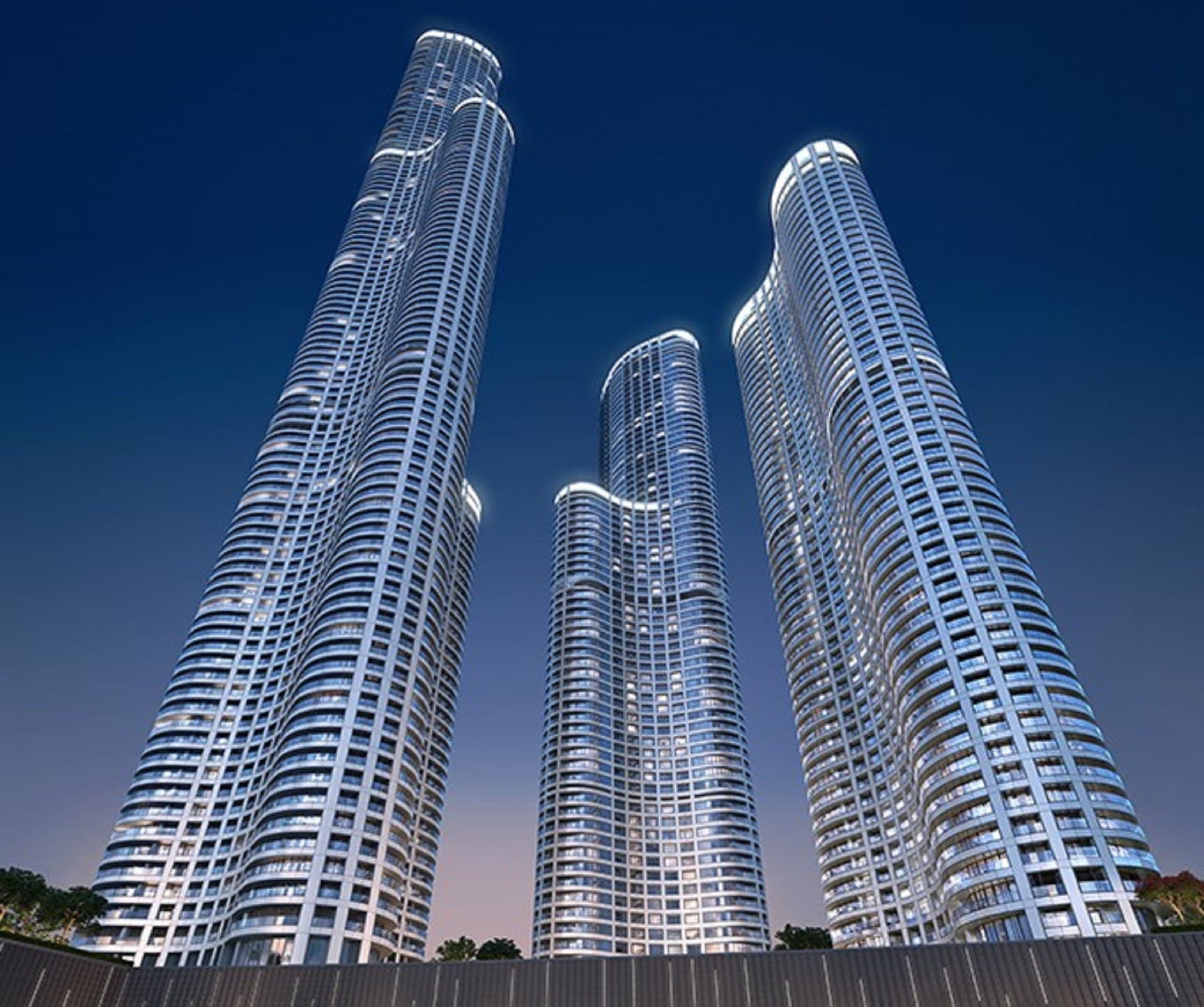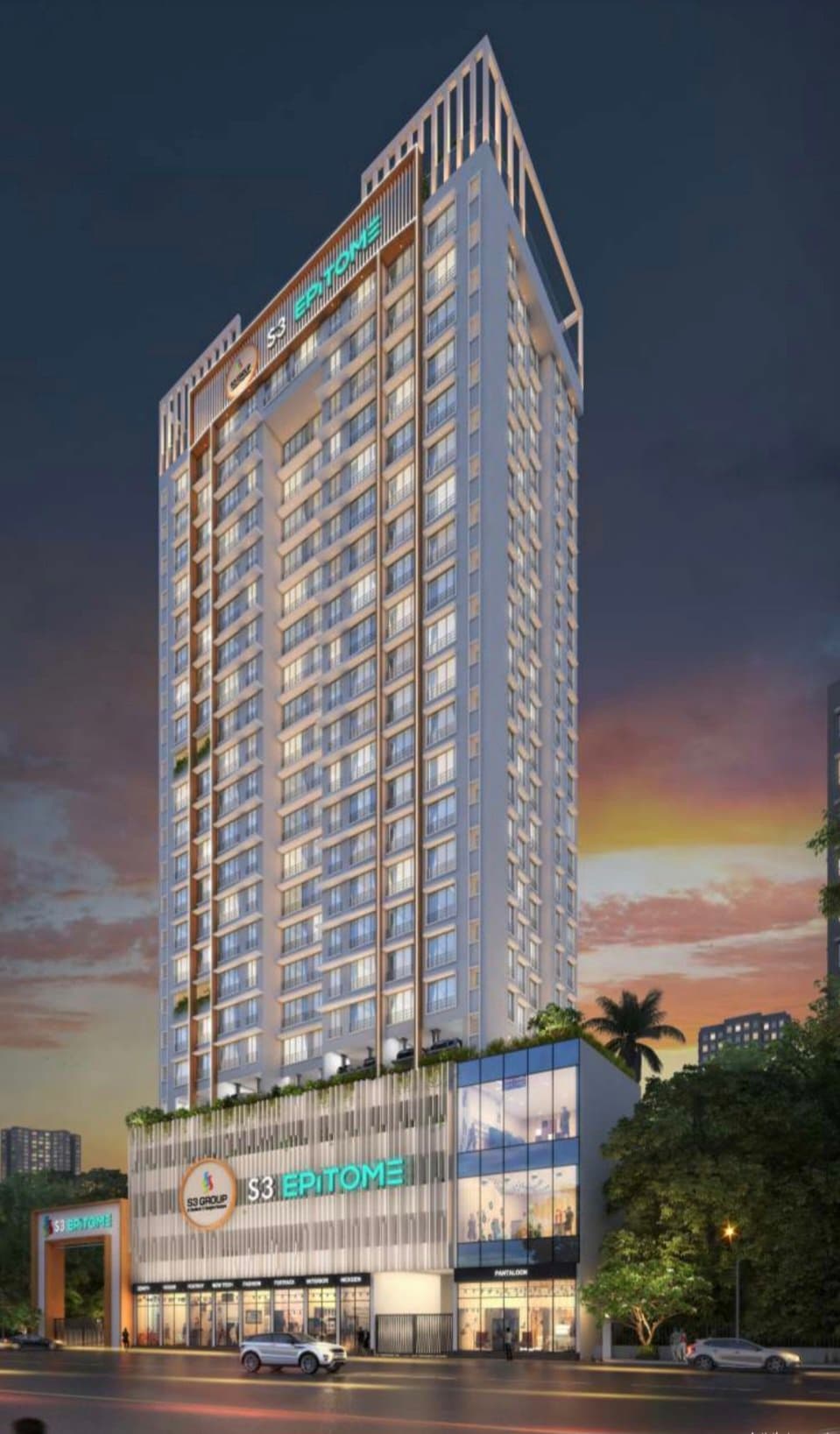
The sea view you are paying ₹18,000-30,000/sqft premium for today is only protected against future skyline obstruction if the adjacent plots have either no development potential left, or no economically viable redevelopment trajectory. Many Lower Parel and Prabhadevi buyers discover only after possession that the south-facing plot two buildings down is in early-stage cluster redevelopment — and the 65-storey tower planned for that plot will block their fifth-to-tenth-floor view band entirely. This is a recoverable risk if caught at diligence and an irreversible loss if missed. Property Butler's skyline-scan diligence walks the adjacent plots before agreement; this is the buyer's framework for doing the same.
The headline math
A 3 BHK Lower Parel apartment on floor 8 with unobstructed west-facing sea view carries roughly ₹4,500-7,200/sqft premium over an equivalent city-view 3 BHK on the same floor. If a 50-storey tower comes up on an adjacent plot within the buyer's hold horizon, the view premium evaporates and the resale comparable drops to the city-view band. On a 1,500 sqft 3 BHK, that is ₹67-108 lakh of imputed loss. The same arithmetic applies on Prabhadevi sea-facing inventory at scale.
The four sources of skyline obstruction risk
Property Butler tracks four specific obstruction trajectories for any Lower Parel-Prabhadevi shortlisted apartment. Each one has a different probability profile, a different timeline, and a different way to detect at diligence.
| Risk source | Typical timeline | Detection signal at diligence |
|---|---|---|
| Adjacent society cluster redevelopment | 5-9 years from first AGM resolution | Check adjacent society AGM minutes and MahaRERA filings |
| Slum redevelopment (SRA) on adjacent plot | 3-7 years from LOI | SRA notification listings + on-ground inspection |
| Mill-land or industrial plot conversion | 2-6 years from sanction | DCR 33(7)/33(10) sanctioned-plan database; planning portal |
| BDD chawl / government redevelopment | 8-15 years from notification | State PSU project pipeline; tender award database |
Why Lower Parel has heightened obstruction risk in 2026-2030
Lower Parel's defining feature — the mill-land conversion legacy — also creates its defining obstruction-risk profile. There are still approximately 18-24 active or near-active mill plot redevelopments in the broader Lower Parel-Worli-Mahalaxmi-Prabhadevi belt, with sanctioned development heights of 40-72 floors. Some of these are on the visible skyline today as construction; others are in pre-launch or planning stages. A buyer entering a 2018-vintage Lower Parel apartment in 2026 has a real likelihood that one or more adjacent mill plots will go into vertical construction within the buyer's first decade of ownership.
The BDD chawl cluster redevelopment is the most strategically important of these. The full BDD cluster covers roughly 90 acres across Worli, Lower Parel and Naigaon, with planned high-rise residential and commercial towers reaching 50-70 floors. Phased construction is staggered across the next 12 years. For any Lower Parel apartment within a 1.5 km line-of-sight of the BDD cluster, the skyline at year 10 will look meaningfully different from skyline at year zero.
Why Prabhadevi has a different obstruction profile
Prabhadevi is largely built out — the dominant plot mix is finished society redevelopment stock from the 2010-2024 wave. Net obstruction risk is lower than Lower Parel, but it is not zero. Two specific risks operate in Prabhadevi: first, second-generation society redevelopment of buildings that did their first redevelopment in the 1980s and are now due for a second cycle (typically replacing 12-15 storey towers with 35-45 storey towers), with multiple such cluster initiatives in early-stage discussion across Prabhadevi-Mahim-Dadar West corridor. Second, the western-facing setback band along Veer Savarkar Marg has tighter setback geometry, meaning small plots can produce tall narrow towers that block specific window-frame view bands of older neighbours.
For Rustomjee Crown specifically, the dominant view risk is south — toward older Prabhadevi society plots that have publicly-floated redevelopment proposals. Crown floors 8-25 carry meaningful south-facing view exposure; floors 30+ have clearer high-view band that is less obstructable. Property Butler's Crown-specific view-risk diligence breaks this down at floor-by-floor level.
The four-step skyline scan diligence
Step 1: identify the protected view cone
- Visit the unit during day and evening
- Map the directions and distance-to-horizon for each view window
- Note the floor-band the view sits in (key view at 25-50 ft elevation differs from 200 ft)
Step 2: list every plot within the protected cone
- Walk the surrounding 500m radius systematically
- List every plot, current built-form and visible elevation
- Identify which plots are old society stock, slum, industrial or institutional
Step 3: scan public planning records
- MahaRERA project search by plot address
- BMC sanctioned-plan database
- MMRDA / SRA project notifications
- Society AGM minutes for adjacent plots (via society office visit)
Step 4: build the worst-case skyline model
- Assume every identified plot redevelops to maximum permissible FSI
- Model the obstruction angle and floor band affected
- Compute the view-band loss for your specific floor
- Apply this to the PSF view premium to get expected impact
Negotiation tactics when obstruction risk is real
When the diligence surfaces meaningful obstruction risk, the buyer has three negotiation moves. First, ask for a price adjustment proportional to the modelled view-premium loss. A ₹6,000/sqft view premium on a 1,500 sqft unit with high-probability obstruction within 5 years is roughly ₹54-72 lakh of negotiable price (factoring in time-discounting of the loss). Sellers often resist this initially but the modelling is hard to argue against when the public-record evidence is presented.
Second, target floors above the obstruction band. If the obstruction risk is from a planned 30-storey tower, target floors 35+ on the target building — the high view band sits above the future obstruction. The PSF premium for high floors is typically ₹600-1,200/sqft but the view permanence is dramatically better.
Third, re-target the search to a different building or wing. Crown Phase I D-wing has different obstruction-risk profile than Crown Phase II — Property Butler's relationship managers regularly redirect clients within the same project to the wing with cleaner view protection.
The corollary — obstruction-protected sub-segments
The flip side of obstruction risk is the small set of Lower Parel-Prabhadevi sub-segments that are structurally obstruction-protected. These carry a premium that holds even when adjacent skylines change. Three specific segments qualify.
First, sea-facing Worli border units in Lower Parel where the protected view is over the sea itself — no plot can be developed in the protected cone. One Avighna Park west-facing, Lodha World Crest sea-facing band, and Indiabulls Sky Forest west-facing higher floors all carry this protection. Second, Prabhadevi sea-facing units on Veer Savarkar Marg where the protected view is over the Arabian Sea — same logic. Third, north-facing Mahim-creek-protected views from select Prabhadevi towers — the creek band is a permanent open space.
Frequently asked questions
How far in advance can I detect a future obstruction?
Cluster redevelopment by the society process is detectable 3-5 years before construction starts via the adjacent society's AGM resolution. Mill-land and industrial conversion is detectable 1-3 years before construction via the sanctioned-plan database. SRA is the most variable — sometimes detectable 4 years out via LOI notification, sometimes a project pops into construction within 18 months. The high-confidence detection window across all categories is roughly 18-36 months before vertical construction begins.
Does the developer protect me against future view loss in the agreement?
No. Standard agreements for sale explicitly disclaim any liability for view changes resulting from third-party plot development. Some developers include positive marketing language about views in brochures, but the legal agreement always carves out this risk. Buyers should treat the view premium as a current-state premium with future-state risk that the buyer alone bears.
If a view-blocking tower comes up, can I sue?
Almost never successfully. There is no general legal right to a view in Indian property law. The adjacent plot owner is exercising their own development rights within sanctioned approvals. Legal challenges typically succeed only on procedural grounds (unsanctioned construction, height violations, encroachment on common areas) — not on the substantive question of view loss.
How does insurance treat view loss?
Standard property insurance does not cover view loss. Title insurance does not cover view loss. There is no commercially available insurance product in India that specifically protects against neighbour-development-driven view loss. The only protection available to the buyer is pre-purchase diligence and post-purchase resale timing — sell before the obstructing construction is too advanced to ignore.
Are higher floors always safer for view permanence?
Largely yes — once you are above the typical 35-45 floor height of redevelopment cluster towers in this corridor, the obstruction risk drops substantially. Floors 45+ in Lower Parel-Prabhadevi luxury towers typically sit above the future skyline ceiling and retain view permanence. But there are exceptions — BDD-cluster towers and select mill-land permissions allow 60-72 floors, which means even floors 50+ can face partial obstruction if the adjacent tower is in this band.
Related Reading
→ Lower Parel Sea View Reality Check→ Prabhadevi Sea View Premium Math (Crown Decoded)→ Prabhadevi Tower Spacing + Light Decoder→ Parel BDD Chawl Redevelopment Property Impact→ Prabhadevi Cluster Redevelopment Buy-In Playbook→ Lower Parel Area Guide→ Prabhadevi Area GuideGet the skyline scan before you pay the view premium
Property Butler's view-permanence diligence maps every adjacent plot, redevelopment trajectory and obstruction risk for any Lower Parel or Prabhadevi unit our clients shortlist.
Search Sea-View Inventory