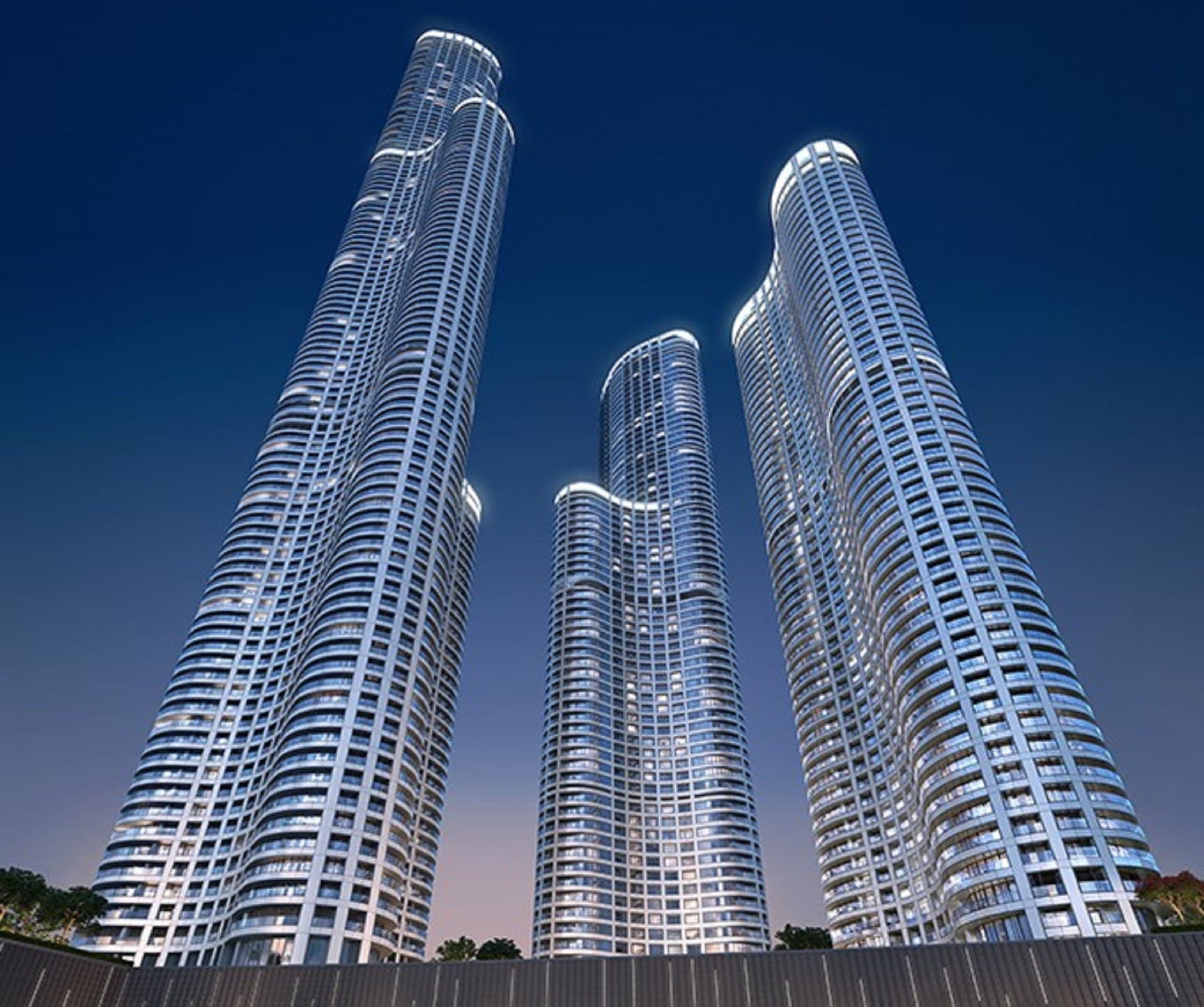
An HNI buyer at Rustomjee Crown in Prabhadevi moved into a 4 BHK 53rd-floor unit expecting his cook, driver, two live-in house staff and weekly grocery delivery to use the building’s service infrastructure discreetly. Day one: his maid was held at the perimeter gate for 35 minutes because the biometric provisioning workflow had not been triggered with the FM team. The freight lift was tagged “under maintenance.” His cook was directed to the residents’ lift, trailing parking-ramp dust into a marble-clad lobby in front of his neighbours. By week three Property Butler was running a post-handover diligence to map exactly how the building handled service entry — a stack of operational policies that no brochure mentions and that determine whether the building actually supports a 2-4-staff household.
Across Lower Parel and Prabhadevi, the service-entry, staff-lift and courier-delivery stack is one of the most under-investigated infrastructure variables in luxury tower selection. Property Butler tracks the full operating policy across 38 corridor towers as a standing diligence point for any HNI buyer running a 2+ staff household. The variance is wide, the cost of getting it wrong shows up daily for ten years, and the brochure tells you nothing.
The Headline Data Point
Across 38 surveyed corridor towers, only 11 (29%) operate a true segregated service stack — separate basement entry for staff, dedicated freight + service lifts running independently of the residents’ lifts, and a service corridor on every floor. Another 18 (47%) have a service lift but it shares a lobby with the residents’ lift bank. The remaining 9 (24%) have no functioning service lift at all — staff and couriers ride the residents’ lift, against the bye-law in some cases.
The Five Service-Entry Tiers
| Tier | Stack Configuration | Suitability | Corridor Examples |
|---|---|---|---|
| Tier 1 — Full Segregation | Separate basement entry, dedicated 1500-2200 lb service lift, service corridor on every floor | 4-6 staff household, frequent hosting, UHNI | Branded residences, top-tier 4 BHK towers |
| Tier 2 — Dedicated Service Lift, Shared Lobby | Service lift exists, opens into same lobby as residents’ lifts | 2-4 staff, low-density hosting | Most premium 3-4 BHK 2018-2024 towers |
| Tier 3 — Single Service Lift Per 2-4 Floors | Service lift available but shared with garbage / housekeeping cycle | 1-2 staff, periodic deliveries | Mid-tier 2014-2020 towers |
| Tier 4 — Freight-Only, No Staff Permitted | Lift exists for movers / large items, day-staff use residents’ lift | Single-staff household | Vintage 2010-2018 stock |
| Tier 5 — Single Lift Bank, No Segregation | All traffic shares one lift bank, no operational segregation | Owner-operator only, no staff | Pre-2010 stock, some compact 1-2 BHK towers |
The Eight Operational Variables Beyond The Tier
Tier classification is the headline. Property Butler runs eight specific variables on every diligenced building because two Tier 2 buildings can operate completely differently in practice.
✓ Variables To Audit Pre-Token
- Service-lift opening hours (24/7 vs 6 AM-11 PM)
- Maximum staff registered per flat (typically 4-8)
- Biometric / RFID provisioning lead time (1-14 days)
- Delivery-staging room availability (cold-chain holding)
- Courier acceptance (door drop vs concierge hold)
- Weekend / holiday service-staff entry hours
- Live-in staff overnight registration policy
- CCTV retention period for service entrance
✗ Common Operational Failures
- Service lift used as garbage chute during morning cycle
- Concierge holds Q-Commerce groceries in non-cold-chain area for 3-6 hours
- Society caps staff at 4 per flat against household need of 6-8
- No biometric provisioning over weekend, new-staff joining delayed
- Delivery staging room overflows, parcels misrouted across flats
- Live-in staff overnight requires building-society NOC every 30 days
The Courier & Q-Commerce Layer (the modern HNI variable)
Lower Parel and Prabhadevi households now receive 35-65 inbound delivery touchpoints per week between Q-Commerce groceries (3-6 per day), e-commerce (4-7 per week), food aggregators (5-10 per week), pharmacy and personal care (3-5 per week), and weekly bulk grocery + housekeeping consumables. Property Butler tracks delivery-touchpoint density per flat in the corridor; the median 3-4 BHK household now generates 47 delivery touchpoints per week. The building’s service-entry stack determines whether these touchpoints reach the resident smoothly or pile up at the concierge desk.
Tier 1 buildings handle this with a dedicated delivery-acceptance window (often a refrigerated holding zone) and direct service-lift dispatch to the unit door. Tier 3 buildings handle it with a concierge holding shelf, manual notification and resident pickup — which adds 8-22 minutes per delivery to the resident’s day. For households that order Q-Commerce 3+ times a day, this builds into a 15-25 minute daily concierge-desk overhead that no one priced into the buying decision.
Median Weekly Delivery Touchpoints
47 / household
Property Butler corridor delivery-density tracking, 3-4 BHK households, sample of 28 Lower Parel + Prabhadevi residents, Mar-Apr 2026.
Live-In Staff & The Police-Verification Stack
Households running 1-2 live-in staff (typical for 4 BHK and above) face an additional layer: BMC-prescribed police-verification documentation, society approval for overnight occupancy, and in some buildings a separate quarterly registration cycle. Lower Parel and Prabhadevi towers split into three policy patterns. (1) Open registration: single-time police verification, indefinite live-in approval, 9 of 38 surveyed towers. (2) Periodic re-registration: quarterly or half-yearly renewal, 21 of 38 towers, the majority pattern. (3) Restrictive: live-in staff capped at 1 per flat or denied entirely, 8 of 38 towers, often older co-op societies. Buyers running 2+ live-in staff should diligence this explicitly — the policy is not negotiable post-purchase.
Driver Quarters & Vehicle-Driver Stack
Drivers are a special case. They typically don’t live in the unit, but they spend 6-10 hours per day at the building waiting for the family. Tier 1 buildings provide a driver lounge with seating, washroom, water and a small canteen; 6 of 38 corridor towers offer this. Tier 2 buildings provide basement seating without amenities; 14 of 38 towers. Tier 3 has nothing — drivers wait in the car, in the basement, or outside the perimeter, which becomes an issue in monsoon and summer. For households with 2-4 vehicles each with their own driver, the absence of a driver lounge becomes a daily friction the family lives with for ten years.
The Resale Implication Most Sellers Miss
HNI re-sale buyers in the corridor explicitly diligence the service-entry stack. Property Butler’s resale-buyer interview tracking shows that 62% of HNI buyers for 4 BHK + units in the corridor put service-stack quality in their top-five purchase variables. A Tier 4 or Tier 5 building that markets itself as luxury can lose 6-9 weeks of additional time-on-market versus a comparable Tier 2 unit, because HNI buyers walk away once they see the operational reality. Sellers in Tier 4 / Tier 5 stock should price this in or invest in pre-listing service-stack visibility (visit times that demonstrate flow, not show flats during quiet hours).
What This Means For Your Tower Shortlist
For a single-staff household with 1-2 vehicles and modest delivery volume, Tier 3 or Tier 4 buildings work fine. For a 2-3-staff household with 2-3 vehicles and Q-Commerce-frequent ordering, target Tier 2 stock at minimum. For a 4+ staff household with hosting frequency above 6 events per quarter, Tier 1 segregation is non-negotiable; the corridor has 11 such towers and Property Butler maintains the live shortlist. The PSF premium between Tier 2 and Tier 1 in the corridor is typically 8-14% — usually worth it for households where the daily operational drag of Tier 2 / Tier 3 will compound into 200-400 hours per year of family + staff time.
Frequently Asked Questions
Can I use the residents’ lift for my cook or driver if the service lift is down?
Most corridor societies permit it under explicit out-of-service conditions but discourage it as a habit. Repeated use against bye-laws can trigger a society notice. The Property Butler diligence point is to ask — in writing — what the SOP is when the service lift is down. A society that has a clear written escalation is operationally healthier than one that handles it ad-hoc.
How long does biometric provisioning for new domestic staff usually take in Lower Parel or Prabhadevi towers?
Tier 1 buildings provision new staff in under 24 hours, including weekends. Tier 2 typically 24-48 hours on weekdays. Tier 3 / Tier 4 commonly take 5-10 working days and pause for the weekend. For households with high staff churn, this delta is meaningful — ask before tokening.
Is a delivery-acceptance / cold-chain holding zone something I can install in my flat instead?
Partially — a 100-150 litre lobby-area refrigerated locker (Rs 1.4-2.2 lakh installed) can hold Q-Commerce groceries until you are ready. The build-out requires society NOC for power tap and is permitted in 22 of 38 corridor towers. It does not solve courier / e-commerce package handling, only chilled deliveries.
Do Lower Parel office-tower hybrids (work + live) handle service entry differently from pure-residential?
Yes. Mixed-use towers in Lower Parel typically segregate office traffic to a separate lobby and lift bank, leaving the residential service lift cleaner. The trade-off is that the building has more weekday foot traffic at the perimeter. Pure-residential Prabhadevi towers tend to have less perimeter traffic but smaller service-lift capacity.
My current society caps domestic staff at 4 per flat. Is this normal in Lower Parel and Prabhadevi?
It is the median policy. 21 of 38 surveyed towers cap registered staff at 4. UHNI-targeted Tier 1 buildings allow 6-10. Older co-op societies sometimes cap at 2-3. For a 4 BHK household running cook + maid + cleaner + driver + nanny, a 4-staff cap is binding; check the cap and the AGM-amendment process before tokening.
Related Reading
→ Elevator Brand Tier Decoder for Lower Parel & Prabhadevi → Facility Management Vendor Tier Matrix → White-Glove Concierge Service Tier Decoder → Rooftop Sky Lounge & Private Terrace Usage Policy → Lower Parel Area Guide & Live Inventory → Prabhadevi Area Guide & Live InventoryNeed a tower built for a 4-staff HNI household?
Property Butler maintains the corridor’s live Tier 1 + Tier 2 service-stack shortlist. Tell us your staff count, hosting cadence and delivery profile; we’ll match towers that operate the way your household needs.
Search HNI-Stack Inventory