Three of the seven largest developers active in Lower Parel and Prabhadevi carry publicly-rated debt instruments. The yields on their non-convertible debentures (NCDs) have moved 50-220 basis points over the last 12 months. For buyers committing ₹5-25 crore to under-construction stock, that bond-market signal is the cleanest leading indicator of completion risk — and it is almost never priced into developer brochures.
Property Butler tracks 17 under-construction projects across Lower Parel and Prabhadevi as of May 2026, with cumulative committed inventory of approximately ₹4,200 crore at developer-anchor PSF. Of these, 9 are being built by developers with active credit ratings — and the dispersion between investment-grade (AA-/A+) and stressed (BB+/BB) carries direct implications for whether the buyer eventually gets keys on time, on spec, and against escrow-protected funds.
Key Insight
A 50 bps widening in a developer's 3-year NCD spread typically precedes a project delay announcement by 4-7 months. Buyers who track bond yields catch the warning before the RERA extension filing.
Why Bond Markets Beat Brochures
The brochure is a sales artifact — designed, paid for, and approved by the developer's marketing team. The credit rating is a third-party assessment by CRISIL, CARE, ICRA, or India Ratings, each of which has fiduciary obligations to bond investors and Sebi disclosure norms. When an analyst downgrades a developer from A to BBB+, the action is preceded by months of data review — covenant breaches, project-level cash flow lag, refinancing roll risk, escrow leakage.
For property buyers, three rating dimensions matter:
- Group-level rating: The holding company's overall credit. Reflects diversification across multiple projects and geographies.
- SPV-level rating: The project-specific entity that owns the LP/PD land and contracts construction. This is the entity directly between the buyer's funds and the keys. SPV ratings are often 1-2 notches below group rating because they are single-asset and harder to refinance.
- Outlook (Stable / Negative / Positive): Forward-looking commentary. A "Stable" outlook on A+ is structurally different from a "Negative" outlook on A+ — the second carries an implicit 50% probability of downgrade within 12-18 months.
The Yield Signal — Reading NCD Coupons
| NCD Yield Band | Implied Risk | Buyer Action |
|---|---|---|
| Sub-8.5% | Investment-grade, low refinancing risk | Standard under-construction comfort |
| 8.5-10% | Mid-tier, sector-typical premium | Demand RERA escrow audit + recent project completion track |
| 10-12% | Stressed, refinancing concerns | Avoid pre-launch; insist on ready-to-move or part-OC stock |
| 12%+ | Distress, possible NCLT exposure | Property Butler classifies as red-flag; revisit fundamentals |
Reading A Rating Action
A typical CRISIL release reads: "CRISIL Ratings has revised its rating on the long-term bank facilities of [Developer X] to CRISIL BBB+/Negative from CRISIL A-/Stable." The transition from A-/Stable to BBB+/Negative carries two embedded signals — a one-notch downgrade (already material) and an outlook shift from Stable to Negative (an additional 30-50% probability of further downgrade in 12-18 months).
For LP/PD buyers, this matters most for projects 18-36 months from delivery. A downgrade announced in May 2026 means refinancing capacity is constrained through 2027 — exactly the period when slab-stage construction must remain funded. The developer can still deliver, but the margin for error narrows. Buyers who lock in pre-launch pricing on a downgraded developer are taking yield-compression risk: the asset value they think they captured can erode if the project drags into RERA extensions.
Group-Level vs SPV-Level — A Critical Distinction
Several large LP/PD developers run projects through subsidiary SPVs that are legally separate from the listed parent. The parent may be A-rated and have strong liquidity, while the SPV running the specific Lower Parel project carries no rating at all — meaning lenders treat it as a single-asset, single-cycle entity with limited recourse outside the project's own cash flows.
The buyer rarely sees this structural distinction in the brochure. The brochure carries the parent's brand and historical project record. The actual sale agreement and RERA registration name the SPV. If the SPV defaults, parental recourse is contractual, not automatic — and historically, parental guarantees in Indian real estate have been litigated, not honoured at first ask.
✓ Strong Signal — Buyer Comfort
- Group AA-/Stable or higher
- SPV explicitly named in rating release
- NCD yield within 100 bps of govt 10-year
- Last 3 completed projects delivered within 6 months of RERA target
- Escrow account audited by a tier-1 chartered firm
✗ Warning Signal — Pause
- Group BBB or below with Negative outlook
- SPV unrated or rated 2+ notches below group
- NCD yield 250 bps+ above govt 10-year
- Recent RERA extension filings on prior projects
- Auditor change in last 12 months
How To Access This Data — Public Sources
Bond market data is more accessible than buyers realise:
- Rating agency websites: CRISIL (crisilratings.com), CARE (careratings.com), ICRA (icra.in), India Ratings (indiaratings.co.in). Each publishes free credit opinions, downloadable as PDFs.
- NSE/BSE corporate bond data: Listed NCDs trade publicly. Yields visible on NSE's debt market segment.
- Sebi filings: Annual reports, credit committee disclosures.
- Stock Exchange announcements: Major rating changes require Stock Exchange notification within 24 hours under Sebi LODR norms.
The LP/PD Specific Picture
Several of the most prominent towers in Lower Parel and Prabhadevi were built by developers whose credit history has shifted materially over the last 5 years. Indiabulls Real Estate, once an aggressive A-rated player, went through restructuring and emerged with a different ownership and rating profile — buyers in Indiabulls Sky Forest who entered pre-2020 had a very different risk picture than those entering today.
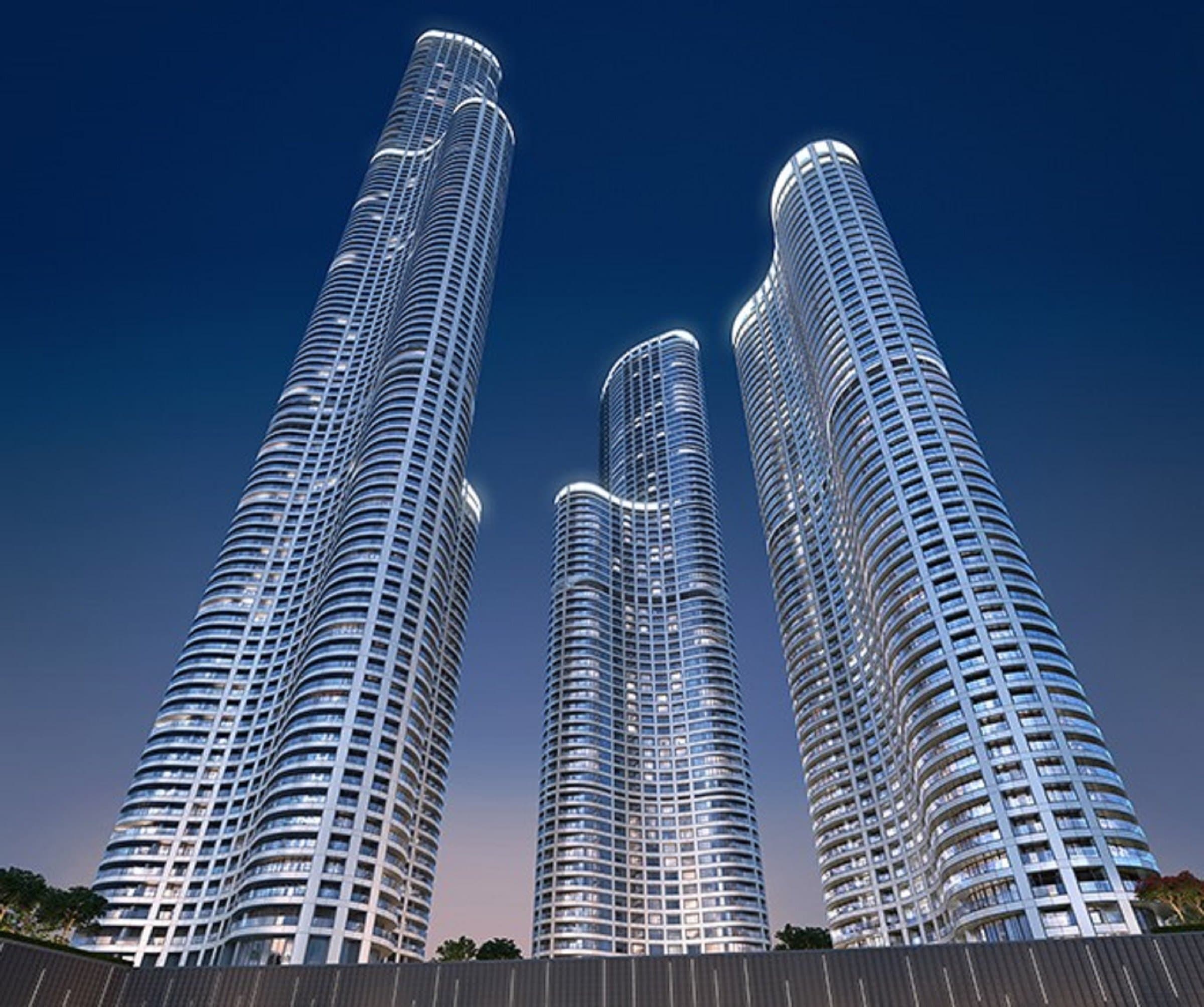
By contrast, Lodha (Macrotech Developers) has progressively improved its rating profile since its IPO listing — from BBB to A category — reflecting both debt repayment and earnings stability. Project Butler tracks Lodha's footprint across Lodha Ciel, Lodha Allura, Lodha Vista, Lodha World One, and the upcoming Lodha Grandeur in Prabhadevi. Macrotech's improving NCD spread is the cleanest positive signal in this sub-market.
Mid-tier developers — Marathon, Sumer, Sugee, Sarvesh, Aristo, Aakasa, Rohan Lifescapes, Wadhwa-Hubtown — typically carry unrated or sub-investment-grade ratings. This does not mean the projects are doomed; mid-tier rating simply means refinancing flexibility is narrower. Buyer playbook: prefer RTM stock or insist on robust RERA escrow audit.
Buyer Playbook — Three Steps Before Pre-Launch Token
- Pull the rating rationale: Search [developer name] + [rating agency] + 2025/2026 on Google. The PDFs are public.
- Check the SPV: Cross-reference the RERA registration's developer entity name with the rated entity. They are often different.
- Read the watch-list trigger: Rating outlook + "events to monitor" in the rationale tells you what could cause the next downgrade. If land monetisation or refinancing roll is the watch event, the project depends on macro conditions you cannot control.
Frequently Asked Questions
If the developer has no public credit rating, is the project automatically risky?
No, but the absence of rating means the buyer must do more diligence directly. Look at the developer's last 3 completed projects: did each receive OC on time? Did any go to RERA disputes? Mid-sized boutique developers can deliver well without ratings — but the rating layer is one fewer external check, so structural diligence (escrow audit, prior project track) must compensate.
Can RERA escrow protect me from a developer credit event?
Partially. RERA's 70% escrow norm restricts withdrawals to project-related costs and requires CA certification. But operational escrow leakage has been documented in stressed projects — and once construction halts, the buyer's funds are locked even if technically still in escrow. Rating-based pre-screening reduces the probability of ever reaching that scenario.
What is a "watch-list with negative implications"?
A formal pre-downgrade signal from the rating agency. It means a rating action (downgrade) is being actively reviewed with a probability of 50%+ within 90 days. Buyers seeing this on an under-construction project's developer should pause new commitments and wait for resolution.
How does the buyer benefit from this analysis on a ready-to-move property?
Less critical for RTM. The construction risk is already crystallised. But the developer's group-level credit still matters for warranty servicing (defect liability period), club/amenity completion if not yet handed over, and any future redevelopment of adjacent plots that may impact view or value.
Buying Under-Construction in LP/PD?
Property Butler's pre-token diligence pack includes the developer's latest rating action, SPV mapping, and last-3-project OC track. Talk to us before paying token.
Browse LP/PD Under-Construction