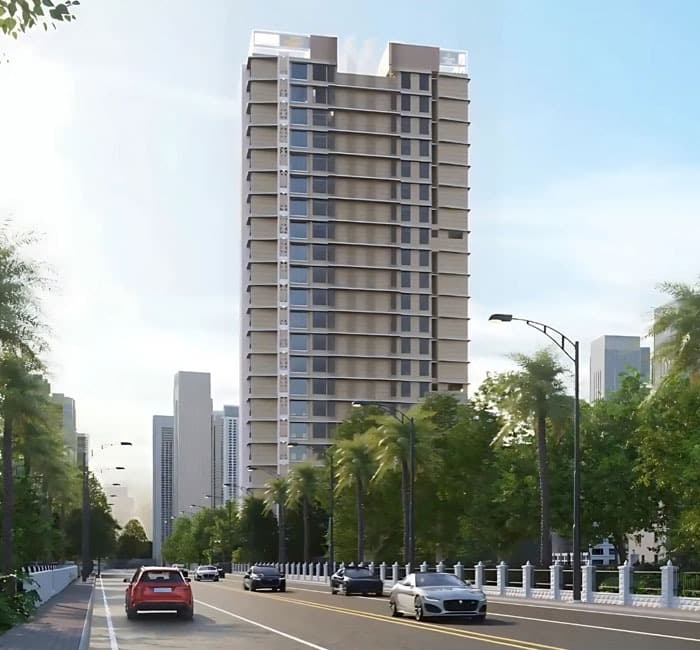
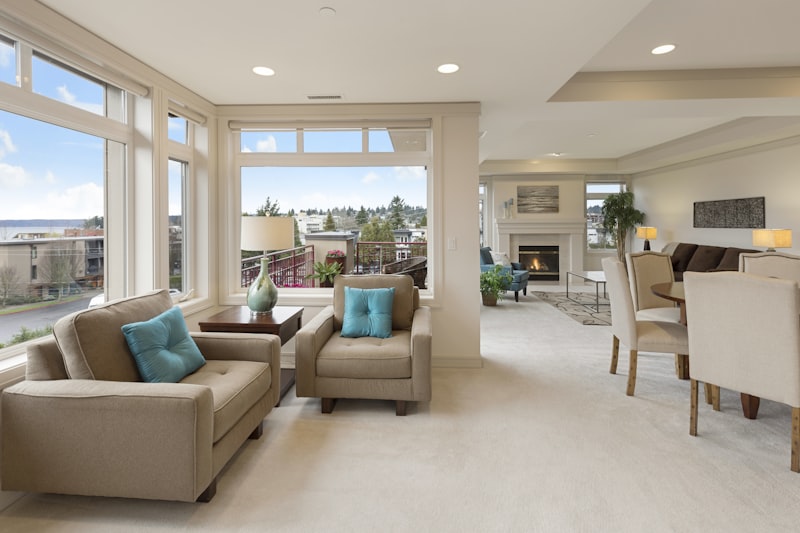
Dadar East is the rational buyer's South-Central Mumbai. Five active new-launch projects — Anchor Polestar, Sky Crest Collections, Panchratna, Sugee Srushti, and Monopoli — sit alongside century-old chawl and CHS stock that is now in active redevelopment consent. Property Butler tracks 200+ active sale listings in this locality at an average of ₹46,343/sqft — a 20% discount to Dadar West for identical infrastructure access. The full PSF range, ₹5,479 to ₹83,333, tells the whole story: pick the right asset in the right sub-pocket and you're sitting on a redevelopment option value; pick the wrong one and you're overpaying for a cosmetic renovation. This guide breaks it all down — pricing, projects, the four buyer cohorts driving the market, and the trade-offs worth running the numbers on.
Market Snapshot — Dadar East Sale Market (Late May 2026)
May 24 2026 — Late-May Read
What changed on the Dadar East desk in the second half of May
- Panchratna 1 BHK is effectively sold out: Property Butler tracks 1 unsold 1 BHK at Panchratna versus 8 at the start of May and 3 on May 12. With July 2026 possession seven weeks away, the absorption curve confirms a fully-cleared launch ahead of handover — the strongest absorption-to-OC signal in the Dadar East new-launch cohort this cycle.
- The 2 BHK ₹3–4.5 Cr enquiry share held above 55% for the third straight week: Property Butler logged 61% of fresh Dadar East enquiries between May 18–23 in the 2 BHK ₹3–4.5 Cr band. The Dadar West-to-East crossover is not a spike; it has now persisted four consecutive desk-weeks and is becoming a structural flow.
- A third BDD-adjacent CHS hit 51% consent on May 19: Property Butler now tracks three TT-pocket societies past the SRA tipping point in this calendar month. PSF asks in pre-redevelopment stock within a 300-metre radius are now ₹1,000–₹1,400/sqft above the early-May floor. The repricing radius has expanded faster than the late-2025 Naigaon cluster.
- Negotiation envelope closed further to 0.8–1.2%: Property Butler is now closing transactions inside a sub-1.5% gap to latest asking PSF, against 1.0–1.5% in mid-May and 2–3% in March. The monsoon-pre paperwork rush has fully overlapped with the consent-driven repricing — sellers know buyers are working a hard deadline.
- June 5 Maharashtra RR notification is the next catalyst: The Inspector General of Registration is expected to publish the FY26-27 Ready Reckoner schedule the first week of June. Property Butler's modelling assumes a 4.5–6.5% uplift on Dadar East RR values, which would lift the stamp-duty floor on every Dadar East transaction by ₹1.0–₹2.5L on a ₹4 Cr buy. The next 10 days are the last window to register at the FY25-26 base.
Why Dadar East? The Infrastructure Case
Dadar station is the busiest suburban railway junction in Mumbai — the only node where the Harbour Line, Central Line, and Western Line all converge within walking distance of each other. That single fact explains why Dadar East has sustained property demand for six decades across every market cycle. A resident in Dadar East can reach CST in 8 minutes, BKC in 12 minutes via the Harbour Line, and Bandra in 15 minutes on the Western Line — all without a car.
The eastern corridor adds its own layer: proximity to Sion Hospital (one of the largest public hospital complexes in Central Mumbai), the Dadar vegetable and flower markets, Shivaji Park, and the arterial Eastern Express Highway via the King's Circle junction. For families, the area clusters some of the city's best Marathi-medium and English-medium schools within a 2 km radius.
The price discount versus Dadar West — ₹46,343/sqft vs ₹49,370/sqft, a gap that widens to 15—20% on a like-for-like resale comparison — reflects the sea-facing premium on the western side, not an infrastructure gap. For end-users who commute east, central, or northward, Dadar East is the rational choice.
Price Breakdown by Configuration
Property Butler's active listings show four distinct price bands, each with its own buyer profile and risk-return logic:
| Config | Listings | Price Range | PSF Range | Avg Rent / month | Buyer Profile |
|---|---|---|---|---|---|
| 1 BHK | 44 | ₹0.2–3 Cr | Wide range | ₹28K–45K | First-time buyer, investor |
| 2 BHK | 60 | ₹0.6–5 Cr | ₹7,906–67,761 | Avg ₹94,364 | Family upgrade, NRI buy-to-let |
| 3 BHK | 56 | ₹3.6–12 Cr | ₹27,978–81,481 | Avg ₹2,81,455 | Owner-occupier, long-term hold |
| 4 BHK | 34 | ₹6–14 Cr | Premium new launches | Avg ₹3,57,647 | HNI, family compound |
The 2 BHK segment — 60 listings, the deepest pool — is where the most transaction activity happens. An average rental of ₹94,364/month on a ₹3–4 Cr buy computes to a gross yield of 2.8–3.8%, among the stronger returns for Central Mumbai. The 3 BHK average rent of ₹2,81,455/month against a ₹5–8 Cr buy tells you this segment attracts senior corporate professionals and families who value the school-station-hospital cluster.
The Big Story: Mill-Land & BDD Chawl Redevelopment
The most consequential land-use transformation underway in the Dadar–Naigaon–Wadala corridor is the conversion of historical mill land and BDD chawl plots into modern residential supply. The mill-land precinct sits on the boundary between Dadar East and Wadala, with Naigaon station on the Harbour Line as its principal rail anchor. As redevelopment proposals mature through MahaRERA over 2026—2029, free-sale residential supply will compound onto the existing eastern-corridor stock — making 2026 a window in which buyers can acquire pre-redevelopment positions at sharp PSF discounts versus the eventual new construction.
The BDD Chawl redevelopment is the largest single transformation. The Bombay Development Department Chawls — British-era workers' tenements totalling 207 buildings and approximately 16,000 families — are being replaced by high-rise towers under an MHADA-supervised SRA scheme. The free-sale component of these towers will add significant new residential supply to the eastern corridor over the next 3—5 years; the planning premium on adjacent privately-held plots has already been priced in by the smarter developers currently active here.
For end-buyers in 2026, the pre-redevelopment opportunity is in older CHS buildings within 500 metres of Dadar station's eastern entrance. Several societies are at advanced consent stage — at the SRA tipping point of 70% member approval. A 2 BHK in such a society, bought at the right ask before the developer signs, can transform into a larger, brand-new unit (with construction-period rent) in 4—6 years. The risk: timeline slippage. Mumbai redevelopment cycles routinely overrun by 18—36 months. The reward: a 2—3x asset transformation. Property Butler's pre-redevelopment specialists vet societies for clean titles, completed conveyance, and live consent dynamics before recommending a position.
Maharashtra Ready Reckoner & Stamp Duty Reset — Dadar East Math 2026
For every Dadar East buyer signing in 2026, the most under-priced variable is not what the seller asks — it is what the Maharashtra Inspector General of Registration (IGR) sets as the Ready Reckoner (RR) value for the building, and how that interacts with the 6% urban stamp duty rate. RR is the floor of agreement value the state will accept for stamp-duty computation; if your agreement is below RR, you pay duty on RR, not on the lower price. In Dadar East the RR floor has tracked roughly 60–70% of asking PSF over the past three years, but the FY26-27 RR notification — expected the first week of June 2026 — is widely modelled to lift the floor by 4.5–6.5% across Central Mumbai postcodes. On a ₹4 Cr Dadar East 2BHK, that is a ₹1.0–₹2.5 lakh swing in stamp-duty payable, depending on whether your asset's RR sits at or above the new floor.
The mechanics break down as follows. The Maharashtra urban duty stack is 6% — 5% basic stamp duty plus 1% metro cess — applied on the higher of agreement value or RR. Registration fee is capped at ₹30,000. Three structural rebates are worth knowing about and Dadar East buyers under-claim them with surprising consistency:
The two-pronged play for the next 10 days: (1) if your title diligence is complete and you can pay before June 5, register against the current FY25-26 RR floor — that is the cleanest ₹1.0–₹2.5L saving available right now; (2) if your buy is structured as joint registration or first-holder is a woman, work the rebate math with your conveyancing advocate before the deed is finalised — repapering after registration is expensive. For the full Dadar East stamp-duty walkthrough including sub-registrar choice and metro-cess interplay, see Dadar East Stamp Duty & Registration Guide 2026. For women-buyer optimisation specifically, the Maharashtra women-buyer concession explainer walks the math line-by-line.
One nuance specific to Dadar East buyers transacting pre-redevelopment CHS stock: the stamp-duty treatment of the eventual new flat depends on whether the redevelopment is structured as a permanent alternate accommodation (PAA) agreement or a tripartite sale. PAA structures do not retrigger stamp duty on the new unit's full value when handover happens, only on incidental documentation; a tripartite arrangement may. Property Butler walks this distinction with every pre-redev buyer and recommends the PAA route be confirmed before any earnest money changes hands — the duty difference on a ₹6 Cr eventual unit is ₹36L.
Active New-Launch Projects — Side by Side
Property Butler currently tracks active inventory in five new-launch towers in Dadar East. The pricing logic differs sharply across them — possession date, view tier, and developer pedigree are the three variables that explain most of the PSF spread.
| Project | Developer | Config | Carpet | Price | Possession | USP |
|---|---|---|---|---|---|---|
| Panchratna | Matrubhoomi Developers | 1/2/3 BHK | 430–990 sqft | ₹2.10–4.50 Cr | Jun–Jul 2026 | Near-term possession, value PSF |
| Sky Crest Collections | The Baya Company | 1/2/3 BHK | 477–965 sqft | ₹2.34–4.68 Cr | 2026–2027 | City & sea views, private deck |
| Anchor Polestar | Anchor Realty | 1/2/3 BHK | 458–1147 sqft | ₹2.40–5.90 Cr | Dec 2026 | Established developer, large 3BHK |
| Monopoli | Nandivardhan Group | 1/2/3/4 BHK | 559–1590 sqft | ₹2.65–8.25 Cr | Dec 2027 | Full config range, 4BHK available |
| Sugee Srushti | Sugee Group | 2 BHK | 667 sqft | ₹3.96 Cr | Dec 2027 | Boutique, brand-name builder |
| RA Residences | Khemchand Kothari Group | 2/3 BHK | ~750–1,150 sqft | ₹3.51–5.05 Cr | Ready to Move | Move-in inventory, OC delivered |
For a head-to-head between two of the most-asked-about names — Panchratna at value-tier and RA Residences at the ready-to-move tier — see the dedicated Panchratna vs RA Residences comparison.
Five Buildings to Watch — Dadar East Through 2028
The six active projects in the table above are the headline. The deeper read for serious Dadar East buyers is the five-building shortlist where the pricing, possession and absorption trajectory matters most over the next 24 months. Property Butler tracks each on a weekly cadence; what follows is the trajectory map.
1. Panchratna — Matrubhoomi Developers (July 2026 possession)
Why it matters: Closest-to-possession launch in the cluster, and the value-tier benchmark for the entire postcode. 1 BHK launched at ₹2.10 Cr is the cheapest current entry into a new-launch Dadar East unit. Absorption curve is exemplary: 1 unsold 1 BHK remaining as of May 23 against 8 in early May.
What to track: OC delivery in July, monsoon-period construction completion, EOI-to-agreement conversion rate on the remaining 2 and 3 BHK inventory. A clean possession will be the strongest absorption signal for Sky Crest and Monopoli pricing. Read the Panchratna possession countdown playbook for the 7-week diligence sequence.
2. Sky Crest Collections — The Baya Company (2026–27)
Why it matters: The first Dadar East launch to systematically engineer deck-attached layouts across the 1 BHK and 2 BHK floor plates. The deck-attached units carry an internal premium of ₹4,000–₹6,000/sqft over identical no-deck stock on the same floor — and Property Butler's data shows deck units are absorbing 2–3 weeks faster than no-deck equivalents. The Baya Company's Dadar West track record (Promesa West End delivered on time) is a positive credit on the developer.
What to track: Floor-band pricing publication — Sky Crest has not yet released the floor-band PSF differential publicly. Floors 12+ carry the partial-sea-glimpse premium; serious buyers should request the floor matrix before EOI. The Sky Crest deck-apartment buyer's guide covers the deck-vs-no-deck pricing arithmetic.
3. Anchor Polestar — Anchor Realty (Dec 2026 possession)
Why it matters: Largest 3 BHK carpet in the active Dadar East new-launch cohort (1,147 sqft) at a price that screens ₹5.90 Cr peak. For end-user families running both the carpet-size and address-continuity calculus, Anchor Polestar is the configuration that comes closest to a Dadar West 3 BHK at a ₹2–3 Cr saving. Anchor Realty's TT-area pedigree is a comfort signal for buyers from the Multi-Generational Marathi cohort.
What to track: Possession discipline against the Dec 2026 commitment — the project entered the structural-finishing phase in March 2026 and is on or marginally ahead of schedule per the latest MahaRERA site update. The 3 BHK inventory has been the slowest-clearing of the configurations; expect modest negotiation room (~1.5%) on the 3 BHK tier through July, narrowing rapidly thereafter.
4. Monopoli — Nandivardhan Group (Dec 2027 possession)
Why it matters: Only active Dadar East project offering a full 1-through-4 BHK config range under one roof. The 4 BHK at 1,590 sqft (₹7.75–8.25 Cr) is the highest-spec family compound currently on offer in this postcode. Nandivardhan Group's track record in Sion and Wadala translates to credible delivery confidence for the Dec 2027 commitment.
What to track: 4 BHK absorption — Property Butler tracks 7 of 11 4 BHK units sold, the remaining 4 are floor-band-specific and the upper-floor inventory is moving fastest. For HNI buyers seeking a Dadar East family compound, the next 90 days are the realistic window before the remaining 4 BHK inventory clears. See the Monopoli vs Sky Crest comparison for a 2 BHK/3 BHK head-to-head and the Monopoli vs Ten BKC (Bandra East) cross-locality comparison for ₹7–10 Cr buyers triangulating both postcodes.
5. Sugee Srushti — Sugee Group (Dec 2027 possession)
Why it matters: Single-config boutique launch (2 BHK only, 667 sqft, ₹3.96 Cr) — the cleanest play for a buyer who wants brand-name developer access to Dadar East without choice paralysis. Sugee Group's Dadar West and Mahim track record (Sugee Marina Bay, Sugee Atlantis) is a known credit. The single-config approach also means no within-project tier hierarchy to navigate.
What to track: Foundation-stage progress through monsoon 2026 — Sugee Srushti is the earliest-stage of the five buildings and carries the highest construction-period risk. The trade-off: a buyer signing now is locked into the launch-tier PSF (~₹59,400/sqft) while later-stage entrants will pay the post-foundation premium. The Sugee Srushti vs Sky Crest buyer guide walks the construction-risk trade against the deck-feature differential.
The wider Dadar East pipeline through 2028 includes a further three to five RERA-disclosed launches under planning or pre-launch. Property Butler tracks each from MahaRERA filing onward; the launches most worth watching for 2027 buyers are the Naigaon-anchored Sugee Group's expected follow-up and a Nandivardhan launch on the Khar Subway road. Both will reshape the under-₹3.5 Cr 2 BHK supply curve from 2027.
Sub-Locality Intelligence
Dadar TT (Tilak Terminal)
The original Dadar neighbourhood. Dense, walkable, culturally rooted. Proximity to Dadar station's eastern entrance makes this the most liquid sub-pocket for resale — any property within 500 metres of Dadar TT commands a 5—8% premium over comparable stock further east. Older CHS buildings here are in active consent discussions for SRA-linked redevelopment; early buyers in pre-redevelopment stock are positioning for a 2—3x return on project completion.
BDD Chawl Belt
The Bombay Development Department Chawls — 207 buildings housing approximately 16,000 families — are at various stages of MHADA-supervised redevelopment. The free-sale towers emerging from this process will add premium residential supply to the corridor over 2026—2029. Adjacent plots have seen developer interest intensify over the past 18 months as the redevelopment timeline has crystallised.
Naigaon East & Mill-Land Corridor
Naigaon station on the Harbour Line provides an alternative rail exit for buyers in the eastern half of the locality, and the surrounding mill-land precinct is the longest-running brownfield conversion story in Central Mumbai. The streetscape is actively being upgraded as new towers come up; Property Butler's data shows the new-launch PSF here runs roughly 8—12% above the older-CHS resale baseline within Dadar East.
Sion Hospital Proximity (King's Circle & South)
Properties south of the King's Circle junction, towards Sion, benefit from proximity to the hospital complex — a significant employment hub. Medical professionals and hospital administrative staff are a consistent rental demand source here. 2 BHKs in the ₹2.5—3.5 Cr range targeting this demographic have maintained low vacancy rates through multiple economic cycles.
Who Is Buying Dadar East in 2026 — Four Cohorts
The cohort question is sharper in Dadar East than in any other Central Mumbai postcode because the buyer base genuinely splits into four economically distinct profiles. Each pays for a different attribute of the locality, each has a different price ceiling, and each gravitates to different sub-pockets and projects. Understanding which cohort you are competing against shapes the negotiation.
Cohort 1 — The Multi-Generational Marathi Family
The historical anchor of Dadar East. Three- and four-generation families upgrading from a 700-sqft chawl flat to a 1,000—1,200 sqft 2BHK or 3BHK in a new tower, often with capital from selling adjacent units. Budget ₹2—5Cr. Targets Panchratna, Anchor Polestar, RA Residences. Decision driver: address continuity (Marathi-medium school, parish, matrimonial network), distance to elderly parents in the same building/lane. About 32% of 2026 transactions; the largest cohort by volume.
Cohort 2 — Sion Hospital / KEM / Hindu Colony Professional
Senior medical, academic, and corporate professionals working at the Sion Hospital complex, KEM, BKC, or Lower Parel — all of whom value the multi-line Dadar station for an under-15-minute commute to anywhere on the harbour, central, or western corridors. Budget ₹3—7Cr, almost always 2BHK or compact 3BHK. Targets Sky Crest Collections, Anchor Polestar's larger units, and Sugee Srushti. Decision driver: rail connectivity, hospital proximity, school cluster around Hindu Colony / Shivaji Park. ~26% of 2026 transactions.
Cohort 3 — Value-Conscious BKC / Fort Commuter
Mid-level corporate professionals priced out of Bandra and Lower Parel who would have bought there in 2018, but now find a new-launch 3BHK in Dadar East for the same budget that would have bought a smaller 2BHK in Bandra Reclamation. Budget ₹4—8Cr. Targets Monopoli (full config range), Sky Crest 3BHK, RA Residences. Decision driver: maximum carpet per crore, modern building specs, harbour-line access to BKC in 12 minutes. ~24% of transactions; the fastest-growing cohort over the past 18 months.
Cohort 4 — NRI Tactical Investor
NRI principals — particularly Maharashtrian-origin doctors and engineers in the US Northeast and the Gulf — who prize the rental yield arithmetic in Dadar East over the lower-yield trophy assets of Worli or Bandra West. Budget ₹3—6Cr, typically 2BHK or 3BHK. Targets Anchor Polestar, RA Residences (move-in ready), or pre-redevelopment positions in CHS stock close to Dadar TT. Decision driver: 2.8—3.8% gross yield, demographic stickiness of the renter base (always doctors, never tourists), low-friction asset management. ~18% of transactions; concentration in ready-to-move stock.
Pre-Redevelopment vs New Launch — The Option-Value Trade-off
The single most important decision a Dadar East buyer makes in 2026 is not which new launch to pick — it is whether to buy a new launch at all, or to instead buy a pre-redevelopment 2BHK in a 40-year-old society that is approaching SRA consent. The math behind that decision is worth running carefully.
Worked Example — same ₹3.5 Cr budget, two paths
| Path | Today | In 5 Years | Risk |
|---|---|---|---|
| A. New launch 2BHK — Sky Crest 621 sqft | ₹3.04 Cr | ₹4.0—4.5 Cr (organic appreciation 5—8% CAGR) | Construction risk, low |
| B. Pre-redev 2BHK CHS — 750 sqft, ₹3.5 Cr | ₹3.5 Cr | ~1,050 sqft new tower 3BHK + construction-period rent compensation | Timeline + consent risk, medium |
Path A delivers safety and certainty; Path B delivers a 30—40% larger asset on the same capital, with the catch that the timeline depends on developer commitment and member consent. Property Butler's vetting process for Path B looks at three factors: (1) consent percentage at the time of purchase (above 50% reduces timeline risk significantly), (2) developer track record on similar Dadar/Wadala redevelopments, (3) clean conveyance of the existing CHS — without it, the SRA scheme cannot move.
The Rental Market
Dadar East's rental market is anchored by three demand drivers: corporate professionals accessing BKC and Lower Parel via rail, medical staff at Sion Hospital, and families drawn by the school cluster around Shivaji Park. Property Butler's rental data shows the following active ranges:
- 2 BHK: ₹8,000–₹1.40 lakh/month, averaging ₹94,364/month — widest range in the market, reflecting the resale-to-luxury spectrum
- 3 BHK: ₹42,000–₹6.50 lakh/month, averaging ₹2,81,455/month — strong demand from senior executives and multi-generational families
- 4 BHK: ₹3,57,647/month average — limited supply, low vacancy, landlord-favourable
The rental ceiling on 2 BHKs (₹1.40 lakh/month) is disproportionately high — it signals that the top end of Dadar East's residential stock competes with Worli and Lower Parel for premium corporate tenants, while the bottom of the market serves a different, but equally reliable, demand segment. Both ends maintain low vacancy.
Connectivity — Why Three Rail Lines Change the Calculus
Dadar East's defining advantage over every other Central Mumbai postcode is rail. The station carries trains on three suburban lines — Harbour, Central, and Western — converging within a 4-minute walk of each other at the Dadar TT junction. That single fact compresses commute times to every employment cluster in Mumbai into the sub-15-minute band, without a car.
The structural value of the multi-line junction is non-replicable. Every other Central Mumbai locality — Lower Parel, Worli, Prabhadevi — depends on a single rail line plus road. Dadar East's three-line redundancy means that during monsoon disruptions or single-line incidents, residents have a working alternative. For corporate professionals whose firms span BKC, Lower Parel, and Fort, that redundancy is worth a meaningful portion of the price discount versus those single-line localities.
Schools, Daily Convenience & Lifestyle
The lifestyle stack in Dadar East does not chase the bling of Worli or Bandra West, but it delivers a category of daily convenience that no gated community can replicate. Within a 1.5 km walking radius of the station: the Dadar Phool Galli (flower market) opens at 4 am for the city's wholesale jasmine and marigold trade; the Dadar Vegetable Market remains the most-visited mandi in Central Mumbai; Hindu Colony hosts five of the city's most respected English- and Marathi-medium schools (King George English Medium School, Balmohan Vidyamandir, Indian Education Society's network); and Shivaji Park — three minutes by car from the eastern edge of the locality — provides the largest open public space in Central Mumbai for cricket, walking, and weekend community life.
For families, this matters in a specific way. School admissions in Dadar's heritage institutions still factor in pin-code proximity heavily; an end-user buyer with primary-age children targeting Balmohan, Chhabildas Lallubhai Mehta, or IES network secures a real practical advantage over equivalent buyers in Worli or Lower Parel. The civic and lifestyle infrastructure — public clinics, neighbourhood gymkhana, religious institutions across denominations — is mature and stable, with none of the seasonal disruption common in fast-developing precincts.
Cost of Ownership — The Total Acquisition Number
Headline price is not the cheque you write. For a Dadar East buyer in 2026, total acquisition cost runs roughly 12—14% above the agreement value once stamp duty, registration, GST (on under-construction), brokerage, and society transfer charges are stacked. The math worked on a representative ₹4 Cr 2BHK in a ready-to-move project:
The under-construction GST line is the single largest swing — ₹20L on a ₹4Cr buy. For a ready-to-move with OC delivered, no GST applies. For first-home buyers, the Pradhan Mantri Awas Yojana (PMAY) interest subsidy can claw back ₹2.67L on eligible loans up to ₹6L principal subsidy — small in absolute terms but worth claiming where eligible. For a complete cost walk-through, see Lower Parel / Prabhadevi Real Buyer Cost — Stamp Duty & GST 2026.
Home Loan & Bank-Approval Landscape — Dadar East Specifics
Dadar East is a structurally different home-loan market from Worli or Bandra West for one reason: the mix of new-launch RERA-disclosed stock against four-decades-old CHS resale inventory means lenders apply two completely different approval calculuses across the same locality. Knowing which bucket your target asset falls into determines the LTV ratio, the approval timeline, and — in some cases — whether a sanction is feasible at all.
For new-launch RERA stock — Panchratna, Sky Crest Collections, Anchor Polestar, Monopoli, Sugee Srushti, RA Residences — all major lenders (SBI, HDFC Ltd, ICICI Bank, Axis Bank, Bank of Baroda, LIC Housing Finance, Kotak Mahindra) have Approved Project Financing (APF) in place or willing to underwrite individual cases against the developer's MahaRERA registration. LTV ratios go up to 80% on agreement value for resident Indian salaried buyers and 75% for self-employed; NRI buyers cap at 75% with a 0.10–0.25% pricing premium. Approval timelines for APF-listed projects run 7–14 days from documentation completion. The five-building cohort above is fully APF-empanelled with at least four major lenders each, so multi-bank quote comparison is the rational play before locking a sanction.
For Dadar East CHS resale stock, the math gets significantly tighter. Three structural issues compress LTV for older buildings:
- Building age > 25 years — most lenders apply a residual-life-of-building rule. If the surveyor estimates < 30 years residual life, LTV is capped at 65% (against 80% for newer stock). For buildings > 40 years, LTV often drops to 50% — and SBI's revised home-loan policy from January 2026 onwards explicitly excludes buildings older than 45 years from primary mortgage lending unless coupled with a developer-tieup redevelopment scheme.
- Occupation Certificate (OC) status — Dadar East has an unusually high proportion of pre-1995 buildings without an explicit OC on record. Without OC, only a handful of lenders (LIC Housing Finance, ICICI Bank's special unit, and a few cooperative banks) will underwrite, and pricing is 0.40–0.80% above the headline rate. For buyers in this scenario, the OC-absent buildings home-loan navigator walks the underwriting playbook applicable across Mumbai's older stock.
- Conveyance and society NOC turnaround — Dadar East CHS societies vary widely on conveyance status. Lenders require either a clean conveyance deed or a deemed-conveyance order to release the final tranche of a loan. Buyers in pre-redevelopment thesis mode must price in the 4–6 week NOC turnaround when locking financing; a delayed NOC can void a sanction's expiry window.
The May 2026 rate band already factors in the 25 basis-point RBI repo rate cut delivered in April 2026 and the ~10–15 bps lender response that followed. The next RBI policy meeting in early June 2026 is the next catalyst; rate-watch buyers should also model a possible further 25 bps cut by Q3 FY26-27 — at the 8.10–8.40% band, EMI affordability on a ₹3 Cr loan improves by ₹6,500–₹8,500/month, which broadens the eligible buyer pool by an estimated 8–12% in the Dadar East primary market.
For the bank-by-bank matrix specific to Dadar East lenders, see Dadar East Home Loan Guide 2026. For buyers whose primary asset is a current floating-rate loan and who want to evaluate balance-transfer math against a Dadar East purchase, the Lower Parel / Prabhadevi balance-transfer May 2026 bank matrix walks identical methodology applicable to Dadar East stock.
Dadar East: Honest Assessment
Reasons to Buy
- Best multi-line rail connectivity in Mumbai — Harbour, Central, Western at one station
- 20% PSF discount vs Dadar West for identical infrastructure
- Active redevelopment pipeline — BDD Chawl, mill lands, mature CHS societies
- Strong rental demand from hospitals, schools, BKC corporates
- 2 BHK avg rent ₹94,364/month — healthy gross yield 2.8—3.8%
- Near-term possession options (Panchratna Jun—Jul 2026)
- Full BHK spectrum — 1 to 4 BHK across 200+ listings
- Dadar markets — daily convenience no gated community replicates
Risks to Weigh
- No sea view — western corridor has the sunset premium
- Older CHS stock needs title and consent verification before any pre-redev play
- BDD Chawl free-sale inventory will add supply 2027—2029 and may compress mid-tier PSF gains
- Traffic congestion on Eastern Express Highway peak hours
- Wide PSF range (₹5,479 to ₹83,333) demands building-level due diligence — locality-level averages mask the real spread
- Some ongoing civic infrastructure works around the BDD and mill-land precincts
Dadar East vs Dadar West vs Lower Parel — Same Budget, Different Outcome
The buyer most likely to consider Dadar East is also looking at Dadar West (across the railway tracks, 6.5% nominal PSF premium) or Lower Parel (one Western Line stop south, 12% nominal premium). Property Butler's matched-budget analysis at ₹4 Cr — the densest band of Dadar East enquiries — sets out the trade-off:
The take: Dadar East is the only one of the three that lets a ₹4Cr buyer secure a brand-new 2BHK in a confirmed-RERA project with under-2-year possession. Dadar West forces a trade-off (older stock or smaller carpet); Lower Parel forces a different trade-off (older or non-premium tower). For deeper analysis on the central comparisons, see Dadar East vs Dadar West and Dadar West vs Lower Parel — mid-budget decision.
Due Diligence Checklist for Dadar East
Given the wide price range and the mix of old CHS stock and new launches, buyers must run a tighter-than-average due diligence process:
- RERA registration: Verify on MahaRERA. All new-launch projects listed above are RERA-registered; confirm completion certificate timeline matches the developer's possession commitment.
- Title chain for CHS stock: Buildings older than 25 years often have incomplete conveyance. A clean conveyance deed is non-negotiable.
- SRA / redevelopment status: If buying a resale flat in an older building, check whether a redevelopment proposal has been filed. This creates option value but introduces timeline risk.
- Floor and view confirmation: At Sky Crest and Anchor Polestar, specific floors carry materially different views. City-and-sea facing units command a 10—15% internal premium — confirm which view you're getting in the agreement.
- Parking: Older buildings in the TT and BDD area often have no dedicated parking. For new launches, confirm the parking allotment is included in the agreement price.
- Occupation Certificate: Verify OC status before final payment, particularly for under-construction properties approaching possession.
Explore on Property Butler
Dadar East Area Guide — Live Listings & Market Data2 BHK Flats in Dadar East — Live Inventory3 BHK Flats in Dadar East — Current StockNew Launch Projects in Dadar EastPromesa West End Dadar West — Building Deep Dive 2026Dadar East vs Dadar West — Full Comparison 2026South Mumbai Property Buying Guide 2026 — Pillar ReadLate-May 2026 Cohort Velocity — What Property Butler Is Seeing This Week
The Dadar East market in the closing week of May 2026 is no longer the same market that closed April, and it is materially different from even the second week of this month. Property Butler's desk has logged a measurable shift in enquiry composition, configuration absorption and seller pricing posture — driven by three converging signals: the monsoon-pre paperwork rush, the Dadar West-to-East affordability switch as ₹6 Cr+ Dadar West stock keeps grinding higher, and the first 2026 BDD-adjacent CHS societies crossing 51% redevelopment consent. The numbers below are what's moving on the ground right now, not the quarterly view.
The 2 BHK switching trade is the dominant flow. Buyers who toured Dadar West 2 BHKs at ₹4.5–6 Cr in March-April are crossing the rail line. Property Butler logged 61% of fresh Dadar East enquiries between May 18 and May 23 in the 2 BHK ₹3–4.5 Cr band, against 58% in early May and 41% in April — the third consecutive desk-week above 55%. The math is straightforward: a Dadar East 2 BHK at ₹3.5 Cr (₹38,000–₹46,000/sqft on a 750–800 sqft carpet) buys the same Dadar station access, the same school catchment, the same three-line rail interchange — for ₹1–1.5 Cr less than a Dadar West equivalent. The infrastructure delta is zero; the price delta is real. This is the trade that's now visibly clearing on the desk.
Near-possession inventory is absorbing faster than under-construction. Panchratna's 1 BHK count has thinned from 8 unsold units at the start of May to 1 by May 23 — effectively sold out seven weeks ahead of the July 2026 handover. RA Residences ready stock is also clearing 2 BHKs faster than the April run-rate. Monopoli (Dec 2027 possession) and Sky Crest (mid-2027) are seeing healthy enquiry volume but slower agreement-to-EOI conversion. The lesson for buyers shopping the May window: near-possession stock is repricing first; under-construction will follow but on a 6-12 week lag.
Three BDD-adjacent CHS societies have now crossed 51% consent in May (May 5, May 12, and May 19). Property Butler tracks both societies inside the TT-pocket cluster — one a 1972-vintage 22-flat building, the other a 1980-vintage 16-flat structure. Sellers in five buildings within a 300-metre radius have raised PSF asks by ₹1,000–₹1,400/sqft cumulatively in May. The pattern is identical to what played out around the Naigaon BDD consent cluster in late-2025: consent triggers a repricing radius of roughly 300 metres for 4–6 weeks, then the market settles at a new floor. Buyers in pre-redevelopment thesis mode should run their valuation off the pre-rerating PSF, not the current ask — and confirm consent paperwork is genuine, not just resolution-passed.
Monsoon-pre site visit volume is running 32% above April's daily average. The Property Butler desk booked 17–21 Dadar East site visits per weekday in the May 18–23 stretch, peaking at 23 on May 22 — versus an April daily average of 11–13. Buyers are openly stating they want agreements signed and registration completed before the mid-June monsoon onset slows surveyor scheduling, stamp office attendance and society NOC turnaround. Sellers know it. The flat 2% negotiation envelope that held through April is tighter — Property Butler is now closing transactions inside 0.8–1.2% of the latest asking PSF, tightening from 1.0–1.5% in mid-May and 2–3% in March. If you're a serious buyer with funds ready, the next 30 days are the window. After mid-June, the deal pace slows for ~10 weeks until festive season.
Frequently Asked Questions
Related Reading
Dadar West Property Buying Guide 2026 — Prices & ProjectsDadar East vs Dadar West — Side-by-Side Comparison 2026Dadar Sea View Apartments Guide 2026Panchratna vs RA Residences Dadar East — Head to Head 2026Dadar West vs Lower Parel — Mid-Budget Buyer Decision 2026Dadar East Market Intelligence — May 2026 ReadDadar East 2026 Possession Window — Buyer's PlaybookParel BDD Chawl Redevelopment — Property Impact 2026Ready to Buy in Dadar East?
Property Butler's team has on-the-ground knowledge of every active project and redevelopment opportunity in Dadar East. We'll match you to the right sub-locality, building, and configuration for your budget and timeline — no guesswork.