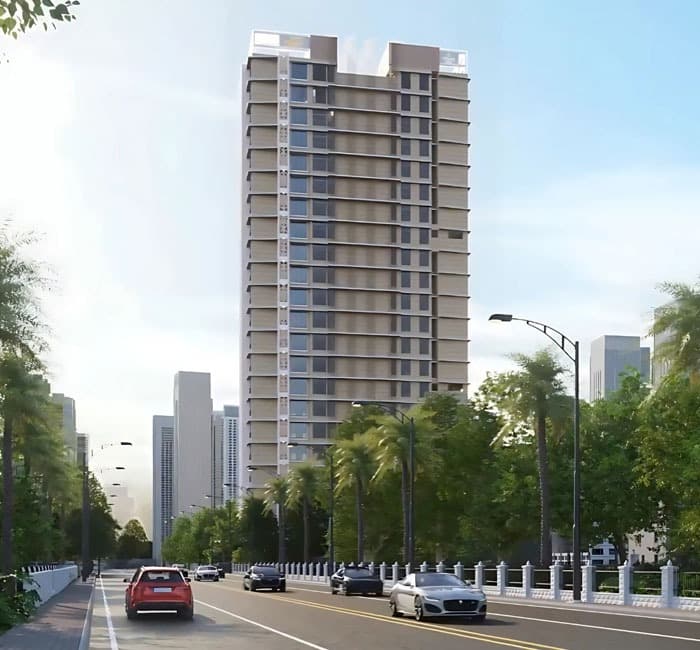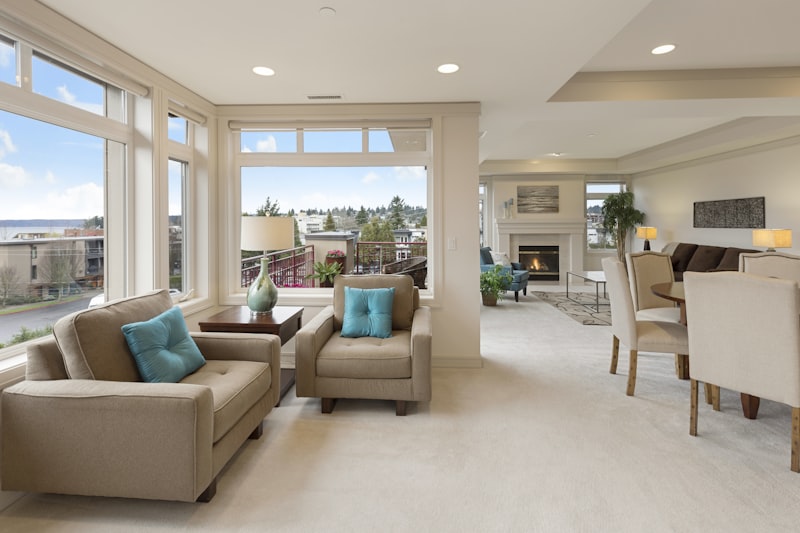
Between 2016 and 2026, a buyer who paid ₹1.5 Crore for a 1 BHK in Dadar East is now sitting on an asset worth ₹2.1–2.4 Crore. That's a 40–60% gain in a mid-market locality that most institutional capital ignored for much of that decade. Property Butler tracks Dadar East closely because it's one of the most structurally sound mid-budget corridors in Central Mumbai. Here's the ten-year story.
Decade at a Glance
Dadar East asking PSF: ₹17,000–21,000/sqft (2016) to ₹46,000–59,000/sqft (2026). Implied CAGR: 9.5–11%. A ₹1.5 Cr investment at 2016 prices is worth approximately ₹3.8–4.1 Cr at today's asking levels — if held in a new-build project with good specifications.
Where Dadar East Started in 2016
In 2016, Dadar East was the poorer cousin of Dadar West. Dominant inventory was decade-old resale stock in societies built through the 1980s and 1990s — smaller plots, basic amenities, no clubhouse. New launches were sparse and priced at ₹17,000–21,000/sqft, well below Dadar West's commanding ₹25,000–32,000/sqft at the time.
The core buyer in 2016 was the Central Railway commuter — teachers, government employees, and small business owners who valued the Dadar TT junction for its unmatched connectivity to CSMT and Thane. These buyers weren't chasing appreciation; they were buying practicality. That pragmatic demand kept prices stable but not exciting.
Three structural shifts were already beginning that 2016-era buyers didn't fully price in: the coming demolition of BDD Chawls and Dharavi structures that would reshape Central Mumbai's geography; a new generation of quality developers — Sugee Group, The Baya Company, Matrubhoomi — pioneering premium new-builds in Dadar East; and the Mumbai Metro network, which would eventually make Dadar East a multi-modal hub connecting both railway lines and the BKC corridor via Monorail.
The 2018–2021 Developer Upgrade Cycle
Between 2018 and 2021, Dadar East saw its first wave of premium new-build launches — projects that deliberately differentiated from existing society resale. Asking prices for new launches climbed to ₹26,000–34,000/sqft. This was the critical inflection point: buyers were paying a premium for RERA registration, OC-obtained delivery, and modern amenities that simply didn't exist in the area before.
The COVID-19 period caused an 8–12% correction in asking prices across Mumbai. However, Dadar East's correction was shallower than overbuilt peripheral corridors — because the locality had a genuine end-user base, not speculative inventory. By late 2021, prices had recovered and were setting new highs.
The 2022–2024 Breakout: PSF Crosses ₹40,000
Three simultaneous developments drove the re-rating: ultra-high floor launches reset benchmarks (The Baya Company's Sky Crest Collections with 25+ floor units pushing PSF to ₹46,000–50,000/sqft); the Dharavi Redevelopment gained credibility once Adani Group was confirmed as the redevelopment partner for 259 acres, permanently shifting Central Mumbai land value narratives; and post-pandemic luxury upgrade demand found Dadar East offering near-luxury specifications at 40–50% discounts to Bandra West and Worli.
Dadar East in 2026: The Active Market
Property Butler currently tracks active inventory at asking prices ranging from ₹46,000 to ₹59,000/sqft, depending on floor height, view, and specification.
| Project | Config | Price | PSF | Possession |
|---|---|---|---|---|
| Sky Crest Collections | 2 BHK + Deck (ultra-high fl) | ₹3.04 Cr++ | ₹48,954 | 2027 |
| Sky Crest Collections | 3 BHK + Deck (ultra-high fl) | ₹4.68 Cr++ | ₹48,497 | 2027 |
| Panchratna | 2 BHK | ₹3.10 Cr++ | ₹45,722 | Jun 2026 |
| Anchor Polestar | 1 BHK | ₹2.40 Cr | ₹52,402 | Dec 2026 |
| Sugee Srushti | 2 BHK | ₹3.96 Cr | ₹59,370 | Dec 2027 |
The ₹45,000–59,000 PSF range represents a 2.2x to 2.8x appreciation from the 2016 baseline — a CAGR of approximately 8.5–11%. That consistently outperforms fixed deposits and is competitive with equity mutual funds on a risk-adjusted basis when you factor in leverage, tax benefits on home loans, and the elimination of market timing risk.
Five Structural Drivers That Explain the Run
Supply Scarcity
Dadar East is landlocked with limited new-build land. Unlike Malad or Thane, developers cannot keep launching at will. Each new project displaces old stock in a structurally constrained environment.
Transport Superiority
Dadar is Mumbai's only station where Western Railway and Central Railway converge. Monorail to BKC runs 25–30 minutes. No other mid-budget locality matches this connectivity profile.
Dharavi Adjacency Premium
The 259-acre Dharavi Redevelopment borders Dadar East directly. As Phase 1 completes in 2027–28, surrounding micro-market PSF will re-rate upward materially — Dadar East is within the primary impact radius.
Developer Quality Upgrade
Sugee Group, The Baya Company, and Matrubhoomi introduced specifications — rooftop amenities, energy compliance, RERA-registered delivery — that reset buyer expectations and justify ₹45,000+ PSF pricing.
The Fifth Driver: Internal Upgrader Demand
Dadar East generates its own upgrader demand. A buyer who bought a 1 BHK resale in 2016 for ₹85 Lakhs now holds an asset worth ₹1.4–1.7 Cr. Many such buyers are upgrading within the locality — using capital gains to step into a new 2 BHK. This internal recycling is a demand flywheel that stabilises prices through cycles.
Dadar East vs Comparable Corridors: The 10-Year Scorecard
| Locality | 2016 PSF | 2026 PSF | Appreciation | Est. CAGR |
|---|---|---|---|---|
| Dadar East | ₹17,000–21,000 | ₹46,000–59,000 | ~2.7x | 10.4% |
| Dadar West | ₹24,000–30,000 | ₹58,000–88,000 | ~2.7x | 10.4% |
| Bandra East | ₹22,000–28,000 | ₹55,000–85,000 | ~2.8x | 10.8% |
| Worli | ₹35,000–55,000 | ₹80,000–1,40,000 | ~2.5–3x | 9.5–12% |
The most striking insight: Dadar East has delivered nearly identical appreciation CAGR to Dadar West — but starting from a lower base. Buyers who couldn't afford Dadar West's prices in 2016 and chose Dadar East instead achieved approximately the same percentage return on a lower absolute investment.
The Rental Story
In 2016, a new-build 2 BHK in Dadar East at ₹1.5 Cr fetched ₹28,000–32,000/month rent (2.2–2.6% gross yield). Today, a 2 BHK at ₹3.1 Cr commands ₹50,000–65,000/month, implying a gross yield of 1.9–2.5%. The yield has compressed slightly — mathematically expected when prices appreciate faster than rents — but remains competitive. The rental base has diversified: Central Railway commuters now share tenancy with BKC-adjacent professionals (Monorail users), Bandra East overflow demand, and Dadar medical corridor staff. This diversification reduces vacancy risk materially.
The Next Five Years: Catalysts to 2031
A conservative 8% CAGR from today's ₹46,000–59,000/sqft base implies ₹67,000–87,000/sqft by 2031. Three catalysts power this: Dharavi Phase 1 completion in 2027–28 (direct PSF uplift within 1.5 km); Mumbai Metro Phase 2B extension that reduces Dadar East travel time to BKC, Goregaon, and the airport corridor; and BDD Chawl redevelopment spillover from Worli/Dadar that sets premium PSF benchmarks across the surrounding micro-market. On a ₹3 Cr investment today, that's an asset worth ₹4.4–4.9 Cr in 2031 — approximately ₹1.4–1.9 Cr of wealth on a leveraged purchase with home loan tax benefits.
Current Entry Range — Dadar East
₹2.10 Cr – ₹4.68 Cr
1–3 BHK new-build projects | May 2026 | Source: Property Butler inventory
Frequently Asked Questions
Is Dadar East still a good investment in 2026, or has appreciation already played out?
Meaningful runway remains. The Dharavi Redevelopment is not yet complete — the PSF uplift event will come post-completion. The developer upgrade cycle, where old-era resale stock is displaced by premium new builds, is mid-way. Buyers who enter at current prices are positioned ahead of the Dharavi catalyst. The answer changes if Dharavi faces another major delay — that remains the key downside risk.
How does Dadar East compare to Dadar West as a long-term investment?
Both sides have delivered near-identical 10-year appreciation in percentage terms (~2.7x). Dadar West commands a 15–25% PSF premium for the Shivaji Park address, sea views, and historic prestige. Dadar East offers the same connectivity and comparable appreciation trajectory at lower entry prices. For pure return efficiency, Dadar East is the stronger case. For lifestyle and social cachet, Dadar West wins.
What Dadar East price segment has seen the fastest appreciation?
Ultra-high floor units — specifically 25+ floor apartments with city and sea views — have seen the sharpest appreciation, reaching ₹49,000–59,000/sqft. They command a 15–25% premium over mid-floor equivalents. There are very few such options in mid-budget Central Mumbai, which creates structural scarcity pricing.
What are the key risks to Dadar East appreciation over the next five years?
Primary risk: delay in Dharavi Redevelopment timeline. Prior delays have occurred and any further setback would push back the PSF uplift event. Secondary risk: a broader Mumbai real estate slowdown from rising interest rates or economic contraction. A third risk is a concentrated supply wave — though Dadar East's landlocked nature and tighter RERA approvals make a supply glut less likely than in peripheral corridors.
Related Reading
→ Dadar East 5-Year Investment Thesis: What ₹3 Cr Buys Today vs 2031 → Dadar East vs Dadar West: Which Side Offers Better Value in 2026? → Dadar West 10-Year Appreciation: The Shivaji Park Premium Story → Dadar East Area Guide — All Active ListingsSee All Active Dadar East Listings
Property Butler tracks every new-build and select resale in Dadar East. Filter by budget, BHK, and possession date.
Search Dadar East Properties