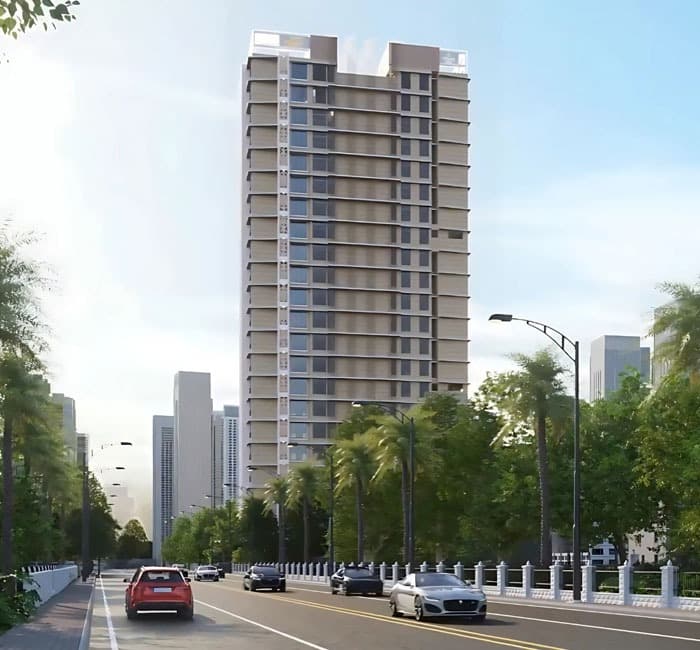
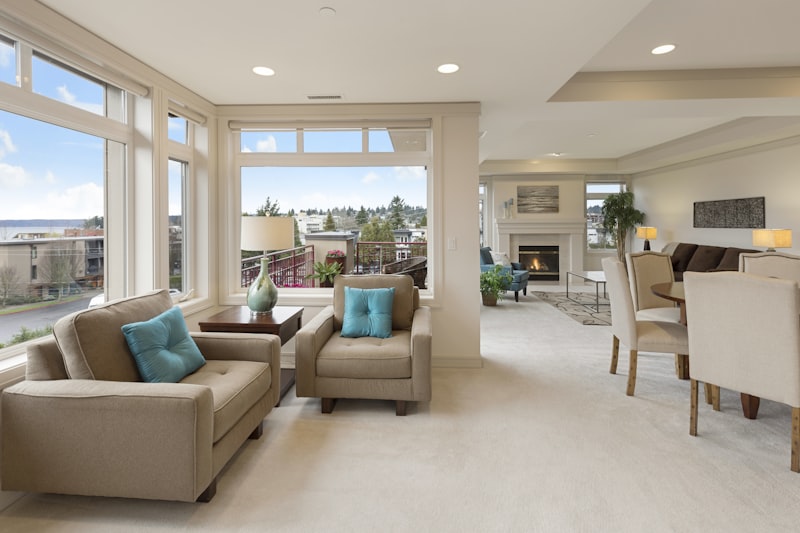
Property Butler tracks Dadar East closely enough to make a specific claim: of all Central Mumbai micro-markets in the ₹2–5 Crore price band, Dadar East has the highest concentration of identifiable, dateable catalysts within a 5-year horizon. Not general sentiment — specific events, infrastructure completions, and redevelopment milestones that will move PSF in predictable directions. Here is the 2026–2031 investment thesis, event by event.
The 5-Year Thesis in One Paragraph
Dadar East enters 2026 at ₹46,000–59,000/sqft with three major catalysts queued within its 5-year window: the Dharavi Redevelopment Phase 1 completion (2027–28), Mumbai Metro Phase 2B connectivity upgrade (2028–29), and the BDD Chawl redevelopment spillover PSF benchmarking from Worli and Dadar (2026–2028). Property Butler's conservative projection: ₹67,000–87,000/sqft by 2031, implying an 8–10% CAGR. The thesis is infrastructure-driven, not sentiment-driven — and infrastructure timelines are more predictable than market cycles.
The Current Entry Point: What ₹2–5 Cr Buys in 2026
Before projecting the 2031 outcome, you need to understand today's baseline. Property Butler's active Dadar East inventory establishes these entry prices:
| Project | Config | Price 2026 | PSF 2026 | Possession |
|---|---|---|---|---|
| Sky Crest Collections | 1 BHK + deck | ₹2.34 Cr++ | ₹49,057 | 2026 |
| Sky Crest Collections | 2 BHK + deck | ₹3.04 Cr++ | ₹48,954 | 2027 |
| Panchratna | 2 BHK | ₹3.10 Cr++ | ₹45,722 | Jun 2026 |
| Panchratna | 3 BHK | ₹4.50 Cr++ | ₹45,455 | Jul 2026 |
| Sugee Srushti | 2 BHK | ₹3.96 Cr | ₹59,370 | Dec 2027 |
The entry PSF range is ₹45,000–59,000. For the investment thesis, the most relevant entry points are the under-construction units delivering in 2026–2027 — where you are buying 6–18 months of under-construction risk in exchange for typically 10–15% below ready-to-move pricing. If Panchratna's 2 BHK at ₹45,722/sqft delivers OC as scheduled in June 2026, an identical unit would likely trade at ₹50,000–52,000/sqft in the resale market by December 2026 — a 9–14% uplift in 6 months from delivery alone.
Catalyst 1: Dharavi Redevelopment Phase 1 (Target: 2027–28)
This is the primary catalyst. 259 acres of Dharavi — Asia's largest informal settlement — is being redeveloped by the Adani Group under a ₹20,000+ Crore project. Dharavi borders Dadar East directly. The redevelopment will:
- Remove the visual and social stigma of Dharavi adjacency that has historically suppressed Dadar East PSF by an estimated 15–20% relative to equivalent-specification projects in Dadar West
- Create new roads, infrastructure, and green spaces adjacent to Dadar East that improve the locality's liveability metrics
- Bring 68,000 rehabilitated residential units to market — but crucially, 57,000 of these are for existing Dharavi residents (regulated resale). Only a small fraction goes to open-market buyers, limiting the supply impact on the surrounding market
- Signal to institutional capital that Central Mumbai's redevelopment-driven PSF appreciation story is real and government-backed
The Dharavi PSF Uplift Estimate
Property Butler's analysis of comparable redevelopment-adjacency events in Mumbai (BDD Chawl demolition impact on Worli, Kamathipura redevelopment impact on Tardeo) suggests that Phase 1 completion of Dharavi will add 12–18% to Dadar East PSF within 12 months of completion. On a current PSF of ₹46,000–50,000, that implies ₹52,000–59,000 from the Dharavi catalyst alone — before any broader market appreciation.
Catalyst 2: Mumbai Metro Phase 2B (Target: 2028–29)
The Mumbai Metro network expansion includes Phase 2B, which extends coverage to improve connectivity between the Dadar area and broader Mumbai's employment corridors. Key impacts on Dadar East:
- Reduced travel time to BKC (currently 25–30 min via Monorail) to approximately 20 minutes via Metro — expanding the pool of BKC professionals who consider Dadar East a viable daily commute
- Direct connectivity to Goregaon and the western suburb employment corridor — creating a new buyer segment of western suburb office professionals who work in Goregaon/Malad and want to live in a mid-city address with good westward access
- Airport connectivity improvement — important for frequent flyers who prioritise T1/T2 access as a purchase criterion
Historical precedent from Phase 1 Metro (opened 2014 along the Versova-Andheri-Ghatkopar corridor): localities within 500m of Metro stations saw 12–18% PSF appreciation in the first year post-operation, with the effect moderating to 5–8% in years 2–4 as the benefit was fully priced in. Dadar East is expected to see a comparable 12–18% uplift within 12 months of Phase 2B opening.
Catalyst 3: BDD Chawl Redevelopment PSF Benchmarking (2026–2028)
The 207 acres of BDD Chawl land in Worli and Dadar are being redeveloped into high-specification residential towers — the government's largest centrally-located redevelopment after Dharavi. As BDD towers deliver and establish PSF benchmarks at ₹1.2–2.5 Lakh/sqft in Worli and ₹80,000–1.2 Lakh/sqft in Dadar, the surrounding micro-markets — including Dadar East — benefit from an upward PSF re-rating. Dadar East currently trades at ₹46,000–59,000/sqft, which is 50–70% below BDD-era Dadar West benchmarks. Even partial convergence towards those benchmarks implies significant appreciation.
The Financial Model: ₹3 Cr Invested Today
Here is a worked example using a 2 BHK purchase at current Dadar East market rates, held to 2031:
| Parameter | Conservative Case | Base Case | Bull Case |
|---|---|---|---|
| Purchase Price (2026) | ₹3.00 Cr | ₹3.00 Cr | ₹3.00 Cr |
| Annual Appreciation CAGR | 7% | 10% | 13% |
| Asset Value 2031 | ₹4.21 Cr | ₹4.83 Cr | ₹5.53 Cr |
| Gross Wealth Creation | ₹1.21 Cr | ₹1.83 Cr | ₹2.53 Cr |
| Cumulative Rental Income (5yr) | ~₹28–32 L | ~₹30–35 L | ~₹33–38 L |
| Total Return (5yr) | ₹1.49–1.53 Cr | ₹2.13–2.18 Cr | ₹2.86–2.91 Cr |
The conservative case (7% CAGR) applies if Dharavi faces another major delay beyond 2028 and Metro 2B is delayed to 2030. Even in this scenario, a ₹3 Cr purchase returns approximately ₹1.5 Cr over 5 years — a 50% gross return — with full capital preservation. The base case (10% CAGR), incorporating the Dharavi and Metro catalysts landing within the 5-year window, returns ₹2.13–2.18 Cr. The bull case (13% CAGR) requires all three catalysts to land on schedule and PSF convergence toward Dadar West benchmarks to accelerate.
Risks to the Thesis
Key Risks
- Dharavi delay beyond 2029 (prior delays happened)
- Interest rate cycle turning adverse (RBI hikes above 7%)
- Concentrated new supply if multiple projects launch simultaneously
- Economic slowdown reducing BKC employment demand
Mitigating Factors
- Landlocked supply — new launches constrained by RERA tightening
- Dadar dual-rail connectivity is infrastructure — doesn't depreciate
- BKC workforce of 2 Lakh+ creates structural rental demand floor
- 10-year track record of 10% CAGR gives statistical confidence
Conclusion: The Investment Grade Verdict
Dadar East qualifies as Investment Grade in Property Butler's framework for one simple reason: it has multiple non-correlated catalysts within a 5-year horizon. When an infrastructure catalyst fails to materialise, the others may still fire. This is not a single-bet investment — it's a multi-catalyst play with a strong base of organic demand even if all catalysts are delayed. For a buyer who can hold 5 years, Property Butler rates Dadar East's 2026 entry as one of the most efficient risk-adjusted property investments in Central Mumbai at the ₹2–5 Crore price band.
2026 Entry — 2031 Target
₹46,000/sqft → ₹67,000–87,000/sqft
8–10% CAGR base case | 3 confirmed catalysts | Dadar East, May 2026
Frequently Asked Questions
Is the Dharavi catalyst reliable, given that the project has faced delays before?
The Dharavi Redevelopment has faced prior delays — this is factually accurate and any investor must model a delay scenario. The critical difference in the current phase is that Adani Group is the developer, not a government agency — private developers have stronger incentives to deliver on time (carrying cost pressure, bank loans against project cash flows). The most credible delay risk is regulatory (court challenges, rehab rights disputes) rather than funding or construction capability. Property Butler models the 2027–28 timeline as base case, with 2029 as the delay scenario.
Should I buy now or wait for prices to correct post the December 2026 delivery wave?
Dadar East's December 2026 supply wave (Panchratna, Anchor Polestar delivering) is small relative to total demand. Any post-delivery price softening will be 3–5% maximum and will last 6–9 months — then prices resume appreciation as the Dharavi catalyst approaches. The opportunity cost of waiting (missing the appreciation between now and December 2026) likely exceeds any savings from a post-delivery correction. Buy now for investment, particularly in under-construction units where you can negotiate pre-delivery pricing.
What's the best unit type to buy in Dadar East for a 5-year investment horizon?
Property Butler's recommendation for a 5-year investment hold in Dadar East: a 2 BHK in the ₹3–4 Cr range at a high or ultra-high floor with a city/sea view. Reasons: (1) 2 BHK has the highest rental demand-to-supply ratio in Dadar East; (2) high floor units carry a structural view premium that doesn't depreciate as the building ages; (3) ₹3–4 Cr is the price band with the highest liquidity (most buyers can access this range vs ₹5 Cr+). Sky Crest Collections' 2 BHK at ₹3.04 Cr on an ultra-high floor with city/sea view is the closest match to this optimal profile in current inventory.
How does Dadar East's 5-year thesis compare to Bandra East over the same horizon?
Both have strong 5-year theses. Bandra East's primary catalyst (Dharavi, Metro 3) is similar to Dadar East's. The key difference: Bandra East is priced 15–30% higher per sqft (₹55,000–85,000 vs ₹46,000–59,000 for Dadar East), meaning you get more absolute carpet area per rupee in Dadar East. Bandra East's BKC adjacency is a direct, already-operational advantage (not future infrastructure). Dadar East's advantage is entry price efficiency and the degree to which Dharavi's completion will narrow the PSF gap between the two. For investors optimising return on rupee invested, Dadar East is currently the stronger entry. For end-users who want a ready address near BKC today, Bandra East is stronger.
Related Reading
→ Dadar East 10-Year Appreciation Track Record: How the Market Got Here → Dharavi Redevelopment Impact on Dadar East Property Prices → Bandra East vs Mahalaxmi at ₹5–9 Cr: Which Corridor Wins? → Dadar East Area Guide — All Active Investment ListingsView Active Dadar East Investment Properties
Property Butler tracks the best investment-grade inventory in Dadar East — high floor, under-construction at negotiable pricing, with Dharavi and Metro catalysts ahead.
Search Dadar East Investment Properties