

Lodha Bellevue — The NRI Buyer Decoder for Mahalaxmi's Urban Forest Address
NRI purchases of Mumbai luxury property follow a different decision-tree from resident-Indian purchases. The currency math, the FEMA framework, the repatriation rules, the TDS on the seller side, the power-of-attorney workflow, the loan structuring against NRE income, and the tax-residency planning for the holding period — every one of these layers is invisible to the resident-Indian buyer but is the architecture that decides whether the NRI transaction closes cleanly or stalls for six months on a single missing certificate. Lodha Bellevue Mahalaxmi is one of the densest NRI-buyer concentrations Property Butler tracks in South Mumbai today — roughly 30 to 40 percent of Bellevue's recent transactions involve NRI buyers, against a SoBo average of 12 to 18 percent. This page is the decoder for the NRI Bellevue buyer specifically.
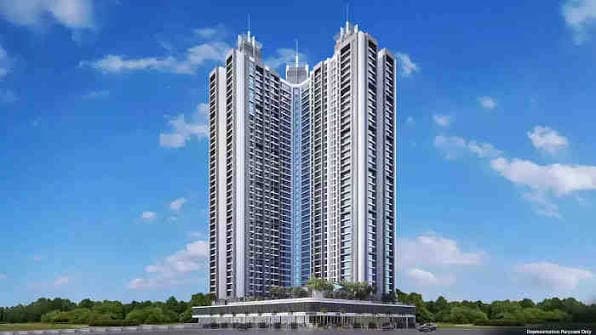
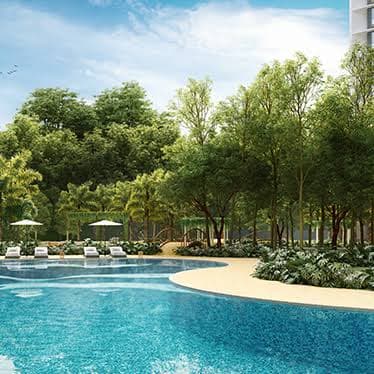
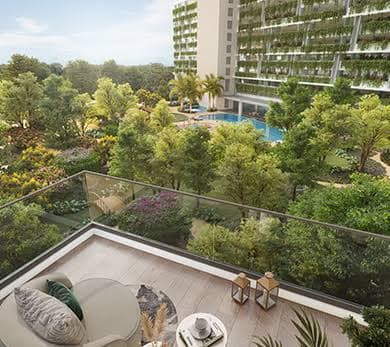
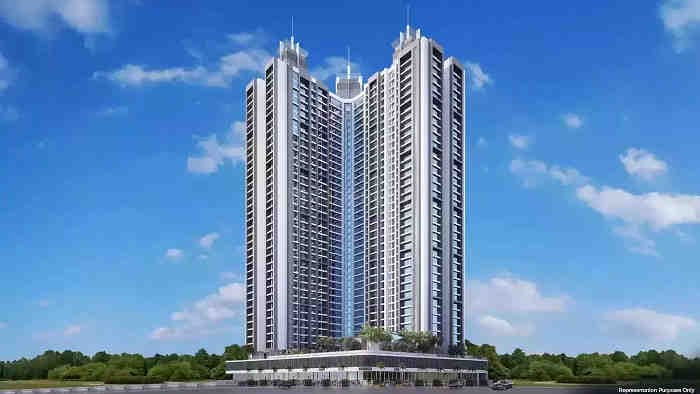
Property Butler tracks 17 active units at Lodha Bellevue Mahalaxmi across 2.5 BHK to 5 BHK plates and 3 Villa configurations, with capital tickets between ₹5.04 Cr and ₹17.80 Cr and the market PSF band running ₹30,873 to ₹109,949 per carpet sqft. The development sits on a 7-acre freehold land parcel with 85 percent open spaces — including a 2.5-acre urban forest — and possession milestones run from June 2026 to September 2028 across the tower phases. The combination of brand (Lodha), scale (7 acres, low density), amenity stack (urban forest, podium pools), and Mahalaxmi's central location makes Bellevue the cleanest fit for the NRI buyer profile who wants Mumbai's South Mumbai address class without the legacy-building maintenance complexity of a Cuffe Parade or Malabar Hill resale.
Lodha Bellevue · NRI Buyer Decoder · May 2026
₹5.04 Cr – ₹17.80 Cr
17 PB live units · 7-acre freehold · 2.5-acre urban forest · 188/360 units sold
Snapshot — The Bellevue NRI Ledger
Why Bellevue ranks high in the NRI shortlist for SoBo
The NRI buyer profile for South Mumbai luxury has narrowed materially over the last 5 years. NRI buyers no longer treat Mumbai property as a passive long-hold parking asset — they treat it as a return-flow vehicle (the family will move back in 5-10 years), a parent-housing asset (the elder generation back home), or a rental-yield diversification asset alongside their overseas portfolio. Bellevue's structural fit for each of these theses:
- Return-flow thesis. NRI families planning a Mumbai return in 5-10 years want a building that will be Ready-to-Move at the target return date with operational amenities, established society, and active resale liquidity. Bellevue's Tower 1 (Jun 2026 RTM) and Tower 3 (Sep 2028) deliveries align with the typical NRI return-cycle window. The 7-acre podium and amenity stack reach operational maturity by 2027-2028 — by the time the NRI family moves in, the project is fully functioning.
- Parent-housing thesis. NRI buyers acquiring for the elder generation back home need a building with reliable services, medical-emergency response, and the social density that older Mumbai residents expect. Bellevue's location at Mahalaxmi gives a 9-12 minute drive to Wockhardt Mumbai Central and Sir HN Reliance Foundation, the urban-forest amenity creates a low-density living environment, and the Lodha brand carries the operational reliability that elder buyers and their NRI children value.
- Rental-yield diversification thesis. NRI investors targeting yield want a building with deep tenant absorption and a stable rental ladder. Bellevue's Mahalaxmi location captures BKC-bound corporate tenants, Lower Parel and Worli professionals, and the diplomatic-corporate housing pool spilling from Tardeo. Property Butler's tenant model for Bellevue puts the gross yield in the 1.9-2.6% band for a 3 BHK — modest in absolute terms but typically compounding with capital appreciation in the 7-9% range over a 5-year hold.
The FEMA framework — what NRI Bellevue buyers must know before they wire
Every NRI residential transaction in India runs through the Foreign Exchange Management Act (FEMA) framework. The Bellevue-specific compliance map:
- Eligibility. NRI / PCI / OCI holders can purchase residential property in India under the FEMA general permission. PIOs (Person of Indian Origin) and OCI holders follow the same rule. Foreign nationals with non-Indian origin cannot purchase Indian residential property — they can only inherit or rent.
- Funding source. The purchase consideration must be paid through (a) inward remittance from a recognised overseas bank, or (b) the NRI's existing NRE / NRO / FCNR account in India. Cash payments and resident-Indian funds (other than gifts from close relatives) are not permitted.
- Number of properties. No cap on residential property purchases by NRIs (unlike agricultural land which is restricted). NRI can hold 1 or 10 Bellevue units depending on capital availability.
- Co-ownership. Bellevue can be purchased in joint NRI names, NRI + resident-Indian names (spouse), or NRI + non-resident foreign-national names (under specific structuring). The most common structure for SoBo NRI purchases is joint-with-spouse (NRI + Indian-resident or NRI + NRI).
- Repatriation on sale. Sale proceeds can be repatriated up to USD 1 million per financial year per individual under the FEMA repatriation rules, subject to TDS clearance and a CA certificate (Form 15CA + Form 15CB). The cap applies per individual, so a joint Bellevue sale can repatriate up to USD 2 million per year (one cap per joint owner).
The currency math — INR + USD path scenarios for a Bellevue 3 BHK
NRI buyers think in two currencies simultaneously: the INR price they pay for the asset, and the USD (or GBP, AED, SGD) equivalent value of their capital deployment. The currency-cycle exposure over a 5-year hold is material — and the Bellevue ticket band (₹5-18 Cr) corresponds to USD 600,000 to USD 2.16 million at today's INR/USD of roughly ₹83.5. The Property Butler scenario table:
The currency lens matters because NRI sellers are penalised on repatriation when the rupee weakens — they get back fewer dollars per rupee of sale proceeds. The five-year INR view from most overseas-currency forecasting models tilts toward modest INR weakening (1-3% per year) against USD; Bellevue's INR capital appreciation has to outrun the currency drag for the USD-denominated return to look attractive. Property Butler's view: Mahalaxmi's central-business-district adjacency and the limited new-build supply in the 7-acre freehold format gives Bellevue capital appreciation tailwinds that should outpace the INR drag over a 5-year hold.
NRI loan structuring at Bellevue — the cleanest financing path
NRI Bellevue buyers have three loan-structuring options. The cleanest path depends on whether the buyer is acquiring for return-flow (where US dollar repatriation matters in 5+ years) or for parent-housing (where INR holding is acceptable).
Path 1: NRE-funded full cash purchase
For NRIs with existing NRE balances exceeding the Bellevue ticket, the cleanest path is full cash from NRE. No loan documentation, no LTV math, no EMI servicing across borders. The downside: the capital is tied up in INR for the holding period. Property Butler's view: appropriate for NRIs with NRE balances exceeding 2x the ticket size, where the foregone-yield argument on the parked capital is dominated by transaction simplicity.
Path 2: NRI home loan via Indian bank
The standard NRI home loan product is available across most major Indian lenders. LTV runs 70-75% against registered value; rates run 8.50-9.10% floating. The EMI must be serviced from NRE / NRO accounts. Tenure typically 15-20 years for NRIs (versus 30 years for residents) because banks underwrite to retirement age and visa horizon. Tax: EMI interest is deductible against rental income in India (Form 26AS impact).
Path 3: Wealth-banking relationship loan
For NRIs with a private-bank wealth-management relationship (typical for the ₹10 Cr+ ticket band), the wealth desk can structure a loan against the global portfolio (LRS portfolio collateral, foreign-currency assets) at LTV 75-80% with rates 25-50 bps sharper than the standard NRI home loan. The wealth-banking route also typically supports faster disbursement (5-8 working days) and lighter documentation. This is the path Property Butler recommends for NRIs with existing private-bank wealth relationships.
Property Butler NRI Insight
The single most under-priced NRI transaction lever at Bellevue is the tax-residency planning around the holding period. An NRI who becomes a tax-resident in the year of sale (RNOR or full-resident) faces different capital-gains treatment than an NRI who remains non-resident at sale. Long-term capital gains on Indian property held over 2 years are taxed at 20% with indexation for resident-Indians; NRI sellers face the same 20% rate but with a 12.5% TDS withholding at the time of sale (against the full sale consideration, not the gain) — refunds against actual tax liability take 18-24 months post-filing. NRIs planning the Mumbai-return cycle should align the Bellevue sale year with the residency-status transition to optimise the tax-and-cash-flow profile.
The Power-of-Attorney workflow — registering Bellevue from overseas
Most NRI Bellevue purchases register through a Power-of-Attorney (POA) executed in the country of residence, attested by the Indian consulate or embassy, and registered in India before the buyer's representative can sign on the buyer's behalf. The standard NRI POA workflow:
- POA draft in India. Property Butler co-ordinates with the buyer's Indian lawyer to draft the POA in the format acceptable to Mahalaxmi's sub-registrar.
- POA execution overseas. Buyer signs the POA at the Indian consulate or embassy in the country of residence. The consulate attests the buyer's signature.
- POA dispatch to India. The attested POA is couriered to the buyer's Indian representative or to Property Butler's legal desk.
- POA registration in India. The attested POA is registered at the Indian sub-registrar's office (typically Mumbai) with stamp duty paid on the POA itself (₹500-2000 depending on scope and consideration).
- Bellevue agreement registration via POA-holder. The POA-holder (usually a close family member or Property Butler's facilitator) signs the Bellevue agreement on behalf of the buyer at the Mahalaxmi sub-registrar's office.
Timeline: 30-45 days from POA draft to Bellevue agreement registration. Property Butler co-ordinates this workflow end-to-end for NRI buyers — there is no need for the buyer to travel to India for the purchase if the POA is correctly executed.
The Bellevue NRI verdict — who fits, who should look elsewhere
Bellevue's structural fit for NRI buyers is highest for these profiles:
- NRI families targeting Mumbai return in 5-10 years — Bellevue's possession milestones (Jun 2026 to Sep 2028) align with typical return-cycle windows. The 7-acre podium reaches operational maturity by 2028-2029.
- NRI investors targeting INR-denominated capital appreciation with modest rental yield — Mahalaxmi's central-business-district adjacency and the freehold land structure give capital appreciation tailwinds. Rental yield modest at 1.9-2.6%.
- NRI buyers acquiring for the elder generation back home — Lodha brand reliability, low-density living, urban-forest amenity, and the Wockhardt / HN Reliance hospital proximity make this the cleanest parent-housing fit in SoBo.
Bellevue is a weaker fit for NRI buyers who:
- Prioritise immediate cash-yield over capital appreciation — Lower Parel's Indiabulls Sky Forest (RTM, 2.4-3.2% gross yield) is the cleaner fit.
- Need ready-to-move immediate occupancy — Tower 1 RTM is Jun 2026; if the NRI family needs to move-in tomorrow, only the RTM units in Tower 1 fit, and inventory there is constrained.
- Want the Worli sea-facing premium — Bellevue is Mahalaxmi-interior; the sea-facing premium is structurally not on the table. Buyers wanting that should look at Birla Niyaara or Lodha World View at Worli.
Frequently Asked Questions
Can NRIs buy property at Lodha Bellevue Mahalaxmi?
Are home loans available for NRI Bellevue buyers?
What is the repatriation limit on sale of a Bellevue unit?
Do I need to travel to India to buy Bellevue?
What TDS applies when an NRI sells Bellevue?
Is Bellevue a good NRI investment versus Sky Forest or Marq?
What is the Bellevue possession timeline?
Continue your Bellevue research
- Lodha Bellevue Mahalaxmi Review
- Bellevue Tower 1 Decoder
- Bellevue 5-Year Cost of Ownership
- Bellevue Urban Forest Amenity Stack
- NRI Property Investment Guide
- Mahalaxmi School Catchment Buyer Guide
NRI Buyer Consultation
Talk to us about Bellevue from overseas
FEMA + Power-of-Attorney + Loan structuring + End-to-end transaction
WhatsApp the Property Butler team