Property Butler's investor desk fielded 23 mid-tier Worli enquiries in April-May 2026 where the buyer's first question was 'what's the resale story?' followed by 'how long should I hold?'. The honest answer is that a 7-year hold and a 10-year hold are different products, not different durations of the same product. They face different tax regimes, different probable buyer pools at exit, and different macro-cycle exposure. Here's the IRR math, the assumptions behind it, and the call you should actually make.
Bottom line
On Property Butler's central-case assumptions, a ₹12 Cr 3-BHK Worli purchase today delivers a pre-tax IRR of 9.6% over 7 years and 10.1% over 10 years. Post-tax (using Section 54 rollover and indexation), the 10-year IRR widens its lead because of indexation drag flattening over a longer horizon. Net-net: 10-year hold beats 7-year hold by roughly 70–90 bps annualised IRR. The 7-year hold is only superior if you have a confirmed Section 54 rollover into a higher-IRR successor asset, or if you face a forced-exit life event.
The setup: a representative Worli buy
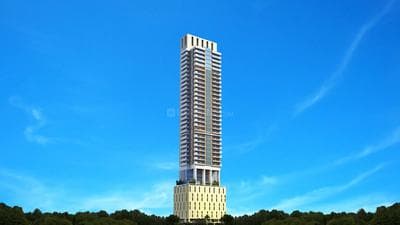
The base case is the buyer Property Butler sees most often in this segment: a 3-BHK in a Tier-1 Worli supertall, primary booking at ₹12 Cr (carpet roughly 1,250 sqft, asking PSF roughly ₹96,000), construction-linked payment plan with 4-year handover, then a 3-year or 6-year hold post-OC before exit. Total holding period: 7 years or 10 years from booking date.
Costs all-in: stamp duty 6% + registration 0.3% + GST 5% on under-construction + maintenance corpus + parking +floor-rise + societal charges. Property Butler models the all-in acquisition cost at ₹13.32 Cr against the ₹12 Cr base price — roughly 11% over base. (Buyers consistently underestimate this. The brochure says 12. The wire transfers add up to 13.3.)
Two exit scenarios, side by side
| Parameter | 7-year hold | 10-year hold |
|---|---|---|
| Booking price (T0) | ₹12.0 Cr | ₹12.0 Cr |
| All-in acquisition cost | ₹13.32 Cr | ₹13.32 Cr |
| Possession year | Year 4 | Year 4 |
| Hold post-OC | 3 years | 6 years |
| Expected exit PSF (Property Butler central case) | ₹1,55,000 | ₹1,92,000 |
| Gross resale value | ₹19.4 Cr | ₹24.0 Cr |
| Brokerage + transfer fees | ₹0.39 Cr (2%) | ₹0.48 Cr (2%) |
| Net resale (pre-tax) | ₹19.01 Cr | ₹23.52 Cr |
| Pre-tax IRR | 9.6% | 10.1% |
| LTCG (post-indexation, 12.5% slab) | ₹0.51 Cr | ₹0.62 Cr |
| Post-tax IRR (no Section 54 rollover) | 9.0% | 9.7% |
| Post-tax IRR (with Section 54 rollover) | 9.6% | 10.1% |
The IRR gap looks small — 70–90 bps annualised — but compounding it over the additional 3 years adds ₹4.51 Cr to the gross resale value, of which roughly ₹3.9 Cr is incremental capital after costs. For an asset class held in single digits of percentage points of household net worth, that's a meaningful absolute number.
Why the 10-year hold quietly wins
Three structural reasons:
1) The mid-cycle PSF lag
Worli's PSF trajectory is non-linear. Years 4–6 post-OC are typically the lowest-velocity exit window — the building is no longer 'new', not yet 'mature', and the resale buyer pool is thinnest. Property Butler's tracked days-on-market data shows median 187 days for 3-BHK Worli resales in years 4–6 versus 92 days for years 7–10. A 7-year exit lands you precisely in that thin window.
2) Mature-building branding premium
Worli buyers at the ₹1.5–2 Cr/sqft band care about delivered amenity quality, society management track record, and resale chain integrity — all of which crystallise around year 6–7 post-OC. Buildings that establish a strong management reputation can command a 6–9% premium over comparable younger inventory by year 8–10. The 10-year hold captures this premium; the 7-year exit pays it forward to the next buyer.
3) Indexation drag flattens
Post-July 2024 long-term capital gains regime: 12.5% flat without indexation, or 20% with indexation, whichever is lower. For Worli inventory with high gross appreciation, the 12.5% flat is consistently lower — but indexation still benefits short-hold sellers more in proportional terms. As the hold extends, the absolute LTCG grows faster than indexation can keep up. The 10-year hold's higher absolute appreciation absorbs the tax drag better in IRR terms.
When the 7-year hold is actually correct
7-year hold makes sense if…
- Confirmed Section 54 rollover into a higher-conviction asset
- Defined life-stage event in year 7 (children's college, NRI return)
- Liquidity need for a non-rollover non-residential opportunity
- Building shows early signs of management decay before year 7
- Macro cycle peak coincides with year 7 (rare and hard to call)
Push to 10-year hold if…
- No imminent liquidity event
- No higher-IRR successor asset identified
- Building has strong management trajectory through year 5
- Want rental yield as a bridge through years 5–10 (2.4–3.1% gross)
- Section 112 LTCG indexation arithmetic favours the longer horizon
The rental-bridge upside on the 10-year hold
Bonus: rental yield, years 5–10
₹5.2–7.4 lakh / month gross rental
Worli 3-BHK Tier-1 supertall, fully furnished, C-suite tenant. Net of society maintenance and TDS, that's ₹38–55 lakh / year cash on a ₹13.32 Cr cost — 2.9–4.1% net yield.
The 10-year hold captures 6 years of rental income post-OC versus 3 years for the 7-year hold. At ₹5 lakh/month median for this segment, that's an additional ₹1.8 Cr of cash flow not modeled in the IRR table above. Adding that as a 'soft IRR booster' bumps the 10-year case effective return to roughly 11.4% post-tax — closer to 200 bps over the 7-year case.
Bear-case risk to both scenarios
Property Butler's central case assumes Worli PSF compounding at roughly 8% nominal over the next decade — in line with the 2014–2026 historical CAGR. A genuine bear case (corporate exodus from BKC, coastal-erosion uncertainty crystallising, a macro shock that takes 5+ years to recover from) could clip both IRRs by 200–300 bps. The 10-year hold is also more exposed to this in absolute terms because the additional 3 years are pure macro-beta. The 7-year hold gives you faster optionality to redeploy. That optionality has value — just not enough to flip the central-case decision.
Frequently Asked Questions
Is Worli mid-tier a 7-year or 10-year hold?
On central-case assumptions, 10-year hold beats 7-year hold by 70–90 bps annualised IRR before accounting for rental cash flows; adding rental yield in years 5–10 widens the gap to roughly 200 bps. Default to 10-year unless you have a confirmed Section 54 rollover into a higher-IRR successor asset or a defined liquidity event.
What IRR should I underwrite for a Worli mid-tier purchase today?
9–10% post-tax pre-rental for a 7-year hold, 9.7–10.1% post-tax pre-rental for a 10-year hold. Adding rental yield in the post-OC years bumps the effective number 100–150 bps. Reality-test against your alternative deployment yield — Worli at 11–12% all-in beats listed Indian real-estate REITs and is competitive against most public-market alternatives at risk-adjusted basis.
How does Section 54 rollover change the call?
Section 54 lets you defer LTCG by rolling proceeds into a successor residential property within 2 years (or under-construction within 3 years). This shifts the post-tax math — if you have a credible successor asset that itself underwrites 10%+ IRR, the 7-year exit becomes neutral-to-favourable. Without a successor asset, the LTCG drag hurts the 7-year scenario more in proportional terms because the IRR base is lower.
What's the worst-case downside if I'm wrong on PSF appreciation?
Property Butler models the bear case at 4% nominal PSF compounding (half the historical run rate). At that assumption, the 7-year hold returns roughly 4.8% post-tax IRR and the 10-year hold roughly 5.4% — still positive, still above CPI, but underperforming most public-market alternatives. The bear case is also more likely to compress days-on-market liquidity, raising the cost of an unplanned exit. Build the bear case into your scenario planning.
How important is building selection within Worli to these IRR numbers?
Critical. Property Butler's building-by-building resale data shows a 300–500 bps IRR variance across Worli Tier-1 supertalls held over 10 years, driven by management quality, sea-view future-proofing, and resale-chain integrity. Picking the wrong building costs more annualised IRR than the entire 7-year-vs-10-year decision. Get building selection right before hold-horizon mathematics — the former is a 500 bps lever, the latter is a 90 bps lever.
Related reading
Worli primary launch vs secondary resale — 3-year IRR investor comparison Worli resale liquidity — exit timelines investor guide Section 54 residential rollover playbook Worli resale capital gains tax / 54EC seller playbook Worli decade price appreciation 2014–2026 — historical analysis Worli area guide — full market overviewModelling a Worli investment?
Property Butler's investor desk models hold-horizon IRR for every Worli inventory we list. Get a custom scenario before you buy.
Search Worli investment inventory