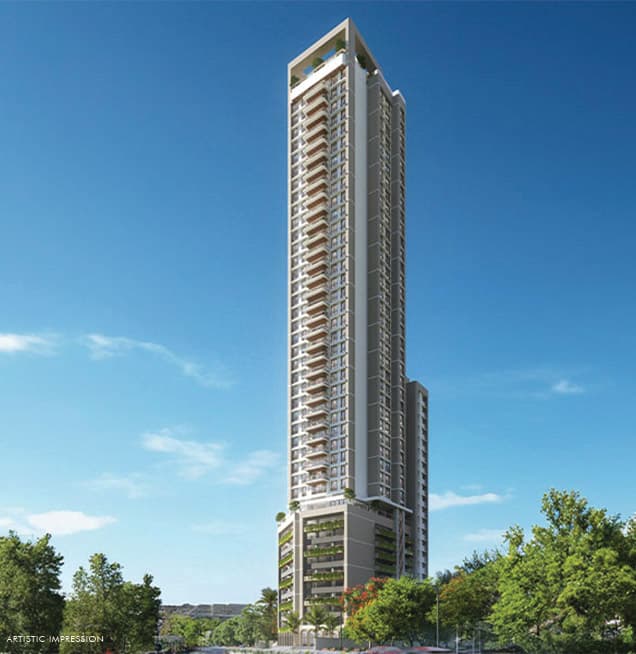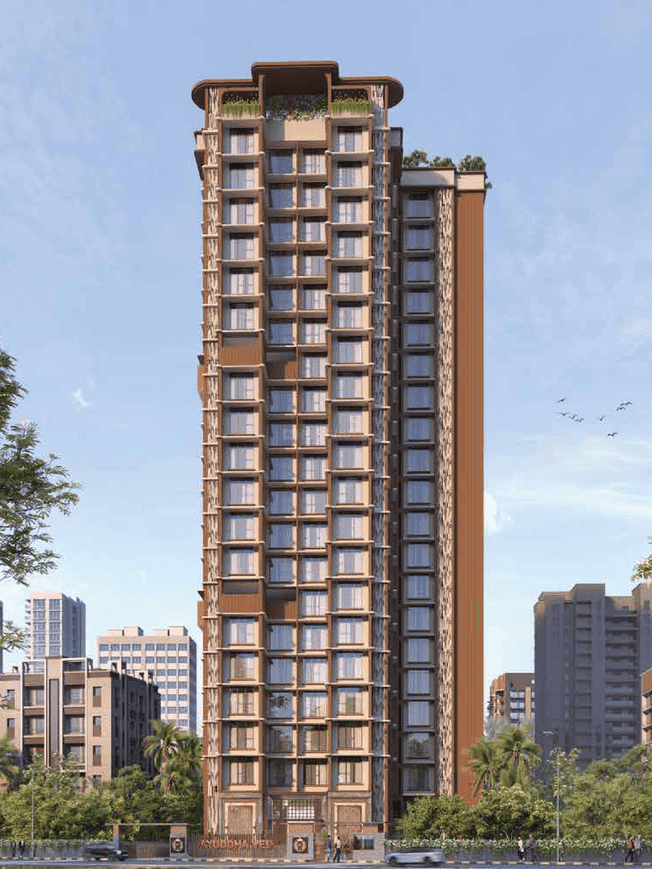
Buying a flat in Tardeo requires navigating two very different document landscapes: the clean, RERA-registered new launch (Lodha Marq, MICL Aaradhya Avaan) and the complex, layered heritage resale (Carmichael Road cooperative societies, Altamount Road older buildings). Both carry title risk if not investigated properly. Property Butler has compiled this due diligence checklist based on common documentation issues seen in Tardeo transactions — including one recent case where a Rs 18 Cr Altamount Road purchase was held up for 14 months by an unresolved encumbrance from a 1978 family dispute. Here is exactly what to check before you sign.
Tardeo Due Diligence — Key Risk Areas
Primary (new launch) risk: RERA compliance, developer escrow health, CC and OC sequencing. Resale (heritage) risk: OC status, encumbrance history, SRA and redevelopment proceedings, cooperative society NOC, structural condition. Both types: stamp duty calculation accuracy, carpet area verification against RERA filed plan, home loan eligibility confirmation before signing token.
Track 1: New Launch Due Diligence (Lodha Marq, MICL Aaradhya Avaan, etc.)
Step 1 — MahaRERA Registration Verification
Every under-construction project in Maharashtra must be registered on MahaRERA (maharera.mahaonline.gov.in). Verify:
- Project name, developer name, and RERA registration number match the booking documents
- Registered carpet area matches the unit being offered — discrepancies of even 3 to 5% are worth flagging
- Completion certificate date committed in RERA vs developer's verbal commitment — RERA date governs legally
- Quarterly updates: check the last 2 to 3 quarterly filings. A developer who is consistently late in filing quarterly updates is often behind on construction milestones
- RERA escrow account: confirm the RERA-mandated 70% of collections held in escrow is active and current
Step 2 — IOD, CC, and OC Chain
Three permissions govern a Mumbai construction's lifecycle:
- IOD (Intimation of Disapproval): The BMC's project plan approval. Verify the IOD covers your specific floor and unit type. High-floor units in luxury towers have IODs that can take longer — some Tardeo high-rises above the 50th floor faced delays on upper-floor IODs.
- Commencement Certificate (CC): BMC's permission to begin construction. Should be valid and current. A lapsed CC means construction technically paused and was restarted — investigate why.
- OC (Occupancy Certificate): Your right to occupy. For under-construction projects, the developer will obtain OC at completion. Ensure the SPA (sale and purchase agreement) specifies the developer's OC obligation timeline and penalty for delay.
Step 3 — Developer Financial Health
For any Tardeo project with a Rs 15 Cr+ ticket size, verifying the developer's project-level financials is worth the effort:
- Check RERA escrow balance — is 70% of received collections actually in the designated account?
- Check if the project has active home loans from SBI, HDFC, or Kotak — banks perform their own due diligence before lending, so a project with active bank loan disbursements is generally healthier than one without
- CIBIL of the developer — your advocate can check for any legal proceedings or NPA notices against the project entity
Track 2: Resale and Heritage Building Due Diligence
Step 1 — Occupancy Certificate Chain
This is the single most important document for any Tardeo resale. Three scenarios:
Best Case
Full OC from BMC covering all floors. Clean chain. Bank will lend, valuation straightforward.
Common Issue
Partial OC — lower floors covered, upper floors pending or on old municipal approvals. Many Tardeo buildings from 1960s to 1980s have this. Banks may lend with caveats; legal counsel required.
Walk Away
No OC at all, regularization pending, or Collector's permission-based old title. Banks will not lend. Resale liquidity severely constrained. Only distressed pricing justifies this risk.
Step 2 — Encumbrance Certificate (30 Years)
An Encumbrance Certificate (EC) shows all market transactions, mortgages, and legal charges on the property for a given period. For Tardeo heritage buildings, Property Butler recommends a 30-year EC minimum — not the standard 13 years. The Rs 18 Cr Altamount Road case referenced in the introduction was blocked by a 1978 family partition deed that was registered at the sub-registrar's office but not tracked in the 13-year EC. A 30-year EC would have caught it.
The EC application process: file at the Sub-Registrar Office (SRO) for Tardeo's jurisdiction (Tardeo falls under SRO Byculla or SRO Borivali depending on the specific address — confirm with your advocate). Processing time: 3 to 7 working days. Cost: approximately Rs 2,000 to 5,000 for a 30-year search.
Step 3 — Society NOC and Share Certificate
Most Tardeo heritage buildings are organized as Cooperative Housing Societies (CHS). The share certificate is the seller's evidence of membership in the society — without it, the flat cannot be transferred. Verify:
- Original share certificate in the seller's name with no annotations or pledges noted
- Society NOC for transfer — some Tardeo societies have waiting periods of 3 to 6 months for NOC processing; factor this into your transaction timeline
- Society accounts: check if the seller has any outstanding maintenance dues — these become your liability post-transfer in some society bylaws
- Society bylaws for any restriction on who can own or occupy: some Tardeo cooperative societies have residency restrictions or sub-letting restrictions that could affect investment buyers
Step 4 — SRA and Redevelopment Status Check
Tardeo has multiple buildings in various stages of redevelopment proceedings. Before buying a resale unit, run this check:
- MHADA / SRA database: search the building address for any active redevelopment scheme, LOI (Letter of Intent) from a developer, or SRA tenant list
- If a building has a signed Development Agreement with a developer for redevelopment, all existing flats may be obliged to vacate within a specified period — your purchase could be of a flat that vacates to a Transit Camp within 12 to 24 months
- Society meeting minutes: request the last 3 years of Annual General Meeting (AGM) minutes — redevelopment resolutions, developer proposals, or consent surveys will appear here if active
Document Checklist: Print and Use
| Document | New Launch | Resale Heritage | Priority |
|---|---|---|---|
| MahaRERA Certificate | Required | N/A | Critical |
| Occupancy Certificate (OC) | At possession | Must verify now | Critical |
| Encumbrance Certificate (30 yr) | Check for land | Always required | Critical |
| Share Certificate | N/A | Required | Critical |
| Society NOC | N/A | Required | Critical |
| SRA / Redevelopment Status | N/A | Check always | Critical |
| IOD + CC | Required | N/A | High |
| Structural Audit Report | Not needed | Strongly recommended | High |
| Carpet Area vs RERA Plan | Always verify | Check city survey | High |
Frequently Asked Questions
How long does Tardeo resale due diligence typically take?
A full due diligence exercise for a Tardeo heritage resale takes 21 to 35 working days minimum: 3 to 7 days for EC search at SRO, 5 to 10 days for advocate's title investigation, 3 to 6 months for society NOC processing (this is the most variable component), and 5 to 7 days for structural audit if required. Budget 45 to 90 days between token payment and registration for a clean transaction.
Can a Tardeo heritage flat without full OC be funded by a bank?
Banks vary significantly on heritage flat OC requirements. HDFC and SBI typically require a full or partial OC with municipal approval chain. Some private banks (Kotak, IndusInd) may lend against properties with old municipal approvals in lieu of OC — with a reduced LTV (50 to 55% versus 60 to 75% for OC-received properties). Always confirm bank approval before making a non-refundable token payment on a property with OC uncertainty.
What is the cost of a proper Tardeo property legal check?
A competent Mumbai property advocate charges Rs 30,000 to 75,000 for a full title investigation and due diligence report on a Tardeo resale. On a Rs 15 to 20 Cr transaction, this is 0.02 to 0.05% of the deal — the best money spent in the entire process. Add Rs 40,000 to 80,000 for a structural audit on heritage properties. Do not negotiate with your advocate on due diligence fees — the incentive structure matters.
Is a new RERA-registered Tardeo launch safer than resale?
On most title-related dimensions, yes — RERA registration means the project is under a statutory compliance framework with developer escrow obligations. However, new launches carry construction risk (delivery delay, specification change) that resale does not. The safest Tardeo purchase overall is a RTM resale with full OC and clean 30-year EC — it combines title certainty with zero construction risk.
Related Reading
Tardeo Luxury Buyers Playbook 2026 How to Negotiate a Tardeo Property Purchase Tardeo Resale and Secondary Market Guide Explore All Tardeo PropertiesBuying in Tardeo and need due diligence support?
Property Butler can connect you with experienced Mumbai property advocates and structural auditors who specialize in Tardeo transactions.
Browse Tardeo Properties