The Mahalaxmi Racecourse Central Park has been pitched to property buyers as Mumbai's answer to New York's Central Park — 298 acres of permanent public green space that would lock in views and push up property values in one of South Mumbai's most sought-after corridors. The investment thesis is compelling. The reality, as of June 2026, is more complicated.
On February 26, 2026, 119 of Mumbai's most prominent architects — including Alan Abraham, P.K. Das, Nitin Killawala, Rahul Kadri, and Vikas Dilawari — submitted a formal letter of objection to the BMC master plan. They raised four specific concerns: flood risk, financial opacity, a parking plan that contradicts city policy, and an undefined accountability framework. As of June 2026, BMC has not issued a formal written response. No construction has commenced. The architects' core demands remain unaddressed.
If you are buying in Mahalaxmi — particularly a racecourse-view unit with the green space premium already partially priced in — you need to understand what these objections actually say, whether they are technically credible, and what happens to your investment thesis if the plan is delayed or modified.
Mahalaxmi Racecourse Central Park — June 2026 Status Board
Total area
298 acres
211-acre racecourse + coastal road green corridor
Architects who objected
119
Formal letter, February 26 2026
Estimated project cost
Rs 500-600 Cr
No cost breakdown made public
Construction status
Not started
BMC response: none documented
What the Plan Actually Proposes
To evaluate the objections, it helps to understand the plan precisely. The 211-acre Mahalaxmi Racecourse is split under a July 2024 BMC agreement: 120 acres transfer to BMC for public development; 91 acres remain under the Royal Western India Turf Club on a lease extended to May 31, 2053. BMC's 120-acre parcel is proposed to become a botanical garden, sports arena, and convention centre — the Central Park component. The remaining 91 RWITC acres are where horse racing may or may not continue under a 30-year lease arrangement.
The total contiguous landscape the planners describe as Central Park — including the coastal road green corridor — reaches 298 acres. A Rs 500-crore subway is proposed to connect Haji Ali to the precinct. Night fountains, underground parking for 5,000–6,200 vehicles, and heritage structure preservation are all in the brief. The sporting complex encompasses a 9.1-acre Sports Arena and Convention Centre.
The Flood Risk Objection: Why Mumbai's Architects Are Alarmed
The most technically substantive objection is the flood risk concern. The architects' letter explicitly identifies the Mahalaxmi Racecourse as historic marshland that functions as permeable, flood-absorbing ground. In Mumbai's hydrology, large areas of absorptive ground slow surface runoff during intense monsoon rainfall. The Racecourse, sitting between the Haji Ali coastal strip and the residential precincts of Mahalaxmi and Tardeo, currently absorbs a meaningful volume of rainfall before it reaches the city's drainage network.
The architects' concern is specific: three basement levels of underground parking require extensive subsurface construction. That construction would waterproof and seal the ground, reducing infiltration capacity. Less absorption means more surface runoff. More runoff during Mumbai's peak monsoon events — which regularly exceed 100mm in 24 hours — means higher flood risk in surrounding streets and buildings. The architects call this destroying Mumbai's Sponge City capacity, and argue it contradicts the state's climate action strategy that endorsed permeable urban surfaces as flood mitigation.
The Flood Risk in Plain Terms
If the underground parking plan proceeds, properties within 500–800 metres of the Racecourse boundary may face measurably higher waterlogging risk during peak monsoon events. For buyers considering Mahalaxmi purchases, this is a material due diligence point — not a remote hypothetical. Mumbai received 331mm of rainfall in a single 24-hour period in July 2005. Subsurface sealing of a large permeable zone directly upstream of residential areas changes the drainage calculation.
The Financial Opacity Concern
The second set of objections is governance-focused. The letter states there is zero cost transparency in the public domain for a project estimated at Rs 500–600 crore. Specifically flagged: no line-item breakdown for the three basement levels of underground parking, no public disclosure of the construction procurement model, and no clarity on whether costs will be recovered through commercial revenue or borne by municipal taxpayers.
The parking plan compounds this. BMC policy aims to reduce car dependency and has restricted parking multipliers in premium localities under development control regulations. Proposing 5,000–6,200 underground parking bays at a flagship public open space directly contradicts this. The architects argue this suggests the plan has been influenced by interests beyond pure public green space. The architects demanded responses within 14 days of February 26 and proposed a joint technical discussion with state and municipal officials. As of June 2026, no formal engagement has been documented.
What This Means for Mahalaxmi Property Buyers
The investment thesis for racecourse-view units has two distinct components. The first — that this land will not become residential towers — remains directionally intact. Multiple attempts to convert the racecourse to residential development have been blocked. The architects are not challenging this; they are challenging the specific implementation.
The second component — that a high-quality public park will create a view premium analogous to Central Park — is where the June 2026 objections introduce genuine uncertainty:
| Scenario | Likelihood | Impact on View Premium |
|---|---|---|
| Plan proceeds as announced (subway, parking, arena) | 30–40% | Full premium: +20–35% over 5 years |
| Plan modified (parking reduced, basement levels cut) | 40–50% | Moderate premium: +12–20% over 5 years |
| Protracted delay (judicial stay, redesign cycle) | 20–25% | Neutral: open land remains, no green infrastructure premium |
| Flood risk materialises (monsoon damage near site) | 5–10% | Negative: premium compressed, resale demand weakens |
The practical implication: if you are buying a racecourse-view unit primarily for view premium appreciation, the objections introduce a timeline risk. The premium may take longer to price in than a 2-year horizon. If you are buying for end use — a specific address, a specific lifestyle — the objections are a risk to monitor, not a reason to abandon the decision.
What the Mahalaxmi Market Is Actually Doing Right Now
The Mahalaxmi residential market in mid-2026 is in a corrective consolidation phase. Property Butler's market data shows Mahalaxmi asking prices averaged Rs 61,915 per sqft in April 2026, down from a local peak of Rs 75,399 per sqft in June 2025 — a 17.9% moderation over 10 months. This reflects the broader South Mumbai luxury cycle after a strong 2024-2025 run, and a return to realistic buyer-seller price discovery.
The highest-PSF projects remain Piramal Mahalaxmi at Rs 83,927 PSF for open-view configurations and Godrej Avenue Eleven at Rs 71,574–71,591 PSF for 4 BHK. The current consolidation creates a window for end-use motivated buyers rather than speculative premium chasers.
A significant supply event: Piramal Mahalaxmi North Tower 3 received possession on June 17, 2026 (RERA: P51900021057). At Rs 3.32 crore for a 2 BHK (721 sqft) and Rs 5.60 crore for a 3 BHK (1,216 sqft), this OC-received supply entering the secondary market will influence pricing in the Rs 3–6 crore band through Q3 2026. Early buyers who purchased at 2021-2023 pre-launch rates are sitting on 20–35% appreciation and may choose to exit — adding liquidity to the secondary market.
Live Mahalaxmi Inventory: OC-Received Units Available Now
Property Butler has these OC-received Mahalaxmi units available for immediate purchase and registration:
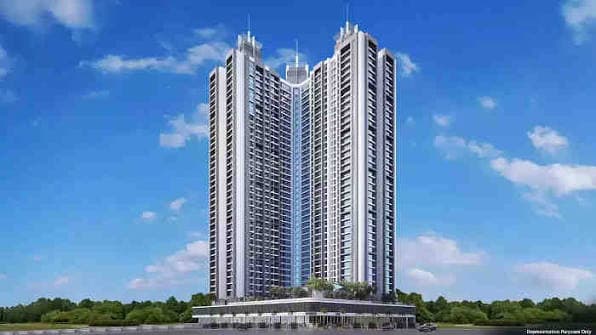
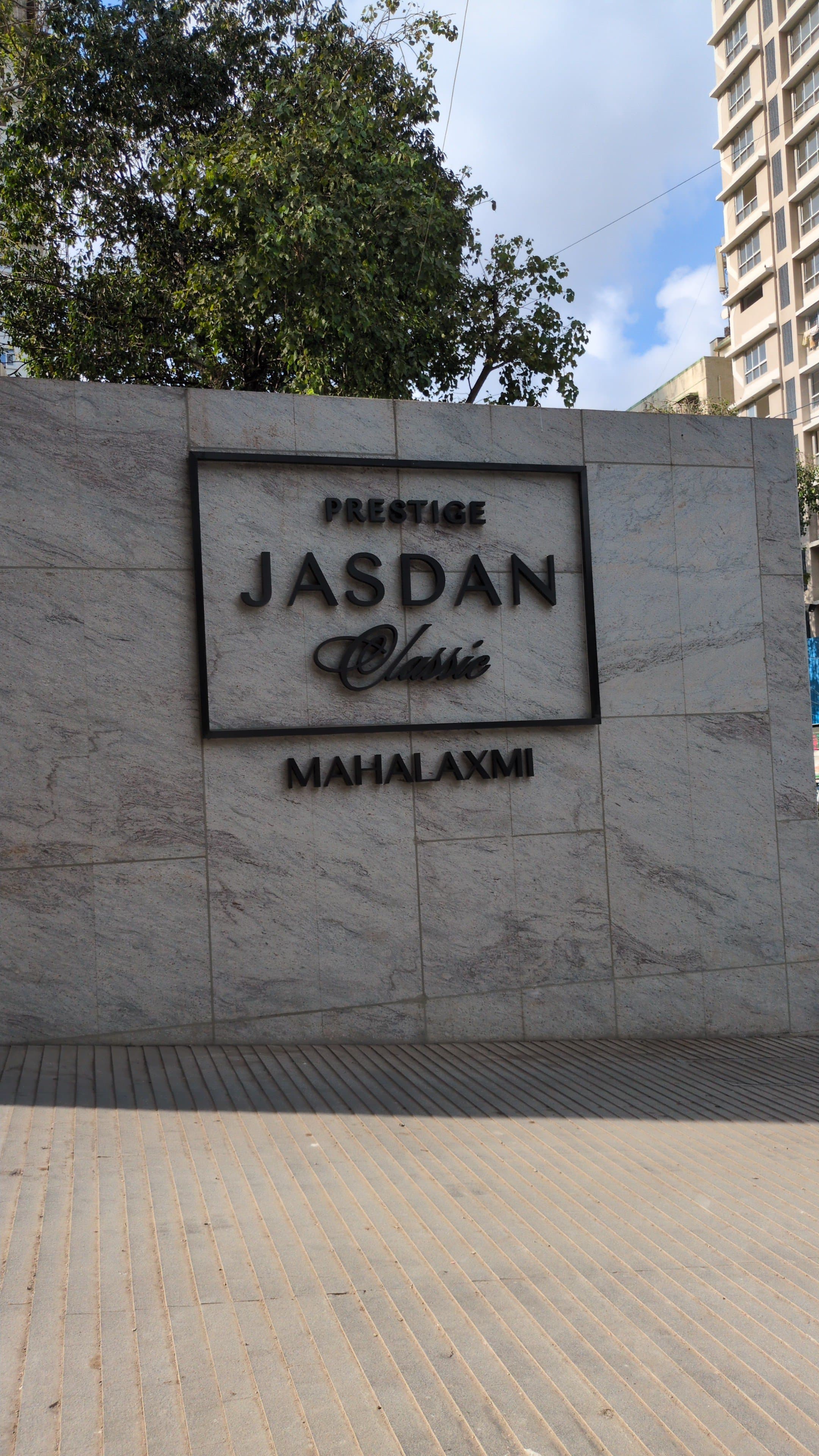
- Prestige Jasdan Classic — 2 BHK: Rs 5.15–5.70 Cr (883 sqft) at Rs 58,323–64,553 PSF. OC received. Ready to register.
- Prestige Jasdan Classic — 3 BHK: Rs 12 Cr (1,766 sqft) at Rs 67,948 PSF. OC received.
- Prestige Jasdan Classic — 4 BHK: Rs 12 Cr (1,766 sqft). OC received.
- Prestige Jasdan Classic — 5+ BHK: Rs 15.50 Cr (2,512 sqft) at Rs 61,703 PSF. OC received.
Prestige Jasdan Classic is a completed, delivered project. No construction risk, no possession delay risk. Registration can be completed within 30–45 days of agreement to sell.
The Right Buying Strategy for June 2026
The most durable Mahalaxmi buys in the current environment are OC-received projects that do not depend solely on the Central Park thesis for their investment case. Prestige Jasdan Classic qualifies: delivered, Mahalaxmi address, priced at Rs 58,000–68,000 PSF — well within what the locality's established comparable set supports independent of any park premium.
For buyers specifically targeting racecourse-view upside, the risk-managed approach is to enter below Rs 70,000 PSF in an OC-received product. At that price, the view premium is not fully priced in. If the Central Park plan proceeds as announced, you capture the rerate. If it is delayed 3–5 years, you have not overpaid for a premium that has not yet materialised. Open-view units priced above Rs 80,000 PSF — Piramal at Rs 83,927 PSF, Raheja at Rs 90,344 PSF — assume the Central Park delivery is largely on track. That is a bolder bet given the June 2026 objection status.
Buyers planning to live in their Mahalaxmi purchase for 7–10 years are least exposed to the objection risk. In that horizon, some version of the Racecourse public activation is highly likely — if not the full Rs 500–600 crore plan, then a modified version that still delivers meaningful open green space. The question becomes how good the park will be, not whether the land goes residential.
Frequently Asked Questions
Are the 119 architect objections a serious legal threat, or just commentary?
Serious enough to monitor, but not currently a judicial stay. The architects' letter is a formal written submission to BMC, not a court petition. However, Mumbai has a history of infrastructure projects facing PIL-based stays after expert objections enter the public record. The flood risk argument — specifically the marshland and subsurface construction concern — is technically substantive enough to survive judicial scrutiny if any NGO or resident association files a PIL during the pre-construction phase. Track whether a court petition follows in Q3 2026.
Does the flood risk concern apply to existing buildings in Mahalaxmi?
The flood risk from the proposed underground parking is forward-looking — it would increase runoff after subsurface construction seals the marshland. Existing buildings in Mahalaxmi already manage within current drainage capacity. Buildings within 500–800 metres of the racecourse boundary, particularly in the Haji Ali to Tardeo Road stretch, would be most exposed post-construction. Ask building management for post-2022 monsoon incident records and waterproofing inspection reports as part of your due diligence.
What is the impact of Piramal North Tower 3's June 2026 possession on the resale market?
North Tower 3's possession (RERA P51900021057, June 17 2026) adds secondary market supply in the Rs 3.32–5.60 crore band through Q3 2026. Early buyers sitting on 20–35% appreciation may choose to sell now, adding well-priced Piramal units. This creates short-term negotiating room for buyers in the Rs 3.5–5 crore range — motivated sellers may accept 5–8% below headline asking through September 2026.
Should I wait for BMC to respond to the architects before buying?
Waiting for BMC clarity is unlikely to produce a clean signal on any predictable timeline. The more useful trigger is whether a court petition seeking a stay on underground construction is filed before the first construction tender is awarded. For end-users who want to live in Mahalaxmi regardless of the park timeline, the BMC response is not a sound reason to delay purchase.
Which Mahalaxmi projects are least exposed to the racecourse uncertainty?
Projects priced below Rs 70,000 PSF in OC-received buildings carry the least exposure. Prestige Jasdan Classic at Rs 58,000–68,000 PSF (OC received) is the clearest example. Projects priced above Rs 80,000 PSF on open-view racecourse-facing floors — Piramal, Raheja Vivarea — have more of their premium tied to the Central Park delivery timeline. For a pure investor on a 2–3 year horizon, sub-Rs 70,000 PSF RTM units are the right risk-adjusted entry.
Related Reading
→ Mahalaxmi Central Park: The Investment Thesis for Open-View Buyers→ Complete Mahalaxmi Property Buying Guide 2026→ Prestige Jasdan Classic Mahalaxmi: Full Review→ Mahalaxmi Monsoon Waterlogging: What Buyers Should Check→ Mahalaxmi Market Intelligence: May 2026 DataBuying in Mahalaxmi? Get an Independent Assessment Before You Sign.
Property Butler tracks every active OC-received unit in the Mahalaxmi corridor and gives you a read on current PSF vs comparables, flood-risk building history, and whether the price reflects the racecourse premium fairly or speculatively.
Search Mahalaxmi OC UnitsMahalaxmi Area Guide