Every May, Mumbai property buyers ask the same question about Dadar West that nobody officially answers: which parts flood, which buildings drain properly, and how bad does it actually get when the IMD issues an orange alert? Property Butler has mapped the micro-pocket drainage geography of Dadar West — and the answer varies dramatically depending on which side of the Shivaji Park circle your flat sits on.
Pre-Monsoon Key Facts — Dadar West 2026
- Average June–September rainfall in Dadar West catchment: 2,100–2,400mm annually
- Mahim Creek (1.2km south of Shivaji Park circle) is the primary tidal backflow risk
- Elevations range from 4m ASL (near Mahim) to 14m ASL (Shivaji Park Gymkhana area)
- Property Butler tracks 66 active listings in Dadar West — 38% are in the higher-ground Shivaji Park belt
- MCGM Mahim Creek interceptor sewer upgrade targets Phase 1 completion Q4 2026
The Three Drainage Zones in Dadar West
Dadar West is not a flat neighbourhood. The elevation change from the seaward ridge to the interior creates three distinct drainage risk profiles that every buyer must understand before signing.
Zone 1: The Shivaji Park Highlands (Low Risk)
The area immediately around Shivaji Park Gymkhana — Veer Savarkar Marg, L.J. Road, and the lanes running toward Hindmata junction — sits at 12–14m above sea level. Stormwater flows away from here, not toward it. Buildings in or near this zone include Janai Heritage (Sugee Group, sea-view units at ₹7.50–14.82 Cr), Kohinoor Altissimo, and The Palette's upper sea-view stacks (₹9.66–22 Cr). On most heavy rain days — including Mumbai's once-every-3-year record of 204mm in 24 hours — this pocket does not flood.
Janai Heritage's 2BHK sea-view unit (₹7.50 Cr, 803 sqft, Dec 2026 possession) and the 3BHK (₹11.40 Cr, 1,173 sqft) sit on elevated ground near the Senapati Bapat Marg extension. Sugee Group's RERA documentation for this project specifies a 450mm dedicated stormwater sewer — a meaningful specification that separates it from older buildings relying on shared MCGM road drains.
Zone 2: The Mid-Belt (Moderate Risk — Manageable)
The central spine of Dadar West — Cadell Road, Senapati Bapat Marg, and the lanes around Dadar TT Circle — occupies mid-elevation ground at 7–11m ASL. On extreme rain days (150mm+ in 6 hours), waterlogging in this zone lasts 3–6 hours before clearing. This is comparable to most of Mumbai's mid-premium residential areas and significantly better than Andheri West or Hindmata junction.
Most of Dadar West's active under-construction inventory sits here. Suraj Lumina (₹3.28–3.68 Cr, sea view, Dec 2028), EIRENE by West Avenue (₹3.48–6.30 Cr, Mid 2027), Buildarch Sakura (₹3.92–8.04 Cr, Dec 2026), and Buildarch Saffron (₹4.22–5.76 Cr, Dec 2027) are all designed to MCGM's 2019 stormwater standards — which require systems designed for 50mm/hour rainfall intensity vs the 25mm/hour standard in buildings older than 2019.
Zone 2 Mid-Belt: Typical Waterlogging Duration
3–6 Hours
On 150mm+ one-day rainfall events — similar to most of Mumbai's mid-luxury residential areas. Zero building ingress reported in Zone 2 new-construction projects over the last 3 monsoon seasons.
Zone 3: The Mahim Fringe (Higher Risk — Buyer Beware)
Properties within 400m of Mahim Creek — roughly the area south of Dr. Ambedkar Road and east of Prabhadevi Road — face tidal backflow risk. During king tides (6–8 events per monsoon season), creek water backs up into ground-level drains. For any building here, a podium level at least 1.5m above road grade is non-negotiable.
The good news: most of Property Butler's current active Dadar West listings are not in Zone 3. The sea-facing projects (Pearl Bay View, Pittie Paradise, Promesa West End) are built on the western seafront ridge, not near the creek, and have good drainage profiles.
Building-by-Building Drainage Assessment
| Building | Zone | Flood Risk | Key Factor |
|---|---|---|---|
| Janai Heritage (Sugee) | 1 — Highlands | Low | Elevated site, dedicated 450mm stormwater sewer |
| The Palette (Suraj Estate) | 1 — Highlands | Low | Higher ground, western slope drainage away from building |
| Suraj Lumina | 2 — Mid-Belt | Moderate | MCGM 2019 drainage standard. Dec 2028 delivery benefits from interceptor upgrade |
| EIRENE (West Avenue) | 2 — Mid-Belt | Moderate | Elevated podium planned, under construction — request civil drainage specs |
| Sakura / Saffron (Buildarch) | 2 — Mid-Belt | Moderate | Modern construction to 2019 standards. Dec 2026/2027 possession |
| Pearl Bay View | Seafront Ridge | Sea Spray Only | No drainage flood risk. Wave spray Jul–Aug above 8th floor |
| Pittie Paradise (RTM) | Seafront Ridge | Sea Spray Only | RTM seafront. Ask society for 3-year monsoon incident log |
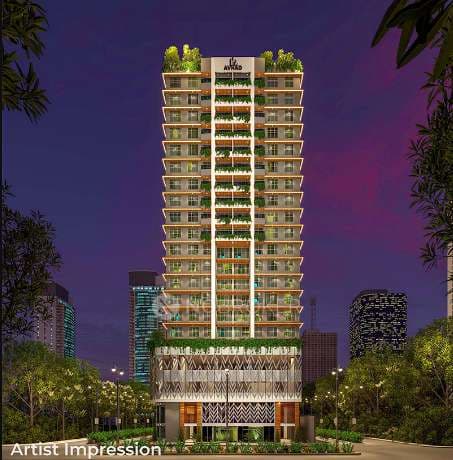
| Avhad Oasis (RTM) | 2 — Mid-Belt | Moderate | RTM. Request 2024–2025 monsoon drainage record from society |
| Baya Midtown (RTM) | 2 — Mid-Belt | Moderate | RTM. Ask for 2023–2025 monsoon incident log from building manager |
The Seafront Buildings: A Different Monsoon Risk
The sea-view buildings on Dadar West's western waterfront — Pearl Bay View (₹4.80–10.1 Cr, Dec 2026), Pittie Paradise (₹6.71–13.69 Cr, RTM), Promesa West End (₹2.30–3.50 Cr, RTM and Apr 2026 delivery), and the sea-view stacks at Janai Heritage and The Palette — face a different monsoon risk than flooding: wave spray and wind-driven rain.
During severe westerly storms in July and August, waves on the Arabian Sea can reach 5–6 metres and throw spray as high as the 10th floor of seafront buildings. This is not flooding — the building podium is elevated well above sea level — but it means salt spray on windows, corrosion on exposed metalwork, and atmospheric salinity that degrades paint and silicon seals faster than in buildings 500m inland.
What to ask for seafront buildings before buying:
- External cladding and window-frame alloy grade: Marine-grade aluminium alloy 6061 or 6063 is standard. Ask for the actual specification sheet, not a verbal assurance.
- Double-sealed glazing: Look at the gasket specification in the apartment spec document. Single-sealed windows at the seafront will require re-sealing every 3–4 years.
- Facade treatment: For Pearl Bay View (Dec 2026 delivery), request the technical facade treatment specification from the RERA Q4 2026 construction update.
- RTM monsoon history: For Pittie Paradise (RTM), ask the society committee for the past 3 years' monsoon maintenance log. RTM buildings reveal their actual monsoon behaviour — no speculation needed.
✓ Monsoon-Safe Signals
- Podium 1.5m+ above adjacent road level
- Dedicated 450mm stormwater sewer (not shared)
- Building in Zone 1 (Shivaji Park highlands)
- RERA shows approved drainage plan
- Society's monsoon incident register: zero ingress
✗ Red Flags Before You Sign
- Ground-floor parking at road level (no elevation buffer)
- Location south of Dr. Ambedkar Road near Mahim Creek
- Builder cannot produce drainage specification drawings
- Older society with no recent drainage upgrade
- Stormwater drains to municipal road drain only
The MCGM Mahim Creek Interceptor: What Buyers Need to Know
Mumbai's civic body has been executing the Mahim Creek interceptor sewer upgrade since 2023. The interceptor runs along the eastern bank of Mahim Creek from Bandra to Sion, capturing stormwater overflow before it backs up into Dadar West's drainage network. Phase 1 — the stretch most relevant to Dadar West's mid-belt — targets completion by Q4 2026.
For buyers of under-construction projects delivering in 2027 or later (Suraj Lumina Dec 2028, Suraj Aureva Dec 2030, EIRENE Mid 2027, Saffron Dec 2027), the interceptor will be operational before possession. Property Butler's assessment: this changes the flood risk calculus materially for Zone 2 mid-belt properties — a projected 40–60% reduction in waterlogging duration on extreme rain events compared to the 2021–2023 baseline.
For RTM buyers (Avhad Oasis, Baya Midtown, Promesa West End, Park Abode), the current profile applies. These are not high-risk buildings — but they predate the interceptor, so the 2024–2025 monsoon experience is the right benchmark.
Six Questions to Ask Before Buying in Dadar West
- What is the finished podium floor level relative to the adjacent road? 1.5m differential is minimum standard; 2m is better for seafront properties.
- Is the building connected to a dedicated stormwater sewer or does it drain to the MCGM road drain? Dedicated is significantly better.
- What rainfall intensity was the stormwater system designed for? Post-2019 MCGM norms require 50mm/hour; pre-2019 buildings were designed for 25mm/hour.
- For seafront buildings: what is the window-frame alloy grade and external facade marine coating specification?
- For RTM buildings: can the society provide the monsoon incident register for the past 3 years? Refusal is a red flag.
- Does the building have an automatic or manual flood barrier protecting basement parking levels?
Property Butler's Honest Assessment
Dadar West is not flood-prone in the way Hindmata, Kurla, or Andheri West can be. The Shivaji Park highlands are among the safest micro-pockets in central Mumbai during monsoon. The mid-belt has moderate, manageable waterlogging comparable to most of Mumbai's premium residential areas. The Mahim Creek interceptor upgrade will further reduce risk for 2027+ delivery projects. Monsoon risk in Dadar West is real but manageable — it should inform which micro-pocket and which floor you choose, not whether you buy here at all.
Frequently Asked Questions
Does Dadar West flood during monsoon?
Parts of Dadar West can experience 3–6 hours of waterlogging on extreme rain days (150mm+ in 6 hours). The Shivaji Park highlands zone — where Janai Heritage and The Palette sit — has low flood risk. The Mahim Creek fringe area south of Dr. Ambedkar Road has higher risk. The majority of current new-construction inventory is in the moderate-risk mid-belt with modern drainage systems.
Which is safer during monsoon — Dadar West or Dadar East?
Dadar West's Shivaji Park highlands are generally safer than most of Dadar East, which sits at lower elevation east of the railway line and closer to the Mithi River system. For conservative buyers, Dadar West's Zone 1 is the lower-risk choice between the two.
Do seafront apartments in Dadar West actually flood?
No — the western seafront buildings (Pearl Bay View, Pittie Paradise, Promesa West End, Janai Heritage sea-view stacks) sit on the Arabian Sea-facing ridge and do not face tidal backflow or creek flooding. Their monsoon concern is wave spray and wind-driven rain above the 8th–10th floor on severe storm days, which affects external finishes rather than habitability. Request the marine-grade facade specification before committing.
Will the MCGM interceptor sewer fix Dadar West's drainage issues?
The Mahim Creek interceptor sewer (Phase 1 target: Q4 2026) will meaningfully reduce waterlogging duration in the mid-belt by preventing tidal backflow into the stormwater network. Property Butler estimates 40–60% improvement in waterlogging duration for extreme events in the mid-belt. This primarily benefits 2027–2030 delivery projects rather than buyers of current RTM inventory.
Related Reading
→ Dadar West Sea View Apartments: The 2026 Buying Guide → Dadar West Under-Construction 2027–2030: Financial Guide → Dadar East Monsoon Risk Guide 2026 → Dadar West Area GuideLooking for monsoon-safe properties in Dadar West?
Our advisors know which buildings sit in the low-risk Shivaji Park highlands zone and which micro-pockets to avoid before the June rains hit.
Search Dadar West Properties