The July 2024 Union Budget fundamentally rewrote the capital gains calculation for Indian real estate — and Dadar West sellers are among the most affected because this locality concentrates long-held redevelopment-era flats purchased at ₹80–₹150/sqft in the 1980s–2000s. Property Butler breaks down the exact tax impact, the exemption routes, and what Dadar West sellers need to do before signing.
⚠ CRITICAL RULE CHANGE — JULY 23, 2024
For property purchased before July 23, 2024 and sold after: you can choose between 12.5% flat LTCG (no indexation) OR 20% with indexation. Pick the lower tax. For property purchased on or after July 23, 2024: only 12.5% flat applies — indexation no longer available.
Understanding the Two Regimes
Long-Term Capital Gains (LTCG) applies when a property is held for more than 24 months before sale. For Dadar West — a locality of old MHADA colonies, cooperative housing societies, and 1990s–2000s developer buildings — virtually all seller-held properties qualify as long-term.
| Parameter | Old Regime (pre-Jul 23 purchase) | New Regime (post-Jul 23 purchase) |
|---|---|---|
| LTCG rate option 1 | 20% with indexation | 12.5% flat only |
| LTCG rate option 2 | 12.5% flat (no indexation) — choose lower | N/A |
| Surcharge on LTCG | 15% surcharge if LTCG exceeds ₹50 lakh | |
| Cess | 4% health + education cess on tax + surcharge | |
| Basic exemption | ₹1 lakh per year (negligible for property) | |
Worked Example A — Dipti Royal Arc 3BHK
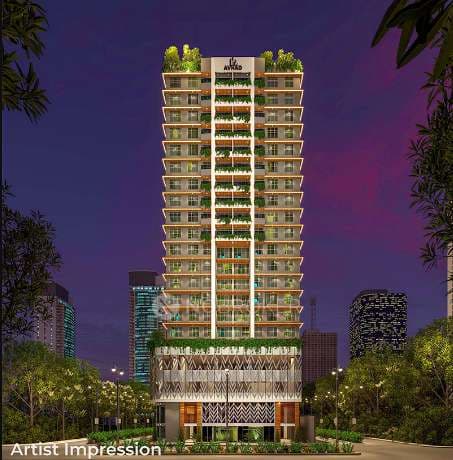
Property Butler tracks a Dipti Royal Arc 3BHK in Dadar West currently listed at ₹7.25 crore. Let's model the tax for a seller who purchased in 2018 at ₹3.20 crore.
SCENARIO: Purchased ₹3.20 Cr in 2018 → Selling ₹7.25 Cr in 2026
Option A — 12.5% Flat (No Indexation)
- Gain = ₹7.25 Cr − ₹3.20 Cr = ₹4.05 Cr
- LTCG @ 12.5% = ₹50.63 lakh
- Surcharge @ 15% (gain > ₹50L) = ₹7.59 lakh
- Cess @ 4% on (₹50.63L + ₹7.59L) = ₹2.33 lakh
- Total tax: ₹60.55 lakh
Option B — 20% With Indexation (CII basis)
- Purchase year 2018–19: CII = 280. Sale year 2025–26: CII = 363 (est.)
- Indexed cost = ₹3.20 Cr × (363/280) = ₹4.15 Cr
- Indexed gain = ₹7.25 Cr − ₹4.15 Cr = ₹3.10 Cr
- LTCG @ 20% = ₹62.0 lakh
- Surcharge + Cess ≈ ₹11.2 lakh
- Total tax: ₹73.2 lakh
Verdict for Example A: The 12.5% flat rate wins by ₹12.65 lakh. For a 2018 purchase, the 7-year holding period means indexation brings limited relief — the CII multiplication factor (363/280 = 1.30) is not large enough to overcome the lower flat rate. Always pick the 12.5% option for post-2015 purchases.
Worked Example B — The 2010 Dadar West CHS Flat
SCENARIO: Purchased ₹1.20 Cr in 2010 → Selling ₹4.50 Cr in 2026
Option A — 12.5% Flat
- Gain = ₹4.50 Cr − ₹1.20 Cr = ₹3.30 Cr
- LTCG @ 12.5% = ₹41.25 lakh
- Surcharge @ 15% = ₹6.19 lakh
- Cess @ 4% = ₹1.90 lakh
- Total tax: ₹49.34 lakh
Option B — 20% With Indexation
- Purchase year 2010–11: CII = 167. Sale year 2025–26: CII = 363
- Indexed cost = ₹1.20 Cr × (363/167) = ₹2.61 Cr
- Indexed gain = ₹4.50 Cr − ₹2.61 Cr = ₹1.89 Cr
- LTCG @ 20% = ₹37.8 lakh
- Surcharge + Cess ≈ ₹6.1 lakh
- Total tax: ₹43.9 lakh
Verdict for Example B: Indexation wins by ₹5.44 lakh. For pre-2015 purchases (held 10+ years), the CII multiplication factor (363/167 = 2.17x) is large enough to reduce the indexed gain substantially, making 20% on a lower base beat 12.5% on the raw gain. For pre-2015 purchases, always compare both calculations.
Section 54 — The Reinvestment Exemption (Most Dadar West Sellers' Route)
Section 54 of the Income Tax Act allows a seller to claim full or partial exemption from LTCG tax if the capital gain is reinvested in a new residential property. Key conditions:
- Buy one new residential property within 1 year before or 2 years after the sale date (or complete construction within 3 years)
- Cap at ₹10 crore — reinvestment exemption is capped at ₹10 Cr LTCG from April 2023 onwards
- Capital Gains Account Scheme (CGAS): If you can't buy before filing your ITR, park the unused gain in a CGAS account with a designated bank — it buys you the 2-year window
- Only one property: Section 54 allows exemption for ONE new property only (not two flats to split gain)
Dadar West Seller Scenario
Sell Dadar West flat for ₹4.50 Cr (gain ₹1.89 Cr indexed). Under Section 54, reinvest entire ₹1.89 Cr gain in a new flat within 2 years → tax liability = ₹0. Many Dadar West sellers use this route: sell a redevelopment-era flat, upgrade to a new under-construction project in Dadar, Parel, or Prabhadevi using the proceeds. The gain is exempt; only the surplus over the reinvested amount is taxable.
Section 54EC — NHAI/REC Bonds
If you don't want to buy another property, Section 54EC allows exemption by investing the gain (up to ₹50 lakh per financial year) in government-notified infrastructure bonds:
- Eligible bonds: NHAI (National Highways Authority), REC (Rural Electrification Corporation), PFC (Power Finance Corporation)
- Lock-in: 5 years — cannot redeem before maturity without the exemption being reversed
- Interest: ~5.25% per year (taxable as income, but gains exempted)
- Timing: Must invest within 6 months of sale date
For gains under ₹50 lakh, 54EC is simpler than 54 (no property purchase required). For larger gains (like the ₹4.05 Cr Example A gain), the ₹50 lakh cap means 54EC covers only part of the liability — Section 54 reinvestment or paying the tax balance is necessary.
The Decision Framework for Dadar West Sellers
| Your Situation | Best Route |
|---|---|
| Upgrading to a new flat anyway | Section 54 — full exemption on reinvested gain |
| Gain under ₹50 lakh, don't want another property | Section 54EC bonds (NHAI/REC) — 5-yr lock-in |
| Gain over ₹50 lakh, partial exemption only | Section 54EC for first ₹50L + pay balance tax |
| Purchase was before 2015 | Compare 12.5% flat vs 20%+indexation — often indexation wins |
| Purchase was after 2015 | 12.5% flat is almost always better |
| NRI seller (non-resident) | TDS @12.5% deducted at source; file ITR to claim refund if exempt |
Frequently Asked Questions
PROPERTY BUTLER NOTE
Property Butler tracks active Dadar West inventory across Dadar West including Dipti Royal Arc and comparable projects. We work with a panel of CAs familiar with Maharashtra property taxation — if you're planning a sale and want a pre-transaction tax estimate, speak to our team. We can also help you identify Section 54-eligible reinvestment options in the ₹3–8 Cr range across South Mumbai. This guide is educational — not tax advice. Consult a qualified CA before transacting.
Capital gains calculations based on Finance Act 2024 provisions. CII figures use CBDT published values; FY25-26 CII is provisional estimate pending official notification. Surcharge and cess rates as of AY 2026-27. This content is for general information only and does not constitute tax advice.