Dadar West is sitting at an infrastructure inflection point. Three major catalysts — Coastal Road Phase 2, BDD Chawl Redevelopment, and Dadar station upgrade — are converging between 2026 and 2030. Property Butler's 5-year analysis examines what each means for buyers entering the market today at ₹53,000/sqft average.
Current Market Baseline — May 2026
Dadar West Average PSF: ₹53,000
Range: ₹4,500–4,800/sqft (boutique entry) to ₹75,000/sqft (Suraj The Palette penthouse). Annual appreciation: 8–12%. Rental yield: 3.5–4%. 5-year appreciation: 10.1% CAGR.
Catalyst 1: Coastal Road Phase 2 — The Time-Distance Compression
Coastal Road Phase 1 (Marine Drive to Worli) is operational. Phase 2 extends the corridor northward, connecting Worli to Bandra and eventually Dadar via interchanges. When complete, the drive from Dadar West to Nariman Point — currently 45–60 minutes in peak traffic — drops to 15–20 minutes.
What this means for Dadar West property prices: the premium commanded by South Mumbai properties (Worli, Prabhadevi, Lower Parel) has historically been tied to their perceived proximity to the CBD. Coastal Road eliminates the time-distance gap between Dadar West and South Mumbai's prime precincts. Properties near the Coastal Road interchanges — particularly Dadar West's seafront and areas adjacent to the Worli connector — stand to benefit the most.
Historical precedent: when Sealink opened in 2009, Bandra West properties within 2 km of the toll gained 18–25% in 24 months. The Coastal Road effect is structurally similar for Dadar West's seafront locations.
Catalyst 2: BDD Chawl Redevelopment — Supply & Neighbourhood Upgrade
The BDD (Board of Development Department) chawls in Worli-Dadar belt cover approximately 90 acres and house 22,000+ families. MHADA and the Maharashtra government are redeveloping these into modern towers. The project timeline stretches to 2030–2032.
How does this affect Dadar West buyers?
- Short-term (2026–2028): Construction activity creates nuisance (noise, dust, traffic). Properties directly adjacent to BDD chawl sites may see 3–5% softness in the immediate surrounds.
- Medium-term (2028–2030): New towers replace old chawls, neighbourhood quality visibly improves, transit access to the area enhances.
- Long-term (2030+): The completed BDD redevelopment creates a halo effect for the entire Dadar-Worli belt — comparable to what Lower Parel's mill land redevelopment did for that corridor between 2005 and 2015.
Investors with a 5-7 year horizon who buy in Dadar West's non-BDD-adjacent areas today are positioned to capture the uplift without the construction nuisance.
Catalyst 3: Dual Railway Hub — Mumbai's Unique Connectivity Asset
No other Mumbai suburb offers what Dadar does: both Western Railway and Central Railway lines within 1 km of each other. This unique connectivity means Dadar West residents have direct train access to BKC (Central line to Kurla), Lower Parel (Western line), CST, and the entire Eastern Express Highway corridor — without a single interchange.
The upcoming Dadar station upgrade (part of the Mumbai Urban Transport Project Phase 3) will add more platforms, better pedestrian underpasses, and improved interchange between the two railway lines. Timeline: 2027–2029. Effect on property: stations with upgraded infrastructure typically see 8–12% premium development in the 500m catchment.
Catalyst 4: Suraj Estate Land Acquisition Pipeline
Suraj Estate Developers — Dadar West's dominant listed developer — recently acquired a new land parcel in Dadar West for ₹18 crore, with a planned project targeting ₹100 crore in GDV. This signals developer conviction that Dadar West prices will be significantly higher when the next project launches in 2027–2028.
Developer land acquisition is one of the strongest leading indicators for price appreciation: sophisticated listed companies don't pay ₹18 Cr for a plot and build for ₹100 Cr GDV if they expect flat or declining prices. The land cost implies a breakeven PSF that creates a floor under the market.
The 5-Year Price Projection
| Scenario | Annual CAGR | PSF in 2031 | ₹3.5 Cr flat value in 2031 |
|---|---|---|---|
| Conservative (infrastructure delays) | 6% | ₹70,900 | ₹4.69 Cr |
| Base Case (historical CAGR) | 8% | ₹77,840 | ₹5.15 Cr |
| Bull Case (Coastal Road opens) | 11% | ₹88,800 | ₹5.87 Cr |
| Stress Case (macro slowdown) | 3% | ₹61,500 | ₹4.07 Cr |
Even the stress case produces a positive return on a ₹3.5 Cr purchase (₹4.07 Cr in 5 years). The base case — most likely — shows ₹1.65 Cr of capital appreciation on a ₹3.5 Cr investment, plus 5 years of rental income (₹12,000–16,000/month for a 2 BHK) totalling ₹7.2–9.6 lakh.
Best Entry Points Today — by Risk/Return Profile
Optimal Dadar West Entry Points — May 2026
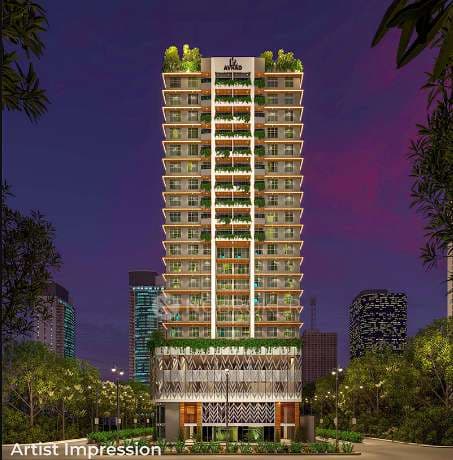
- Conservative investor (wealth preservation): Avhad Oasis 2 BHK ₹2.69–3.39 Cr (ready to move, immediate rental) or Baya Midtown 2 BHK ₹3.38 Cr (ready)
- Mid-risk buyer (5-year horizon): EIRENE 3–4 BHK ₹4.19–6.30 Cr (mid 2027) — best large-format value in the market
- Appreciation play (7-year horizon): Suraj Lumina 2 BHK ₹3.28–3.45 Cr (Dec 2028) — Suraj brand + sea view + longer timeline for coastal road benefit
- Capital growth maximum (10-year horizon): Suraj Park View 1–2 BHK ₹2.78–5.16 Cr (Dec 2030) — Shivaji Park sea view, Suraj delivery certainty, maximum appreciation runway
Risks to Monitor
- Possession delays: Dec 2026 deliveries (Sakura, Kapil Tirth, Pearl Bay View) are scheduled — verify current construction progress on site visits
- Interest rate cycle: If RBI cuts repo rate by 50–75 bps in 2026–27 (consensus expectation), home loan rates fall and affordability improves — positive for the market
- BDD oversupply: When 22,000+ BDD units eventually enter the market (2030+), there could be localised supply pressure — this affects rental yields more than capital values
- Land acquisition pace: If Suraj or other developers face delays in new project approvals, the supply premium that drives new-launch PSFs higher could moderate
Frequently Asked Questions
When will Coastal Road Phase 2 connect to Dadar?
Coastal Road Phase 2 (Worli to Bandra) is under construction and expected to open in stages between 2027 and 2029. The Worli to Dadar connectivity benefit comes through the existing Worli interchange — drive time from Dadar to Nariman Point already drops significantly once Phase 2 is operational. A direct Dadar interchange is part of longer-term plans. Buyers today are buying in advance of this connectivity improvement.
Is Dadar West overpriced at ₹53,000/sqft average?
Contextually, no. Prabhadevi and Worli — the next suburb south — average ₹55,000–70,000/sqft. Bandra West — the next suburb north — averages ₹60,000/sqft. Dadar West sits between two premium corridors and offers the dual-railway advantage that neither Worli nor Bandra West can match. The relative discount to its neighbours, combined with the infrastructure pipeline, is the core investment argument.
What is the rental yield on a Dadar West 2 BHK purchased today?
A 2 BHK in Dadar West at ₹3–4 Cr typically rents for ₹35,000–55,000/month, yielding 1.9–2.5% gross. Net of maintenance, vacancy (2–3 weeks/year typically), and broker fees, net yield is 1.5–2%. Dadar West is primarily a capital appreciation market. Investors seeking yield above 3% should look at commercial assets or geographies with lower entry PSFs.
Should I buy in Dadar West vs Dadar East for the 5-year investment?
Dadar West offers higher absolute appreciation potential (better infrastructure catalysts, sea view premium) but at significantly higher entry PSF (₹53,000 avg vs ₹46,550 in Dadar East). Dadar East offers better rental yield (3.5–6% vs 3.5–4%) and lower entry costs. For pure capital appreciation with a 5+ year horizon: Dadar West. For rental yield with moderate appreciation: Dadar East.
Explore Dadar West investment-grade properties
Property Butler lists every active project with verified PSFs, carpet areas, and possession dates — filter by budget and BHK to find your entry point.
Search Dadar West Properties