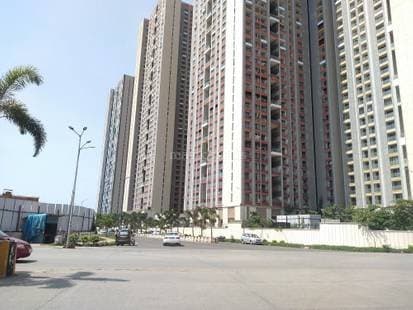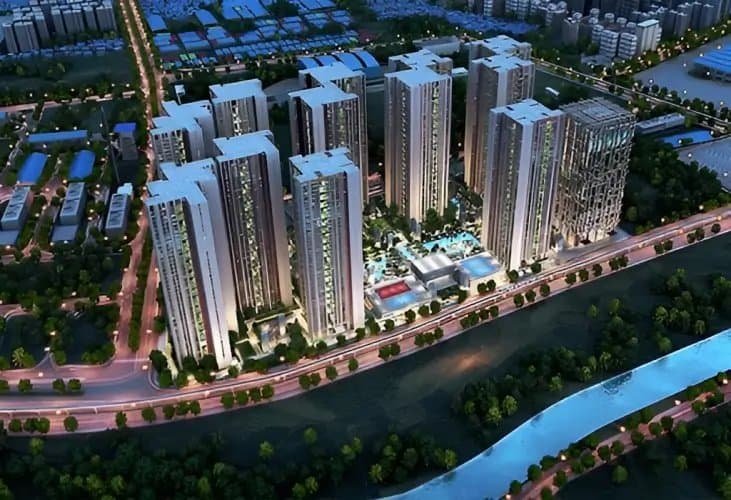
Cuffe Parade's defining residential towers — Maker Towers T, E, and F; World Cove; Jolly Maker Apartments — were built between 1970 and 1990. They are 35-55 years old. At prices ranging from Rs 8 Crore to Rs 45 Crore for a flat in these buildings, the building's operational health is as important as the apartment's location and views. Property Butler has seen buyers lose money not because they chose the wrong area, but because they bought into a building with a depleted sinking fund, aging mechanical infrastructure, or a pending BMC demolition notice that the seller did not volunteer. This checklist closes that information gap.
Why Cuffe Parade Building Health Matters More Than Most Areas
- Maker Towers (multiple wings) built 1972-1985 — oldest major residential complex at this price point in SoBo
- World Cove completed 2004 — substantially newer, lower risk profile
- Jolly Maker Apartments I and II built 1974-1978 — iconic but aging
- Average flat price in Cuffe Parade: Rs 18,000-55,000/sqft depending on building and floor
- Major repair assessments in older buildings range from Rs 5-40 Lakh per flat
- A low sinking fund means future special assessments fall entirely on owners
Question 1: What Is the Society's Sinking Fund Balance?
Under the Maharashtra Cooperative Societies Act, every CHS is required to maintain a sinking fund — a reserve corpus for major structural repairs and building refurbishment. The minimum contribution is 0.25% of the building cost per year, but this statutory minimum is typically far below what a 50-year-old building actually needs.
For a Cuffe Parade building with 50-200 flats, a healthy sinking fund in 2026 should be at minimum Rs 2-5 Crore. A fund below Rs 50 Lakh for a building of this age is a warning sign. It means that the next major repair — new lifts, terrace waterproofing, water tank replacement, façade repairs — will require a special assessment levied on every flat owner. On a Rs 18 Crore flat, a special assessment of Rs 10-20 Lakh is not trivial, but more importantly, it signals management neglect.
Ask for the society's last two annual financial statements. Look at the sinking fund closing balance. If the society refuses to share this, consider it a red flag.
Question 2: Are There Any Pending BMC Notices or Litigation?
BMC routinely inspects Mumbai's older buildings and issues notices for: structural repairs required (C2/C3 category), illegal alterations, plumbing non-compliance, fire safety deficiencies, and elevator non-compliance. Any pending notice affects the building's lendability and can restrict resale. A C1 classification (dangerous structure) is a potential demolition order.
Ask the society secretary for the most recent BMC inspection report. Also request the Encumbrance Certificate from the sub-registrar's office, which should show any court decrees or orders affecting the property. If the building or any flat in it is subject to ongoing litigation (owner disputes, developer disputes, BMC orders), this appears in public court records — accessible via the High Court's online cause list.
Question 3: When Were the Lifts Last Replaced?
Lifts in Cuffe Parade's older buildings have a useful life of 20-25 years. A building from 1975 that has not replaced its lifts since 2000 is operating on 26-year-old lift equipment — overdue for replacement. New lift installation in a mid-size Cuffe Parade tower costs Rs 35-75 Lakh per lift shaft. Most buildings have 2-4 lifts. This is a Rs 70 Lakh to Rs 3 Crore capital expenditure that will fall on owners if the sinking fund is inadequate.
Ask: when were the lifts last replaced? Are they currently under a maintenance AMC with a licensed lift company? Has the lift received its annual fitness certificate from the BMC Lifts department (mandatory under the Maharashtra Lifts Act 1939)?
Question 4: What Is the Maintenance Charge and What Does It Cover?
Cuffe Parade maintenance charges range from Rs 8 to Rs 25 per sqft per month, depending on the building and its amenity stack. The absolute amount matters less than what it covers. A Rs 10/sqft maintenance that includes all common area electricity, security, housekeeping, water, and lift maintenance is better than a Rs 6/sqft charge that has been deliberately kept low at the cost of deferred maintenance.
Ask for the last 2 years of maintenance billing statements and compare actual collections vs budgeted collections. A gap between billed and collected maintenance (i.e., members in arrears) suggests either financial distress in the ownership pool or a culture of non-compliance that management has not enforced. In either case, it is a building-level governance issue.
Question 5: Is There Any Outstanding Loan on the Society?
Some societies have taken loans — from cooperative banks or commercial lenders — to fund major repairs, without collecting sufficient contributions from members first. This society-level debt is not visible to individual buyers unless specifically requested. Ask the society for its balance sheet. Society loans are not illegal, but they represent a liability that current owners carry and that will be passed on to the buyer.
Question 6: What Is the Water Supply Arrangement?
Several older Cuffe Parade buildings have not been connected to BMC's upgraded water supply grid and depend on tanker water for 4-8 months of the year when municipal supply is inadequate. Tanker costs are substantial — Rs 2-5 Lakh per month for a large residential complex — and are borne by the society, ultimately paid by members through maintenance. Ask: does the building receive 24/7 BMC water supply or does it supplement with tankers? If tankers, what is the annual cost?
Question 7: What Is the Car Parking Situation?
Maker Towers and Jolly Maker were built in an era when car ownership was rare. Parking was an afterthought. Some wings have severely inadequate parking — fewer than one slot per two flats. Mechanical parking systems installed in the 1990s are reaching end-of-life in several Cuffe Parade buildings. Replacing a mechanical stack costs Rs 15-25 Lakh per machine.
Ask: how many designated parking slots come with the flat? Is parking ownership clear (i.e., assigned slot documented in the share certificate or separate parking allotment letter)? Is there a waiting list for additional parking? In buildings with acute parking shortage, this can be a significant daily-life friction point for a family with two cars.
Question 8: What Is the Structural Audit Status?
Under BMC's Structural Audit Policy, buildings 30+ years old must undergo a structural audit every 5 years. The audit classifies the building and recommends required repairs. Ask for the most recent structural audit report and its date. If the building is due for an audit and has not conducted one, the society is in non-compliance — a potential exposure.
Red flags in a structural audit report: rebar corrosion (common in sea-facing Mumbai buildings due to chloride attack), spalling concrete on exposed structural members, and any recommendation for Category B or C repairs that have not been completed.
Question 9: Are There Any Sub-Let or Commercial Use Complications?
Some Cuffe Parade buildings — particularly those near the BKC-adjacent commercial zone — have flats that have been converted to corporate guesthouses or serviced apartments without proper society permission or fire safety approvals. If the flat you're buying is currently being used as a guesthouse, verify that the society NOC covers this use and that BMC fire safety compliance (smoke detectors, emergency lighting, exit routes) is in order. A flat with undisclosed commercial use can create title complications at resale.
Cuffe Parade Due Diligence — Building Comparison
| Building | Built | Risk Profile |
| World Cove | 2004 | Lower — modern construction |
| Maker Towers T/E/F | 1972-1985 | Medium — verify lift, sinking fund |
| Jolly Maker I and II | 1974-1978 | Medium — verify structural audit |
| Any pre-1970 building | Pre-1970 | Higher — comprehensive audit required |
The Pre-Purchase Visit Protocol
Property Butler recommends every serious Cuffe Parade buyer make two visits: a property visit and a building visit. The property visit is with the broker or seller, viewing the apartment itself. The building visit — ideally without the seller present — involves speaking with the building watchman, checking the pump room, viewing the parking area, and visiting the lobby to observe maintenance quality. Signs of neglect that should trigger follow-up questions: peeling paint in common areas, non-functional lighting in stairwells, rust-stained walls, or lifts that do not operate smoothly.
Frequently Asked Questions
How do I find out if a Cuffe Parade society has pending BMC notices?
Request the society secretary to share the most recent BMC inspection report. Additionally, you can check BMC's online portal for C1, C2, and C3 classified buildings — the list is publicly available. Your property lawyer should also run a search at the sub-registrar's office for any orders or injunctions affecting the property. If the seller is reluctant to share BMC correspondence, that reluctance itself warrants investigation.
What is a reasonable sinking fund balance for a Maker Towers wing?
For a 50-flat wing with average flat sizes of 1,200-1,800sqft, Property Butler considers Rs 2-4 Crore a healthy sinking fund balance in 2026. A balance below Rs 75 Lakh for a 1975-vintage building with no major repairs in the past decade suggests inadequate reserving. The implication: within the next 3-5 years, a major capital expenditure (lifts, waterproofing, structural repairs) will likely trigger a special assessment of Rs 5-20 Lakh per flat.
Is World Cove significantly better than Maker Towers from a building health perspective?
Yes, in structural terms. World Cove was completed in 2004, uses modern RCC construction, has contemporary lift systems, and its sinking fund is at an earlier stage of the reserve-building cycle. Maker Towers has the legacy of 50 years — some wings are exceptionally well-maintained with healthy reserves, others less so. There is significant variance wing-to-wing. The due diligence questions in this guide are particularly critical for any Maker Towers purchase.
Should I walk away if the society will not share financial statements?
A society that refuses to share its audited financial statements with a serious buyer (even if shared through the seller) should be treated as a significant red flag. Under Maharashtra CHS rules, members have a right to access society accounts — and while a non-member buyer has no statutory right, well-run societies routinely share accounts during due diligence as a matter of good practice. Non-disclosure most commonly indicates: very low sinking fund, maintenance arrears from specific members, or an ongoing financial dispute. In each case, these are material facts that affect the purchase decision.
Related Reading
Cuffe Parade: Which Building Should You Buy In — 2026 Guide Maker Towers Cuffe Parade Complete Review 2026 World Cove Cuffe Parade Review 2026 Heritage Apartment Due Diligence Guide — Colaba and Fort 2026Buying in Cuffe Parade?
Property Butler's South Mumbai team can walk you through building-specific due diligence on any Cuffe Parade complex — sinking fund, lift status, structural audit, and pending notices. Ask us before you sign.
Search Cuffe Parade Properties