
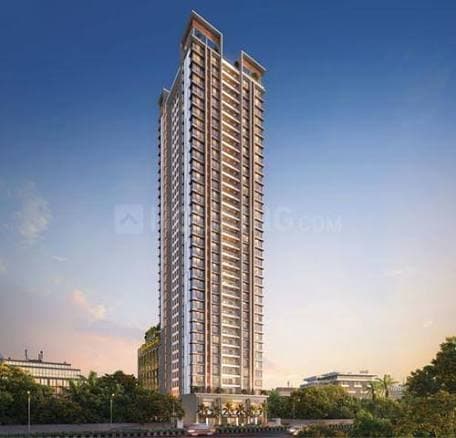
Lodha Marq Tardeo — The NRI Buyer's South Mumbai Asset
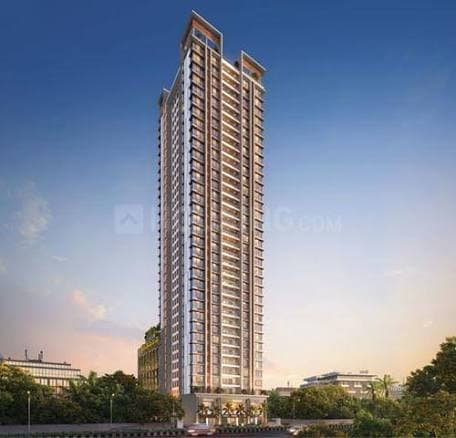
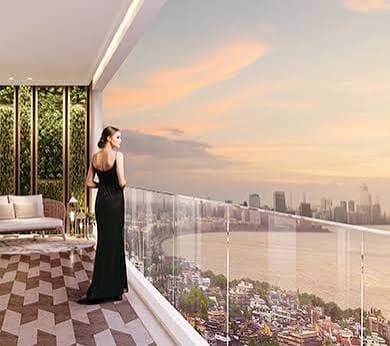
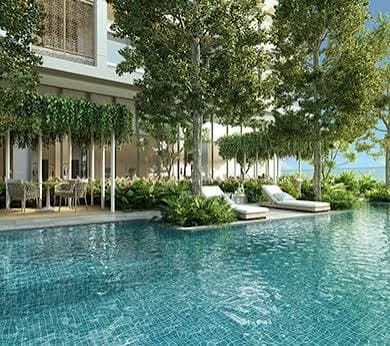
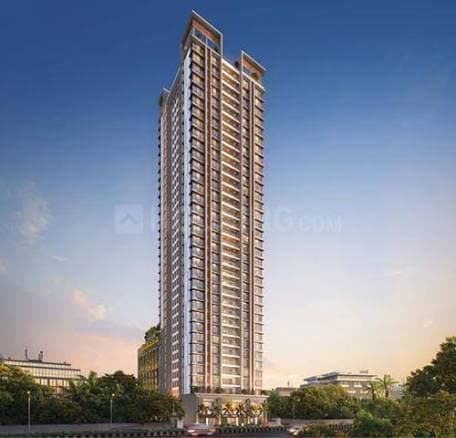
For the NRI household evaluating a South Mumbai luxury acquisition in 2026, Lodha Marq Tardeo sits at a structurally interesting intersection. The asset itself — a Lodha-built 3 BHK and Penthouse residential tower in the heart of Tardeo, walking distance to August Kranti Marg, Bombay Hospital, Wilson College and the Bombay Stock Exchange spine — delivers the three things an NRI buyer most often needs: blue-chip developer brand, deep South Mumbai address recognition, and asset-resale liquidity that does not require a continuous in-country presence to monetise. Property Butler is live with twelve units at Lodha Marq: eleven 3 BHKs (carpet 1,488-2,200 sqft, asking ₹10.71-25 Cr) and one penthouse (9,183 sqft carpet, asking ₹120 Cr). Six of the twelve units carry Sea View orientation, five are Open View, and one is Garden View — a view-mix that maps directly to the NRI buyer's typical preference hierarchy.
Lodha Marq · Tardeo · NRI Buyer Thesis · May 2026
₹10.71 Cr — ₹25 Cr
3 BHK · 1,488 – 2,200 sqft · 6 Sea-View units · 5 Open-View · 1 Garden-View · Penthouse ₹120 Cr separately
The Snapshot — Lodha Marq's NRI-Relevant Specs
The NRI Buyer's Top Three Questions on Lodha Marq
Question one: Can I buy as an NRI, and how does FEMA classify this acquisition? Yes — any NRI (Non-Resident Indian) and OCI (Overseas Citizen of India) cardholder is permitted to purchase residential real estate in India under the Foreign Exchange Management Act (FEMA) 1999 framework, with no requirement for RBI approval for a residential asset purchase. The single restriction is that NRIs cannot purchase agricultural land, plantation property or farmhouse — none of which apply to Lodha Marq's residential designation. The acquisition can be funded through an NRE (Non-Resident External) account, NRO (Non-Resident Ordinary) account, or via home-loan disbursement from an Indian bank (the NRI home-loan product is offered by HDFC, ICICI, SBI, Kotak, Axis and Standard Chartered for Lodha Marq inventory).
Question two: What is the realistic rental yield, and can I lease without being in India? Tardeo luxury rental yields are tracking 2.4-3.0% gross in 2026 for ready-to-move inventory in the Lodha Marq cohort. A 3 BHK at ₹12 Cr would target ₹3.0-3.5 lakh/month rental, primarily to expat tenants, executive-housing programmes and corporate-leasing arrangements. Tardeo's tenant pool is structurally deeper than equivalent Worli sea-face luxury inventory because the locality sits at the intersection of multiple corporate headquarters (Cumballa Hill, Pedder Road, Altamount Road) and high-end medical hubs (Bombay Hospital, Saifee, Wockhardt Charni Road). For the NRI buyer not physically in India, Property Butler's rental-management ecosystem (or an equivalent established rental-management firm) can handle the full leasing cycle: tenant sourcing, KYC and police verification, monthly rent collection into the NRE/NRO account, society compliance, and tax-deduction-at-source (TDS) handling. The yield economics work without owner physical presence.
Question three: How does Indian taxation work on this purchase, and what is the repatriation framework? For NRI buyers, three tax pillars apply: (1) Stamp duty and registration — paid at the time of registration, currently ~6% in Maharashtra (5% stamp duty + 1% metro cess + ~0.3% registration); the April 2026 Ready Reckoner hike has increased the absolute rupee outlay for buyers registering post-1-April 2026. (2) Rental income tax — fully taxable in India under the head "Income from House Property" with 30% standard deduction; gross rental of ₹3.5 lakh/month yields ~₹2.94 lakh/month taxable, with TDS at 30% withheld by the tenant under section 195. (3) Capital gains on resale — long-term capital gains (asset held 24+ months) taxed at 20% with indexation benefit; short-term (under 24 months) taxed at applicable slab rates. Repatriation: under FEMA, NRIs can repatriate up to USD 1 million per financial year from NRO account balances inclusive of sale proceeds — Lodha Marq's typical 3 BHK ticket size of ₹10-25 Cr (USD 1.2-3 million equivalent) means repatriation timeline planning is necessary for buyers anticipating eventual sale-and-return-to-home-country.
The Tardeo NRI Resale-Liquidity Thesis
For an NRI buyer, the single most important non-yield consideration is resale liquidity. South Mumbai's tightest resale-liquidity cohorts are: (1) sea-facing Worli (Lodha World Towers, Trump Tower, Indiabulls Sky Forest line); (2) South Mumbai legacy localities (Malabar Hill, Cumballa Hill, Altamount Road); (3) the Tardeo corridor including Lodha Marq; (4) BKC residential (limited stock); and (5) Lower Parel core. Tardeo's resale-liquidity strength comes from three sources. Address depth — Tardeo's August Kranti Marg corridor has been the headquarters of Mumbai's domestic-finance and corporate-counsel cohort for three decades, generating a continuous resale buyer pool. Brand stack — Lodha Marq, MICL Aaradhya Avaan, The Stardeous, SD The Imperial Edge and Carmichael Residences cluster within a 1-km radius, creating natural buyer-cohort comparison and faster transaction velocity. Health-and-education adjacency — Bombay Hospital, Saifee, Wockhardt, Wilson College, Sophia College and Petit Hall are all within 1-2 km, sustaining steady end-user demand from medical and academic households. For the NRI seller eventually exiting (typically 5-10 year hold), Tardeo's resale velocity is materially faster than Worli inner-line (where supply has scaled fast) and comparable to Cumballa Hill (with structurally deeper inventory at the Marq price band).
The Currency-Hedge Math — INR vs USD Over a 5-Year Hold
For the NRI buyer, the asset's underlying INR price appreciation is one component of total return — the other is the INR/USD currency trajectory. Property Butler's underwriting framework for NRI-buyer Lodha Marq acquisitions uses three scenarios over a 5-year hold (2026-2031). Base case: INR appreciation in the asset of 6-8% CAGR (consistent with Tardeo luxury historic), and USD/INR moving from ~83.0 (current) to ~88.0 by 2031 (~1.2% annual depreciation) — net USD-denominated CAGR ~5-7%. Optimistic case: INR appreciation 10-12% CAGR (driven by Coastal Road infrastructure delivery, RR hike absorption, and Tardeo address premium), and USD/INR stable at ~83-85 — net USD CAGR ~10-12%. Conservative case: INR appreciation 4-5% CAGR (consistent with 2024-2026 luxury cohort), USD/INR depreciation to ~92 — net USD CAGR ~2-3%. For the NRI buyer making the acquisition decision, the asset comparison against USD-denominated alternatives (US REIT income, Singapore residential, Dubai prime) should be evaluated on the base-case framework, with the optimistic case as upside and conservative as downside scenario. Lodha Marq's PSF entry at ~₹72,000-1,15,000/sqft positions the buyer for asymmetric upside if the Coastal Road and Mumbai infrastructure delivery accelerates Tardeo's PSF re-rating versus inner-suburb cohorts.
Lodha Marq 3 BHK Configuration Ladder for NRI Buyers
The NRI-buyer's selection within this ladder is typically governed by USD ticket size and risk tolerance. USD 1.2-1.5 million ticket: Entry 3 BHK at ₹10.71-12 Cr, Open or Garden View — the value-tier with strong rental yield arithmetic. USD 1.7-2.2 million ticket: Mid 3 BHK Sea View at ₹14-18 Cr — the volume cohort, balancing yield and appreciation. USD 2.2-3.0 million ticket: Upper 3 BHK Sea View at ₹18-25 Cr — the appreciation-leaning tier, lower yield but stronger resale narrative. USD 14+ million ticket: Penthouse at ₹120 Cr — trophy tier, holistic family-residence positioning rather than yield-driven acquisition.
NRI Documentation Checklist for Lodha Marq Purchase
Property Butler's NRI buyer documentation framework for Lodha Marq (or any equivalent South Mumbai luxury purchase): (1) Identity documentation — passport (NRI status), OCI card if applicable, PAN card (mandatory for any Indian real estate purchase by NRI), and Aadhaar (preferred but not mandatory for NRIs); (2) Banking — NRE / NRO account in India with funded balance, or pre-approved NRI home-loan from a domestic Indian bank; (3) Source-of-funds documentation — bank statements for 6 months minimum, salary slips or business income documentation, and SWIFT records for funds remitted into NRE account; (4) Power of attorney — registered POA executed in favour of a designated person in India for handling registration, society formalities, and post-handover paperwork if the buyer cannot be physically present; (5) FEMA declaration — declaration that the purchase complies with FEMA framework and that the property is residential (not agricultural / plantation / farmhouse); (6) Tax registration — Form 15CA/CB protocols for any related remittances, TDS withholding documentation, and tax-residency certificate if claiming DTAA benefits.
The Lodha Marq Brand Underwrite for NRI Buyers
For NRI buyers unfamiliar with Mumbai's developer landscape: Lodha Group (founded 1980, 105+ delivered projects) is one of India's three largest residential developers by delivered square footage, with consistent top-tier rankings on the Indian real-estate benchmarks for construction quality, RERA compliance and brand-recall in the luxury cohort. Within Lodha's portfolio, Marq is the brand's Tardeo flagship — the project that anchored the Tardeo PSF re-rating from 2021 onward and remains the brand's strongest South Mumbai address-recognition asset outside the Lodha Park (Worli) ecosystem. For the NRI buyer, the brand-underwrite implication is: Lodha Marq is purchase-grade for any buyer cohort, with the asset's resale liquidity backed both by the developer brand and the Tardeo address. The 12-month post-OC defect liability under Lodha's standard contract is among the strongest in Mumbai, which is particularly important for NRI buyers who cannot be physically present for finish-quality verification at handover.
Comparison — Lodha Marq vs Tardeo NRI Peers
Property Butler's Verdict — The Lodha Marq NRI Recommendation
For the NRI buyer evaluating South Mumbai luxury in the USD 1.5-3 million ticket band, Lodha Marq Tardeo is on a short-list of three or four assets that deliver brand, address, and resale-liquidity simultaneously. Buy Lodha Marq if you are an NRI (or OCI) household with USD 1.5-3.0 million ticket, prefer a national developer brand for resale liquidity, value Tardeo's medical-and-academic adjacency for either personal use or rental tenant pool, and want a single-asset South Mumbai entry rather than fractional or split allocation. The mid 3 BHK Sea View at ₹14-18 Cr is the volume sweet-spot for the cohort. Skip Lodha Marq if you want sea-facing exposure with the Arabian Sea horizon (the Sea-View at Marq is the Worli skyline and Sea Link-direction sightline, not Marine Drive direction) — for that you should evaluate Lodha Park Worli inventory or Lodha World Towers; or if you specifically want a boutique, low-density South Mumbai asset, where The Stardeous or Carmichael Residences may be a better fit. Negotiate on: floor-band PSF (Lodha typically anchors on absolute PSF, leaving floor-band leverage on the table), 12-month post-OC defect liability extension, NRI-specific banking tie-up rates (HDFC NRI Premium typically offers the most competitive home-loan terms for Lodha inventory), and registered POA cost defrayal at the developer's end. — Property Butler
Property Butler Inventory at Lodha Marq
Twelve units, eleven 3 BHKs across the asking ladder + one penthouse:
- 3 BHK · 1,488 sqft · ₹10.71 Cr · Open / Garden View · entry-tier · ~₹71,975/sqft
- 3 BHK · 1,600-1,800 sqft · ₹13-16 Cr · Open or Sea View · mid-floor · volume cohort
- 3 BHK · 1,800-2,000 sqft · ₹16-20 Cr · Sea View · upper-mid floor · ~₹85,000-1,00,000/sqft
- 3 BHK · 2,000-2,200 sqft · ₹20-25 Cr · Sea View · upper floor · ~₹1,00,000-1,15,000/sqft
- Penthouse · 9,183 sqft · ₹120 Cr · Trophy tier · ~₹1,30,650/sqft
NRI buying from overseas? We handle end-to-end.
WhatsApp the NRI desk on Lodha MarqFAQ — Lodha Marq Tardeo NRI Buyer
Can NRIs buy at Lodha Marq Tardeo?
Yes — all NRIs and OCI cardholders are permitted to purchase residential real estate in India under FEMA 1999, with no RBI pre-approval required for a residential acquisition. Lodha Marq is residentially designated and fully NRI-purchase-eligible.
What is the rental yield on Lodha Marq for NRI buyers?
Tardeo luxury rental yields are tracking 2.4-3.0% gross in 2026 for the Marq cohort. A 3 BHK at ₹12 Cr targets ₹3.0-3.5 lakh/month rental, primarily expat / corporate-leasing tenants. With a rental-management agency in place, the NRI owner can lease and collect without physical presence in India.
How is rental income taxed for NRI Lodha Marq owners?
Rental income is fully taxable in India under "Income from House Property" with a 30% standard deduction. The tenant withholds 30% TDS on gross rent under section 195. The owner can claim DTAA (Double Taxation Avoidance Agreement) benefits in the residency country to avoid double taxation. Property Butler's NRI tax-coordination partner can structure this in advance.
Can I repatriate sale proceeds from Lodha Marq?
Yes — NRIs can repatriate up to USD 1 million per financial year from NRO account balances inclusive of sale proceeds, subject to taxes being settled and FEMA documentation in place. For higher-ticket Marq units (₹15-25 Cr), repatriation timing typically spans 1-3 financial years for full proceeds.
Do NRIs get home loans for Lodha Marq?
Yes — HDFC, ICICI, SBI, Kotak, Axis and Standard Chartered all offer NRI home-loan products for Lodha Marq inventory. Typical LTV is 75-80% of asset value for NRI applicants, with rate spreads of 25-50 bps above resident-Indian rates. Documentation requires NRI status proof, employment verification, and overseas bank statements.
Do I need to be in India for the Lodha Marq registration?
Preferred but not mandatory. A registered Power of Attorney (POA) executed in favour of a designated person in India allows registration to proceed without the NRI owner's physical presence. The POA must be executed at the Indian consulate / embassy in the residency country and attested per FEMA framework.
What is the typical NRI ticket size at Lodha Marq?
Property Butler tracks NRI ticket sizes across three bands: USD 1.2-1.5 million (entry 3 BHK at ₹10.7-12 Cr), USD 1.7-2.2 million (mid 3 BHK Sea View at ₹14-18 Cr), and USD 2.2-3.0 million (upper 3 BHK Sea View at ₹18-25 Cr). The mid-tier is the volume cohort for NRI buyers.